THE ADVENTURE COLLECTIVE® · Independent discovery and booking for outdoor travel

Trace pre-Columbian lives across two of Lima’s greatest archaeological sites. This full-day tour links the valley temples of Pachacámac with the urban adobe pyramid of Huaca Pucllana, pairing field archaeology with easy walking and local interpretation.
Trace pre-Columbian lives across two of Lima’s greatest archaeological sites. This full-day tour links the valley temples of Pachacámac with the urban adobe pyramid of Huaca Pucllana, pairing field archaeology with easy walking and local interpretation.
Morning light over the desert plain hits packed-earth pyramids and adobe platforms, and the guide’s voice pulls you into a timeline that predates the Spanish conquest. The day begins with a coastal highway drive from Miraflores into the Lurín valley, where Pachacámac’s broad plazas and sloped temples rise from sandy scrub. Walking the site, the Painted Temple’s faded pigments and the Acllahuasi’s terraced rooms give shape to ritual life; the museum’s carved idols and ceramics sketch daily practice and long-distance trade.
Verified experiences and guided adventures in the surrounding area.
Operated by Inca Trilogy Tours · Lima, Lima
Morning light over the desert plain hits packed-earth pyramids and adobe platforms, and the guide’s voice pulls you into a timeline that predates the Spanish conquest. The day begins with a coastal highway drive from Miraflores into the Lurín valley, where Pachacámac’s broad plazas and sloped temples rise from sandy scrub. Walking the site, the Painted Temple’s faded pigments and the Acllahuasi’s terraced rooms give shape to ritual life; the museum’s carved idols and ceramics sketch daily practice and long-distance trade.
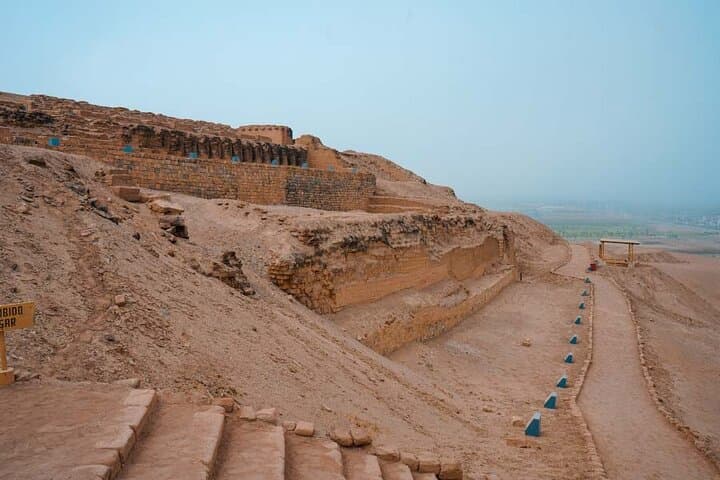
Geology here is coastal-Peruvian: wind-polished sand, alluvial terraces, and river-carved gullies that funneled ancient processions toward the sea. Centuries later, back in Miraflores, Huaca Pucllana’s adobe pyramid sits amid city blocks — an urban ruin that shows how pre-Inca Lima culture adapted to a constrained coastal environment.
Expect guided segments in both open-air sites, interpretive stops at a small museum, and opportunities to photograph panoramic views where ocean and valley meet. The tour balances archaeological detail with practical pacing: limited uphill walking at Pachacámac and flatter paths at Huaca Pucllana. Bring sun protection, water, and shoes that handle sand and uneven adobe.
Timing: mornings are cooler and less windy; late afternoon light flatters photos at Huaca Pucllana. Language: guides commonly speak Spanish and English. Cultural note: these sites remain sacred to local communities — behave respectfully around exposed structures, and follow signs during active excavations. The tour condenses centuries into a single, informative day suitable for travelers wanting history, context, and accessible outdoor walking.
moderate.
5–6 hours.
Suitable for travelers with moderate fitness — involves several short walks, one uphill section at Pachacámac, and standing during explanations.
The tour lasts about 5–6 hours; admission tickets to both the Pachacámac Site Museum and Huaca Pucllana are included as stated in the itinerary.
Yes — the tour includes hotel or Airbnb pickup and drop-off from selected districts in Lima (confirm your pickup point when booking).
The tour is family-friendly but requires moderate mobility; there are uphill sections at Pachacámac and uneven terrain — bring assistance if mobility is limited.
Yes — the on-site restaurant offers lunch with pyramid views (not included in the tour price); reservations are recommended at peak times.
Pachacámac developed as a major pilgrimage and oracle center from pre-ceramic times through the Inca period; Huaca Pucllana represents the pre-Inca Lima culture adapted to a narrow coastal strip.
Both sites face erosion from wind and urban development; tours are structured to minimize wear on fragile adobe and encourage respect for active conservation efforts.
Inca Trilogy Tours operates guided outdoor trips and adventures with an emphasis on safety, stewardship, and memorable experiences.

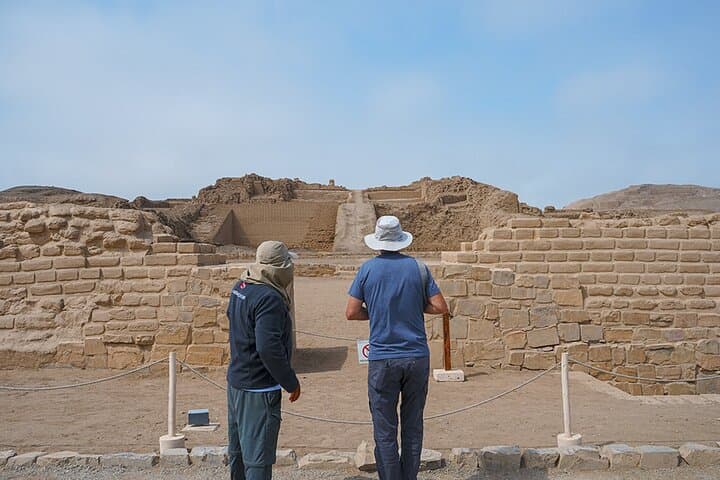
Morning light over the desert plain hits packed-earth pyramids and adobe platforms, and the guide’s voice pulls you into a timeline that predates the Spanish conquest. The day begins with a coastal highway drive from Miraflores into the Lurín valley, where Pachacámac’s broad plazas and sloped temples rise from sandy scrub. Walking the site, the Painted Temple’s faded pigments and the Acllahuasi’s terraced rooms give shape to ritual life; the museum’s carved idols and ceramics sketch daily practice and long-distance trade.
Morning light over the desert plain hits packed-earth pyramids and adobe platforms, and the guide’s voice pulls you into a timeline that predates the Spanish conquest. The day begins with a coastal highway drive from Miraflores into the Lurín valley, where Pachacámac’s broad plazas and sloped temples rise from sandy scrub. Walking the site, the Painted Temple’s faded pigments and the Acllahuasi’s terraced rooms give shape to ritual life; the museum’s carved idols and ceramics sketch daily practice and long-distance trade.
Geology here is coastal-Peruvian: wind-polished sand, alluvial terraces, and river-carved gullies that funneled ancient processions toward the sea. Centuries later, back in Miraflores, Huaca Pucllana’s adobe pyramid sits amid city blocks — an urban ruin that shows how pre-Inca Lima culture adapted to a constrained coastal environment.
Expect guided segments in both open-air sites, interpretive stops at a small museum, and opportunities to photograph panoramic views where ocean and valley meet. The tour balances archaeological detail with practical pacing: limited uphill walking at Pachacámac and flatter paths at Huaca Pucllana. Bring sun protection, water, and shoes that handle sand and uneven adobe.
Timing: mornings are cooler and less windy; late afternoon light flatters photos at Huaca Pucllana. Language: guides commonly speak Spanish and English. Cultural note: these sites remain sacred to local communities — behave respectfully around exposed structures, and follow signs during active excavations. The tour condenses centuries into a single, informative day suitable for travelers wanting history, context, and accessible outdoor walking.