THE ADVENTURE COLLECTIVE® · Independent discovery and booking for outdoor travel

Explore Perge’s Roman streets, the superb theater of Aspendos, Side’s seaside ruins and the emerald spray of Manavgat Waterfall on a single full-day tour from Antalya. Ideal for history fans who want a guided, outdoors-forward introduction to southern Turkey’s ancient sites.
Explore Perge’s Roman streets, the superb theater of Aspendos, Side’s seaside ruins and the emerald spray of Manavgat Waterfall on a single full-day tour from Antalya. Ideal for history fans who want a guided, outdoors-forward introduction to southern Turkey’s ancient sites.
The day begins before sunrise on the Mediterranean coast, when a cooled coach rolls out of Antalya and the road opens to olive-silver hills and roadside pistachio stands. By mid-morning the group steps onto packed Roman paving at Perge, where columns and a long colonnaded street guide visitors through an archaeological grid that still echoes public life from two millennia ago.
Verified experiences and guided adventures in the surrounding area.
Operated by Payless · Antalya, Antalya Province
The day begins before sunrise on the Mediterranean coast, when a cooled coach rolls out of Antalya and the road opens to olive-silver hills and roadside pistachio stands. By mid-morning the group steps onto packed Roman paving at Perge, where columns and a long colonnaded street guide visitors through an archaeological grid that still echoes public life from two millennia ago.
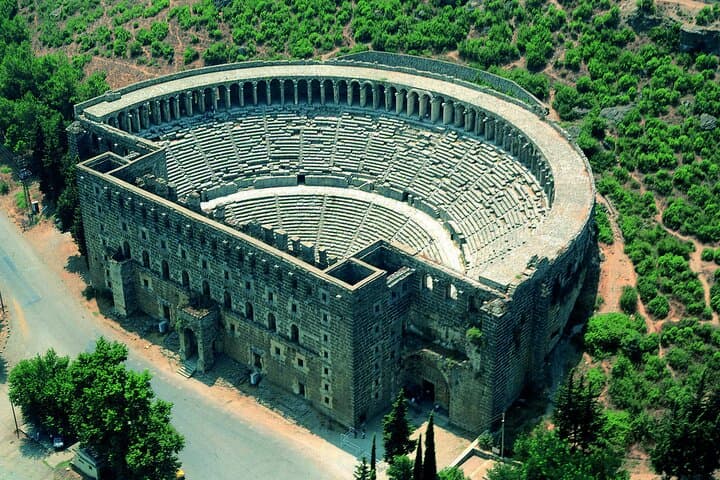
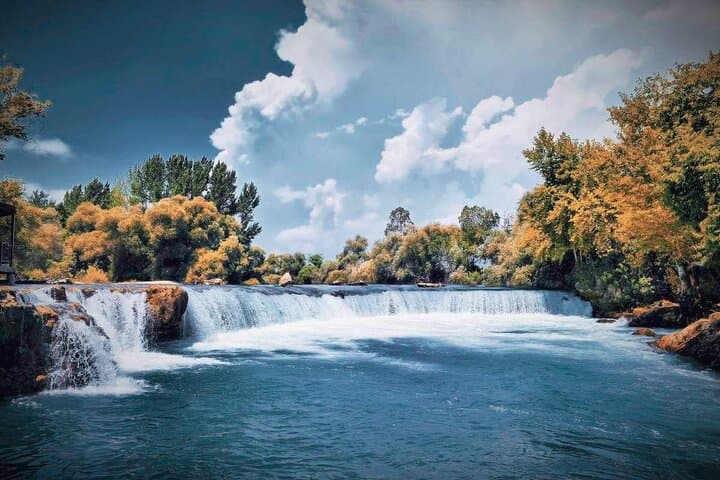
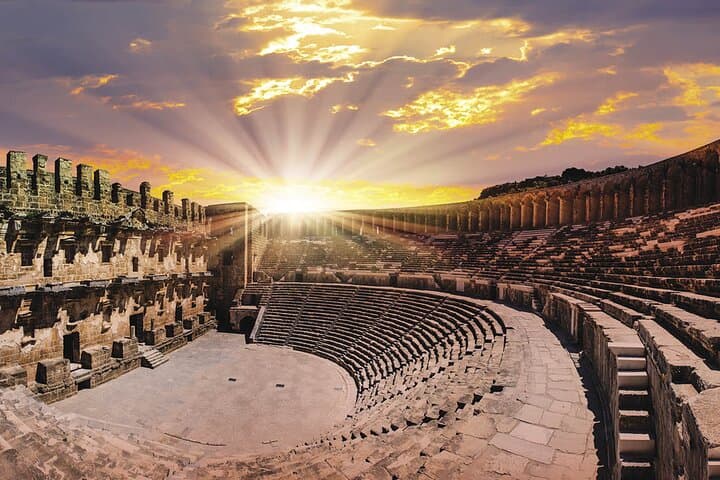
Perge, rebuilt after the legendary Trojan era, offers an open-air classroom of Roman urban planning: a stadium, theater and an acropolis with Bronze Age layers beneath. Downstream at Aspendos, the theater’s limestone blocks and near-perfect acoustics reveal the engineering skill of the Roman period; it remains one of Anatolia’s best-preserved performance venues. Side adds a coastal chapter — marble columns framing Mediterranean blue and the temple of Apollo overlooking a small harbor that has traded goods since antiquity. The trip closes at Manavgat Waterfall, where the river pushes over a wide lip and mists cool sun-warmed faces.
Expect uneven stone, steps and short walks between ruins; guides layer historical context with geological notes about limestone formations and the Köprüçay River corridor. Practicalities: the full loop takes about 7–8 hours with a seated lunch break, so plan sun protection, comfortable shoes and a small daypack. Photography is frequent but respect fenced areas and follow the guide’s path to protect fragile mosaics. Optimal timing is spring or fall for cooler light, while summer brings intense sun and winter can be damp underfoot. This tour pairs archaeological curiosity with accessible outdoor walking — a compact survey of southern Turkey’s layered past and lively landscape.
moderate.
7–8 hours.
Suitable for travelers with moderate fitness who can walk on uneven ground and climb short stone stairways.
The excursion runs approximately 7–8 hours; pickup is typically early morning from Antalya hotels—confirm exact pickup time with the operator.
Admission to some archaeological areas may not be included; the itinerary lists which stops include entrance fees, so check the booking details or bring cash/credit if needed.
Children are welcome but must present passports for museum validation; the tour involves walking on uneven terrain and stairs and is not recommended for guests with serious back, heart, or mobility limitations.
The schedule includes time to walk the seaside ruins and harbor; swimming is not part of the set itinerary, but brief independent exploration of the waterfront is possible within the allocated time.
Perge, Aspendos and Side reflect successive layers of Anatolian history from Bronze Age settlements through Hellenistic and Roman urbanization, with Aspendos’ theater still used for performances today.
Visitor pressure can damage exposed mosaics and riverbanks; stick to paths, avoid littering and support local guides who work with conservation programs protecting coastal turtles and riparian habitats.
Payless operates guided outdoor trips and adventures with an emphasis on safety, stewardship, and memorable experiences.
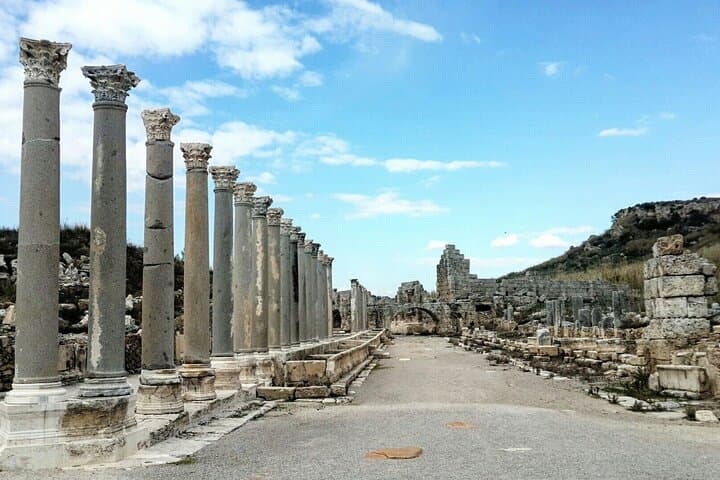
The day begins before sunrise on the Mediterranean coast, when a cooled coach rolls out of Antalya and the road opens to olive-silver hills and roadside pistachio stands. By mid-morning the group steps onto packed Roman paving at Perge, where columns and a long colonnaded street guide visitors through an archaeological grid that still echoes public life from two millennia ago.
The day begins before sunrise on the Mediterranean coast, when a cooled coach rolls out of Antalya and the road opens to olive-silver hills and roadside pistachio stands. By mid-morning the group steps onto packed Roman paving at Perge, where columns and a long colonnaded street guide visitors through an archaeological grid that still echoes public life from two millennia ago.
Perge, rebuilt after the legendary Trojan era, offers an open-air classroom of Roman urban planning: a stadium, theater and an acropolis with Bronze Age layers beneath. Downstream at Aspendos, the theater’s limestone blocks and near-perfect acoustics reveal the engineering skill of the Roman period; it remains one of Anatolia’s best-preserved performance venues. Side adds a coastal chapter — marble columns framing Mediterranean blue and the temple of Apollo overlooking a small harbor that has traded goods since antiquity. The trip closes at Manavgat Waterfall, where the river pushes over a wide lip and mists cool sun-warmed faces.
Expect uneven stone, steps and short walks between ruins; guides layer historical context with geological notes about limestone formations and the Köprüçay River corridor. Practicalities: the full loop takes about 7–8 hours with a seated lunch break, so plan sun protection, comfortable shoes and a small daypack. Photography is frequent but respect fenced areas and follow the guide’s path to protect fragile mosaics. Optimal timing is spring or fall for cooler light, while summer brings intense sun and winter can be damp underfoot. This tour pairs archaeological curiosity with accessible outdoor walking — a compact survey of southern Turkey’s layered past and lively landscape.