THE ADVENTURE COLLECTIVE® · Independent discovery and booking for outdoor travel

Spend a day traversing Angkor’s greatest temples and the floating villages of Tonle Sap. This guided tour combines UNESCO monuments with a boat ride into village life and the lake’s shifting wetlands.
Spend a day traversing Angkor’s greatest temples and the floating villages of Tonle Sap. This guided tour combines UNESCO monuments with a boat ride into village life and the lake’s shifting wetlands.
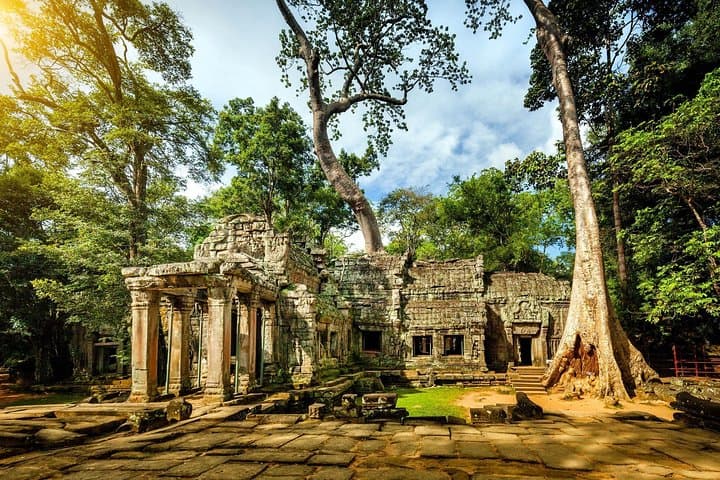
You step off the minivan into a wash of stone, damp with morning shadow and the faint resinous breath of frangipani. Angkor Wat’s galleried ramps rise like an engineered mountain, and the guide’s voice threads history into the carved stone as light slices the bas-reliefs.
Verified experiences and guided adventures in the surrounding area.
Operated by Green Era Travel · Siem Reap, Siem Reap Province
You step off the minivan into a wash of stone, damp with morning shadow and the faint resinous breath of frangipani. Angkor Wat’s galleried ramps rise like an engineered mountain, and the guide’s voice threads history into the carved stone as light slices the bas-reliefs.
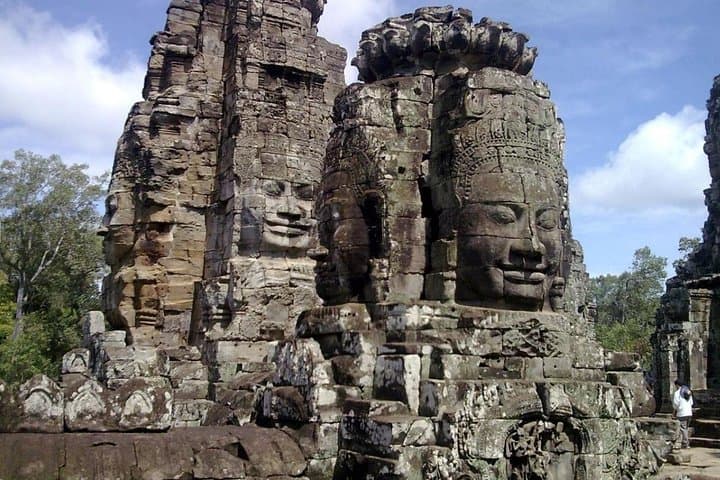
The itinerary moves from the classical symmetry of Angkor Wat — built in the early 12th century for King Suryavarman II — through the monumental causeways and guardian figures of Angkor Thom, then into the folded corridors and many-faced towers of the Bayon. These sites reveal Khmer architectural logic: raised galleries, concentric enclosures and cosmological symbolism grounded in local sandstone and laterite.
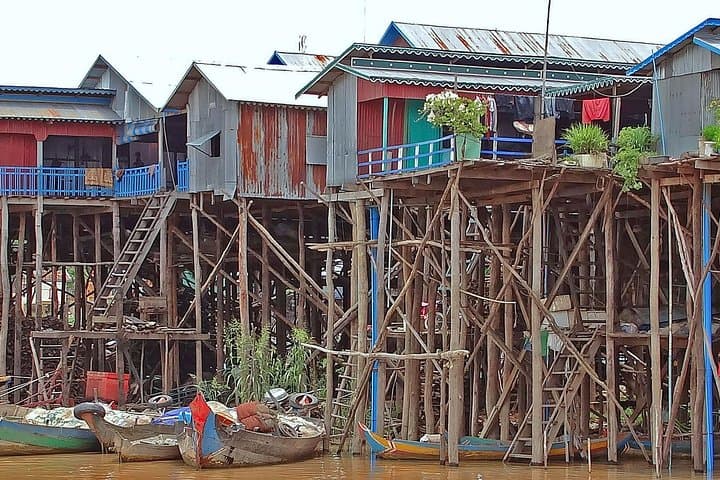
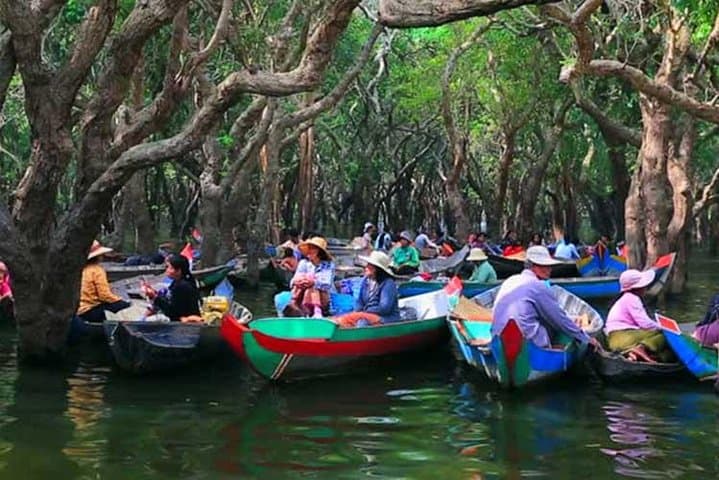
Afternoon shifts the pace. A 45-minute drive to the Tonle Sap’s edge trades stone for water. In Kampong Phluk and Chong Khneas, stilted houses and floating schools mirror the lake’s seasonal moods; in high water the mangrove channels press close like a green wall, in dry months the exposed floodplain alters how life stacks itself vertically.
Practical guidance: allow time for buying your Angkor pass on arrival, wear knee-length trousers or a skirt, and choose shoes that handle uneven flagstones and muddy quay access. Bring sunscreen, refillable water, and a lightweight rain layer in the monsoon months. Expect moderate walking over steps and low passages; boat rides depend on water levels and can include optional canoe detours.
This day tour pairs architectural immersion with a living-water ecosystem — an efficient, sensory-rich introduction to Cambodia’s cultural heart and its seasonal lake life.
moderate.
7 hours.
Moderate fitness recommended: several hours of walking, some stairs and uneven surfaces
Yes — all visitors must buy an Angkor Pass at the ticket office; the guide can direct you to the purchase point on arrival.
A shared boat trip on Tonle Sap is included; optional canoe excursions into flooded forest may cost extra in the rainy season.
Children are welcome but must be accompanied by an adult; consider heat and boat stability when planning with young kids.
English-speaking guides are standard; other languages can be provided for a surcharge if arranged when booking.
Angkor Wat was built in the early 12th century under Suryavarman II and later repurposed as a Buddhist center; Angkor Thom and Bayon were expanded under Jayavarman VII in the late 12th–13th centuries.
Visitor management and conservation programs aim to protect bas-reliefs and stone structures; Tonle Sap faces ecological pressure from seasonal fishing, deforestation, and development, so low-impact tourism practices are encouraged.
Green Era Travel operates guided outdoor trips and adventures with an emphasis on safety, stewardship, and memorable experiences.
You step off the minivan into a wash of stone, damp with morning shadow and the faint resinous breath of frangipani. Angkor Wat’s galleried ramps rise like an engineered mountain, and the guide’s voice threads history into the carved stone as light slices the bas-reliefs.
You step off the minivan into a wash of stone, damp with morning shadow and the faint resinous breath of frangipani. Angkor Wat’s galleried ramps rise like an engineered mountain, and the guide’s voice threads history into the carved stone as light slices the bas-reliefs.
The itinerary moves from the classical symmetry of Angkor Wat — built in the early 12th century for King Suryavarman II — through the monumental causeways and guardian figures of Angkor Thom, then into the folded corridors and many-faced towers of the Bayon. These sites reveal Khmer architectural logic: raised galleries, concentric enclosures and cosmological symbolism grounded in local sandstone and laterite.
Afternoon shifts the pace. A 45-minute drive to the Tonle Sap’s edge trades stone for water. In Kampong Phluk and Chong Khneas, stilted houses and floating schools mirror the lake’s seasonal moods; in high water the mangrove channels press close like a green wall, in dry months the exposed floodplain alters how life stacks itself vertically.
Practical guidance: allow time for buying your Angkor pass on arrival, wear knee-length trousers or a skirt, and choose shoes that handle uneven flagstones and muddy quay access. Bring sunscreen, refillable water, and a lightweight rain layer in the monsoon months. Expect moderate walking over steps and low passages; boat rides depend on water levels and can include optional canoe detours.
This day tour pairs architectural immersion with a living-water ecosystem — an efficient, sensory-rich introduction to Cambodia’s cultural heart and its seasonal lake life.