THE ADVENTURE COLLECTIVE® · Independent discovery and booking for outdoor travel

Spend a single, immersive day moving through the Angkor Archaeological Park—Bayon’s carved faces, Ta Prohm’s tree-entwined galleries and the iconic sweep of Angkor Wat—finishing at Phnom Bakheng for sunset. This small-group tour pairs local insight with practical logistics for a full-day temple circuit.
Spend a single, immersive day moving through the Angkor Archaeological Park—Bayon’s carved faces, Ta Prohm’s tree-entwined galleries and the iconic sweep of Angkor Wat—finishing at Phnom Bakheng for sunset. This small-group tour pairs local insight with practical logistics for a full-day temple circuit.
You step out of the van into a humid dawn that already smells of earth and old stone. Trees lean over collapsed galleries and roots, like impatient hands, pull at carvings while the first shafts of light reveal bas-reliefs half-hidden by dust. For six to seven hours you move through this landscape of carved faces, basins and silent terraces—Angkor Thom's Bayon, the jungle-cradled Ta Prohm, the layered Baphuon, and then the wide lotus silhouette of Angkor Wat itself—before climbing Phnom Bakheng to watch the sun lower itself behind the treeline.
Verified experiences and guided adventures in the surrounding area.
Operated by Siem Reap Shared Tour · Siem Reap, Siem Reap Province
You step out of the van into a humid dawn that already smells of earth and old stone. Trees lean over collapsed galleries and roots, like impatient hands, pull at carvings while the first shafts of light reveal bas-reliefs half-hidden by dust. For six to seven hours you move through this landscape of carved faces, basins and silent terraces—Angkor Thom's Bayon, the jungle-cradled Ta Prohm, the layered Baphuon, and then the wide lotus silhouette of Angkor Wat itself—before climbing Phnom Bakheng to watch the sun lower itself behind the treeline.
The temples map the rise and fall of the Khmer Empire: Angkor Wat began as a 12th-century Hindu state temple for Vishnu and later became a Buddhist center; Jayavarman VII reshaped the city with Buddhist monuments like Bayon and Angkor Thom. The stone is primarily sandstone and laterite—soft to erode, hard to restore—so conservation is ongoing and selective. Local guides connect these architectural choices to religious shifts, Khmer kingship and rice-based economy that funded monumental building.
Expect a mix of paved causeways, uneven stone steps and loose sand; some climbs are steep and exposed. Practicalities: bring sun protection, steady closed-toe shoes, and a refillable water bottle (a complimentary bottle and towel are often provided). Dress respectfully—shoulders and knees covered—to enter temples still in active religious use. Plan to move steadily; lighting is best early and late in the day, and Phnom Bakheng's sunset viewpoint can be crowded and requires a short, sometimes dusty ascent. Buy your Angkor Park pass in advance and carry local currency for small purchases. With an informed guide, the day becomes both a technical walkthrough of ruined engineering and a sensory encounter with a landscape that still seems to shape its visitors.
easy.
6–7 hours.
Suitable for all fitness levels but requires extended walking and some stair climbing; be prepared for heat and humidity.
No, the Angkor Archaeological Park pass is typically not included—buy a 1-, 3- or 7-day pass at the official counters near the park entrance before touring.
Early morning and late afternoon provide the softest light; sunset at Phnom Bakheng is popular but can be crowded—arrive early to secure a viewpoint.
Many core sites have uneven steps and narrow passages; some areas are accessible but the full circuit involves stairs and rough surfaces—check with the operator for tailored options.
Lunch is usually included at a local restaurant during the tour and bottled water and a towel are often provided by the operator.
The Angkor complex grew under Khmer kings from the 9th to 15th centuries; Jayavarman VII in the late 12th century left some of the most iconic Buddhist-era monuments like Bayon and Angkor Thom.
Restoration is active and sensitive—stone is fragile and visitor impact is managed through controlled paths and conservation partnerships; limit touching carvings and stay on marked routes.
Siem Reap Shared Tour operates guided outdoor trips and adventures with an emphasis on safety, stewardship, and memorable experiences.
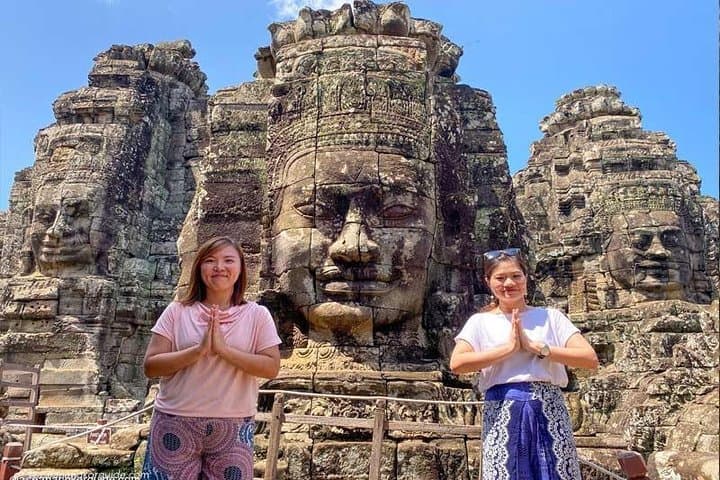
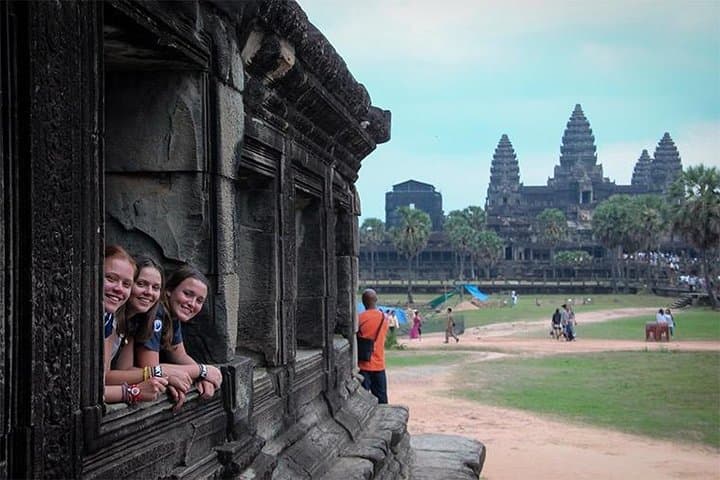
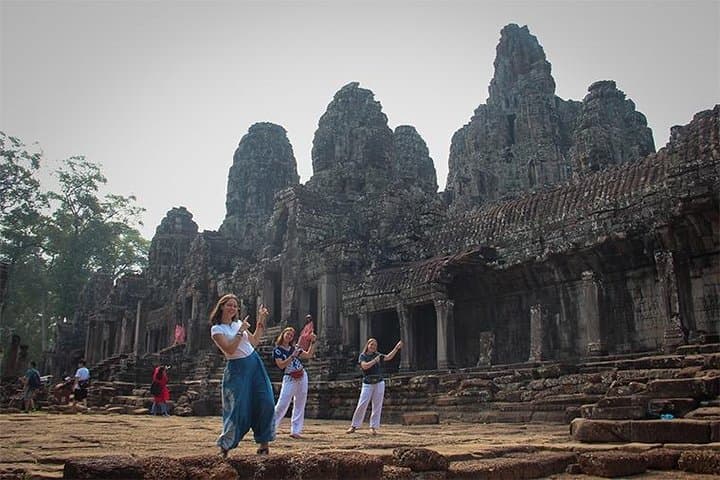
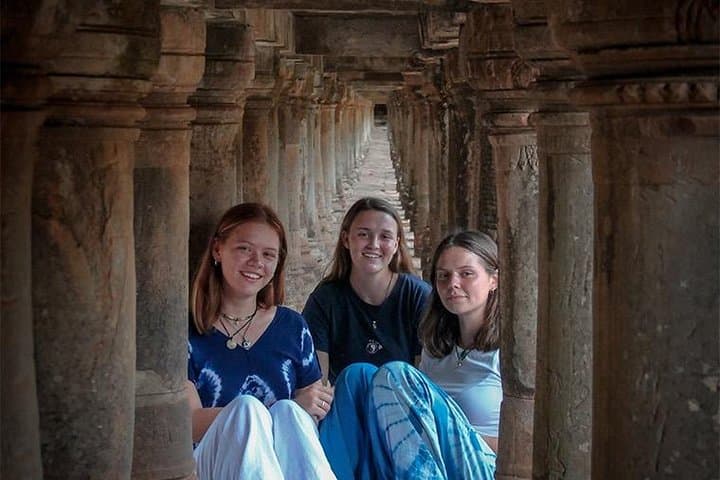
You step out of the van into a humid dawn that already smells of earth and old stone. Trees lean over collapsed galleries and roots, like impatient hands, pull at carvings while the first shafts of light reveal bas-reliefs half-hidden by dust. For six to seven hours you move through this landscape of carved faces, basins and silent terraces—Angkor Thom's Bayon, the jungle-cradled Ta Prohm, the layered Baphuon, and then the wide lotus silhouette of Angkor Wat itself—before climbing Phnom Bakheng to watch the sun lower itself behind the treeline.
You step out of the van into a humid dawn that already smells of earth and old stone. Trees lean over collapsed galleries and roots, like impatient hands, pull at carvings while the first shafts of light reveal bas-reliefs half-hidden by dust. For six to seven hours you move through this landscape of carved faces, basins and silent terraces—Angkor Thom's Bayon, the jungle-cradled Ta Prohm, the layered Baphuon, and then the wide lotus silhouette of Angkor Wat itself—before climbing Phnom Bakheng to watch the sun lower itself behind the treeline.
The temples map the rise and fall of the Khmer Empire: Angkor Wat began as a 12th-century Hindu state temple for Vishnu and later became a Buddhist center; Jayavarman VII reshaped the city with Buddhist monuments like Bayon and Angkor Thom. The stone is primarily sandstone and laterite—soft to erode, hard to restore—so conservation is ongoing and selective. Local guides connect these architectural choices to religious shifts, Khmer kingship and rice-based economy that funded monumental building.
Expect a mix of paved causeways, uneven stone steps and loose sand; some climbs are steep and exposed. Practicalities: bring sun protection, steady closed-toe shoes, and a refillable water bottle (a complimentary bottle and towel are often provided). Dress respectfully—shoulders and knees covered—to enter temples still in active religious use. Plan to move steadily; lighting is best early and late in the day, and Phnom Bakheng's sunset viewpoint can be crowded and requires a short, sometimes dusty ascent. Buy your Angkor Park pass in advance and carry local currency for small purchases. With an informed guide, the day becomes both a technical walkthrough of ruined engineering and a sensory encounter with a landscape that still seems to shape its visitors.