THE ADVENTURE COLLECTIVE® · Independent discovery and booking for outdoor travel

A practical full-day small-group circuit of Angkor's highlights—Angkor Wat, Angkor Thom, Bayon and Ta Prohm—blending clear historical context with hands-on advice for a long day of walking, heat and unforgettable stonework.
A practical full-day small-group circuit of Angkor's highlights—Angkor Wat, Angkor Thom, Bayon and Ta Prohm—blending clear historical context with hands-on advice for a long day of walking, heat and unforgettable stonework.
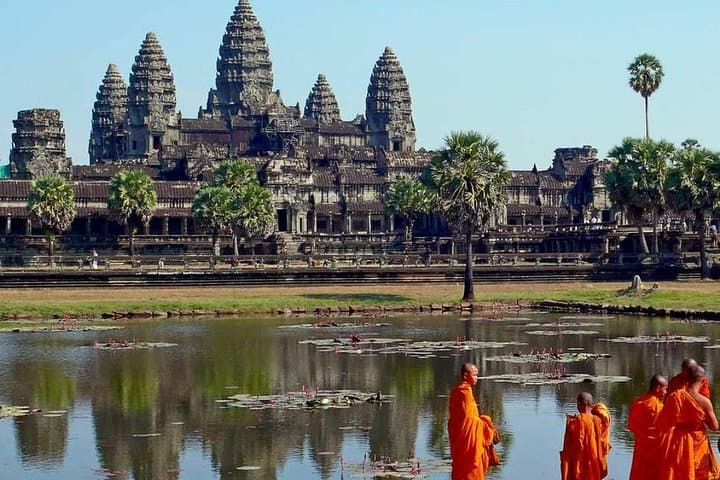
You hit the road before dawn and arrive as the first pale light slides across the moat; stone garlands and carved faces emerge from the shadows while the air smells of limestone warmed by the sun.
Verified experiences and guided adventures in the surrounding area.
Operated by Trip Focus Cambodia · Siem Reap, Siem Reap Province
You hit the road before dawn and arrive as the first pale light slides across the moat; stone garlands and carved faces emerge from the shadows while the air smells of limestone warmed by the sun.
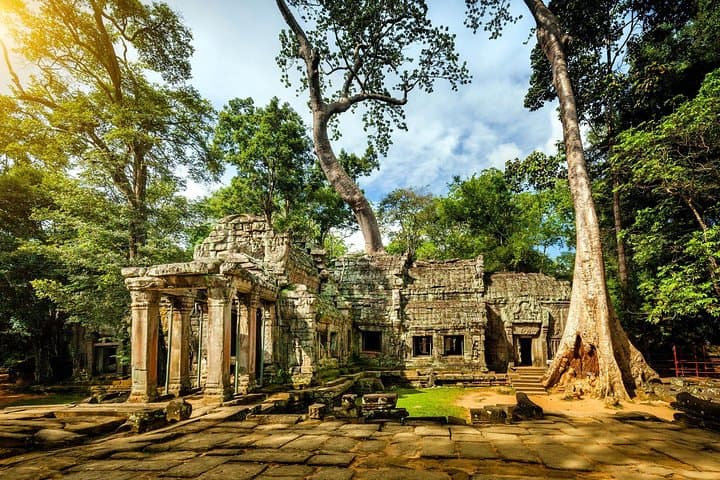
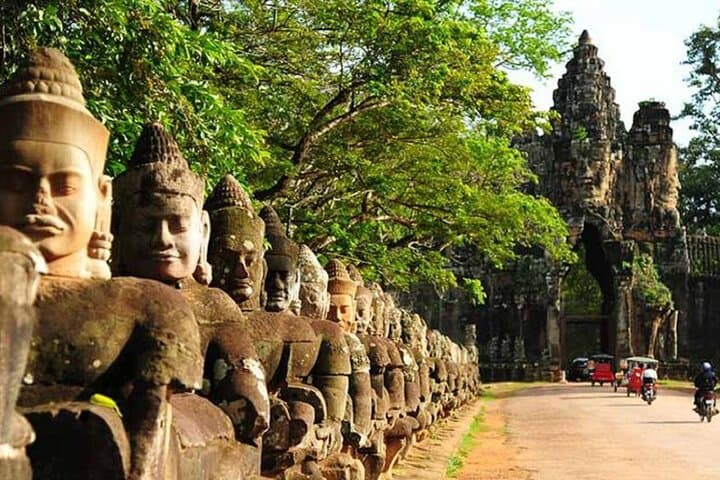
This full-day small-group tour threads together Angkor Wat, Angkor Thom and its stone faces at Bayon, the root-entangled corridors of Ta Prohm and a sunset stop at Pre Rup. These monuments were raised by the Khmer Empire between the 9th and 13th centuries—temple-mountains, hydraulic cities and ceremonial causeways built from sandstone and laterite that weather into warm ochre tones.
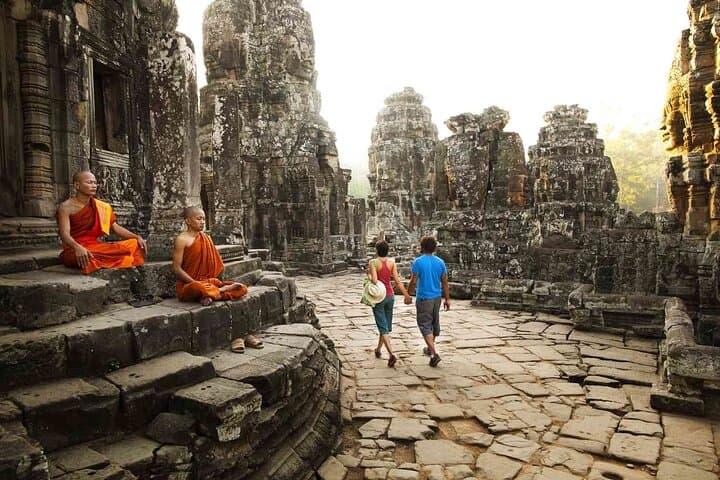
Geology here is simple: a low, seasonally flooded plain underlain by compacted alluvial soils that allowed Khmer engineers to move massive blocks and construct elaborate water management systems. Culture remains visible: devout Buddhists and Hindu iconography coexist in bas-relief panels; local guides translate myth into hard facts against a backdrop of monastic life.
Practical guidance: buy your Angkor Park pass at the Welcome Center before entry (this tour does not include admission). Expect a lot of walking on uneven stone, shallow steps and occasional muddy patches after rain; plan for 6–8 hours. Bring sun protection, refillable water and modest clothing for temple entry. The operator provides hotel pickup, an English-speaking guide, bottled water and air-conditioned transport; aim for early starts to avoid midday crowds and heat. For a quieter rhythm, consider a multi-day pass to reach outer temples that see fewer visitors.
easy.
6–8 hours.
Suitable for most fitness levels—requires several hours of walking with short bursts on uneven terrain.
No—entrance fees are not included. Buy your Angkor Park pass at the official Welcome Center before site entry; options include single- and multi-day passes.
The tour is low difficulty but involves several hours of walking on uneven surfaces and stone steps; comfortable shoes and basic mobility are recommended.
Pickup is typically between 7:30–8:30 a.m., with the full-day itinerary returning in the late afternoon to early evening depending on sunset timing.
Included: hotel pickup/drop-off, English-speaking guide, bottled water and air-conditioned transport; admissions are excluded unless specified.
Angkor was the capital of the Khmer Empire (9th–15th centuries). Angkor Wat was built as a temple-mountain and later became a center for Buddhism, absorbing Hindu iconography into local practice.
The Angkor Archaeological Park limits access to fragile areas and funds conservation through entrance fees; sticking to marked paths and avoiding flash photography helps protect carvings and stonework.
Trip Focus Cambodia operates guided outdoor trips and adventures with an emphasis on safety, stewardship, and memorable experiences.
You hit the road before dawn and arrive as the first pale light slides across the moat; stone garlands and carved faces emerge from the shadows while the air smells of limestone warmed by the sun.
You hit the road before dawn and arrive as the first pale light slides across the moat; stone garlands and carved faces emerge from the shadows while the air smells of limestone warmed by the sun.
This full-day small-group tour threads together Angkor Wat, Angkor Thom and its stone faces at Bayon, the root-entangled corridors of Ta Prohm and a sunset stop at Pre Rup. These monuments were raised by the Khmer Empire between the 9th and 13th centuries—temple-mountains, hydraulic cities and ceremonial causeways built from sandstone and laterite that weather into warm ochre tones.
Geology here is simple: a low, seasonally flooded plain underlain by compacted alluvial soils that allowed Khmer engineers to move massive blocks and construct elaborate water management systems. Culture remains visible: devout Buddhists and Hindu iconography coexist in bas-relief panels; local guides translate myth into hard facts against a backdrop of monastic life.
Practical guidance: buy your Angkor Park pass at the Welcome Center before entry (this tour does not include admission). Expect a lot of walking on uneven stone, shallow steps and occasional muddy patches after rain; plan for 6–8 hours. Bring sun protection, refillable water and modest clothing for temple entry. The operator provides hotel pickup, an English-speaking guide, bottled water and air-conditioned transport; aim for early starts to avoid midday crowds and heat. For a quieter rhythm, consider a multi-day pass to reach outer temples that see fewer visitors.