THE ADVENTURE COLLECTIVE® · Independent discovery and booking for outdoor travel

Spend a full day exploring Angkor’s major temples by tuk‑tuk, walking through village life, the enigmatic faces of Bayon, jungle-swallowed Ta Prohm, and a sunset at Pre Rup. Practical tips on timing, footing, and culture help you plan a focused, unforgettable day.
Spend a full day exploring Angkor’s major temples by tuk‑tuk, walking through village life, the enigmatic faces of Bayon, jungle-swallowed Ta Prohm, and a sunset at Pre Rup. Practical tips on timing, footing, and culture help you plan a focused, unforgettable day.
A low-slung tuk-tuk hums through dawn haze, rice paddies flashing green at the edge of Siem Reap as the driver threads narrow lanes toward the stone giants of Angkor.
Verified experiences and guided adventures in the surrounding area.
Operated by Angkor Dynasty Travel · Siem Reap, Siem Reap Province
A low-slung tuk-tuk hums through dawn haze, rice paddies flashing green at the edge of Siem Reap as the driver threads narrow lanes toward the stone giants of Angkor.
You begin in a nearby village on foot—about a 3 km flat walk—where daily life still unfolds at the roadside and the guide outlines Khmer customs before entering Angkor Thom and the Bayon, whose many carved faces watch over the old capital. The itinerary moves to Ta Prohm, where strangler figs and banyans tug at lintels carved from sandstone and laterite, giving the temple a cinematic, half-reclaimed feel.
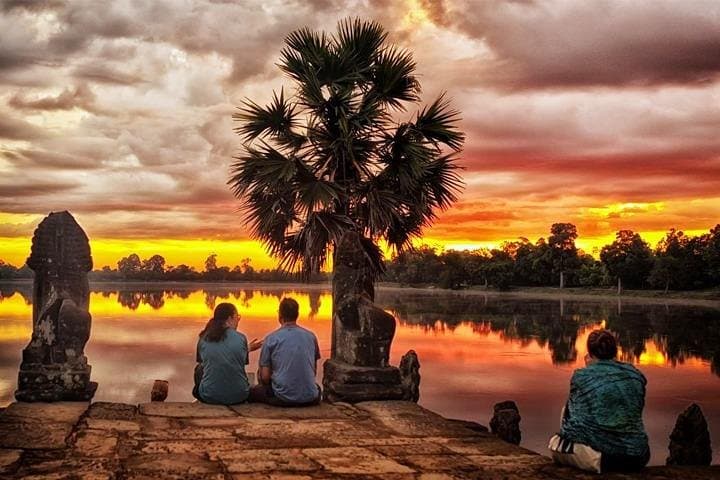
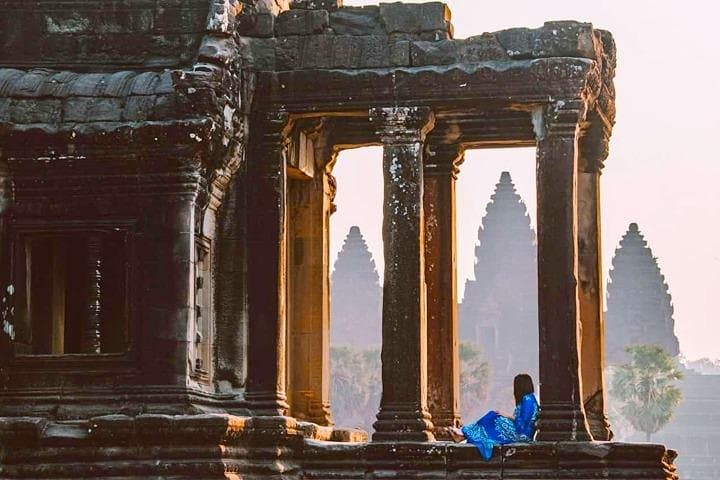
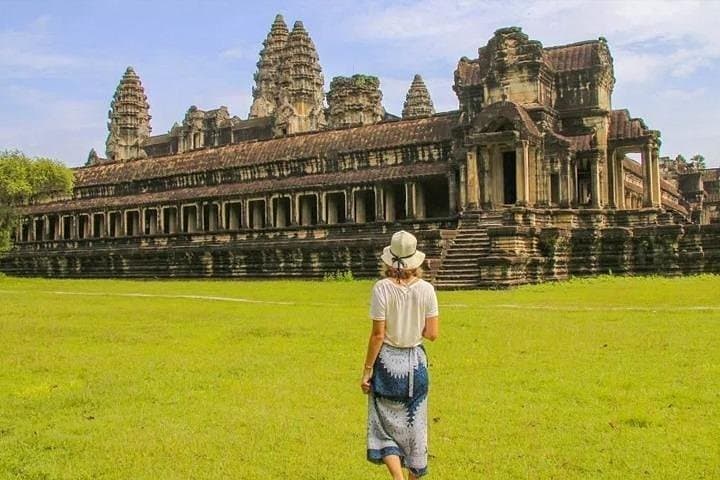
Afternoon brings a quieter approach to Angkor Wat via the eastern entrance: a 12th-century masterpiece dedicated to Vishnu, its bas-reliefs and axial galleries revealing the engineering and cosmology of the Khmer Empire (802–1432). The day closes at Pre Rup, where the setting sun gilds laterite towers and casts long shadows across stepped terraces.
Practical notes: this is a full, roughly 8-hour day with several short walks over uneven stone and dirt. Angkor Archaeological Park admission must be purchased separately at the official ticket center; carry sun protection, cash for lunch and souvenirs, and comfortable shoes for temple floors.
Tours by tuk-tuk are efficient for moving between sites while offering glimpses of rural life; expect heat, intermittent shade, and generous photo opportunities. Respect religious sites—cover shoulders and knees—and plan for hydration and insect protection during the cooler morning and humid afternoon stretches.
moderate.
8 hours.
Suitable for travelers who can walk several kilometers on flat and uneven surfaces in warm conditions; frequent short walks and standing at sites.
Yes — the tour uses a tuk-tuk for the day and includes hotel pickup and drop-off.
No — Angkor Archaeological Park tickets must be bought separately at the official ticket center.
Expect several short walks, including a roughly 3 km village walk and walking around temple complexes on uneven ground.
The tour is family-friendly, but many temple areas have steps and uneven surfaces; those with limited mobility may find some sites difficult.
Angkor was the heart of the Khmer Empire from the 9th to 15th centuries; major monuments like Angkor Wat and Bayon reflect shifts from Hindu to Buddhist worship and significant hydraulic engineering.
Visitor numbers and weathering stress the sandstone temples; stick to marked paths, avoid touching bas-reliefs, and use licensed guides to minimize impact.
Angkor Dynasty Travel operates guided outdoor trips and adventures with an emphasis on safety, stewardship, and memorable experiences.
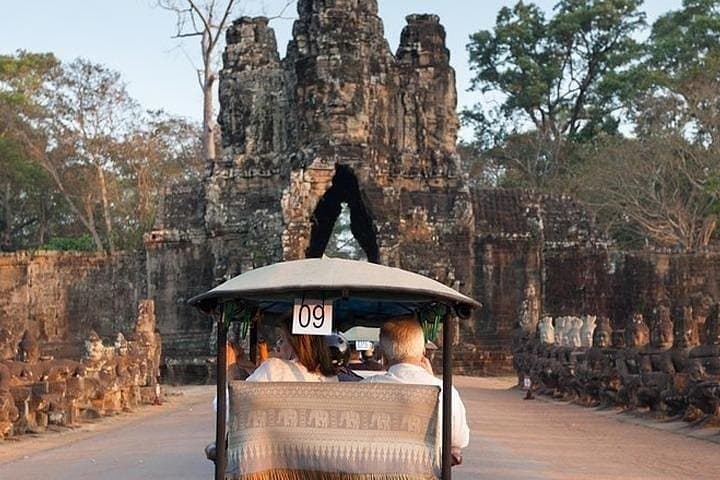
A low-slung tuk-tuk hums through dawn haze, rice paddies flashing green at the edge of Siem Reap as the driver threads narrow lanes toward the stone giants of Angkor.
A low-slung tuk-tuk hums through dawn haze, rice paddies flashing green at the edge of Siem Reap as the driver threads narrow lanes toward the stone giants of Angkor.
You begin in a nearby village on foot—about a 3 km flat walk—where daily life still unfolds at the roadside and the guide outlines Khmer customs before entering Angkor Thom and the Bayon, whose many carved faces watch over the old capital. The itinerary moves to Ta Prohm, where strangler figs and banyans tug at lintels carved from sandstone and laterite, giving the temple a cinematic, half-reclaimed feel.
Afternoon brings a quieter approach to Angkor Wat via the eastern entrance: a 12th-century masterpiece dedicated to Vishnu, its bas-reliefs and axial galleries revealing the engineering and cosmology of the Khmer Empire (802–1432). The day closes at Pre Rup, where the setting sun gilds laterite towers and casts long shadows across stepped terraces.
Practical notes: this is a full, roughly 8-hour day with several short walks over uneven stone and dirt. Angkor Archaeological Park admission must be purchased separately at the official ticket center; carry sun protection, cash for lunch and souvenirs, and comfortable shoes for temple floors.
Tours by tuk-tuk are efficient for moving between sites while offering glimpses of rural life; expect heat, intermittent shade, and generous photo opportunities. Respect religious sites—cover shoulders and knees—and plan for hydration and insect protection during the cooler morning and humid afternoon stretches.