THE ADVENTURE COLLECTIVE® · Independent discovery and booking for outdoor travel

Cycle the Angkor complex in a single day—starting with Angkor Wat and moving through Angkor Thom, Bayon and Ta Prohm. This guided tour combines temple walks with quiet stretches of country road suited to adventurous cyclists looking for history and local flavor.
Cycle the Angkor complex in a single day—starting with Angkor Wat and moving through Angkor Thom, Bayon and Ta Prohm. This guided tour combines temple walks with quiet stretches of country road suited to adventurous cyclists looking for history and local flavor.
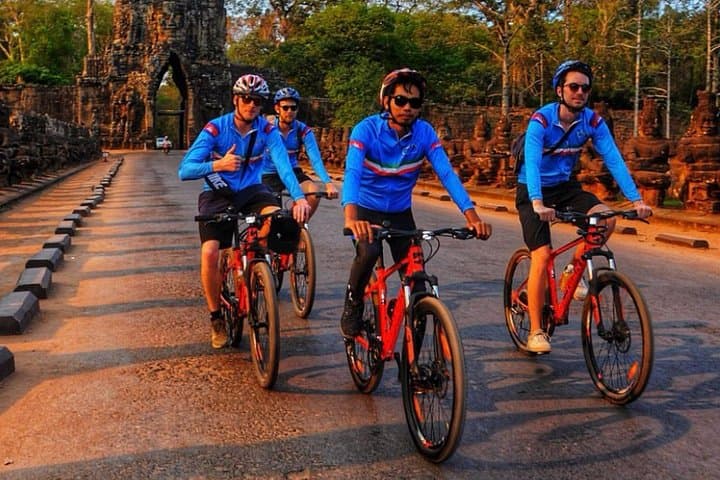
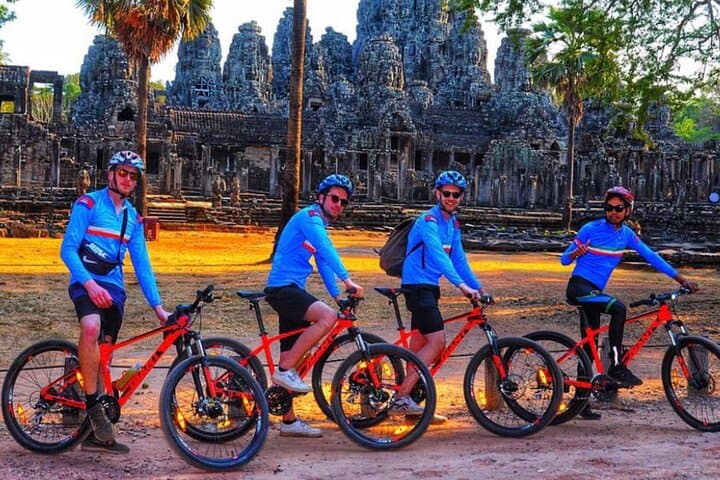
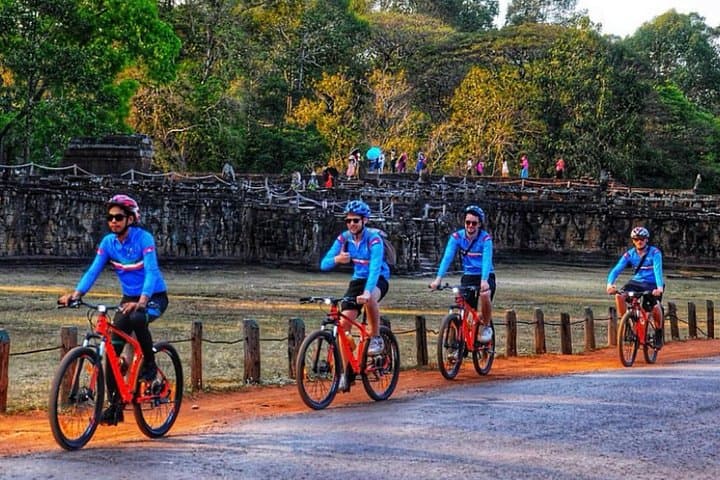
Morning light strips the mist from the reservoir as cyclists push off from Siem Reap toward limestone causeways and stone faces that have watched centuries pass. The air is humid, the path alternates between paved roads and compacted dirt, and the first silhouette you meet is Angkor Wat’s central spire rising like a carved horizon.
Verified experiences and guided adventures in the surrounding area.
Operated by Blue Sky Bike Tour · Siem Reap, Siem Reap Province
Morning light strips the mist from the reservoir as cyclists push off from Siem Reap toward limestone causeways and stone faces that have watched centuries pass. The air is humid, the path alternates between paved roads and compacted dirt, and the first silhouette you meet is Angkor Wat’s central spire rising like a carved horizon.
This ride threads through the heart of the Khmer Empire. Angkor Wat (12th century) anchors the circuit, while Angkor Thom, Bayon and Ta Prohm tell stories of kings, religious shifts and nature’s return—roots and ficus weaving through balustrades. Geologically the site sits on low, flat alluvial plains; sandstone blocks and laterite foundations define the temples’ textures and the slow weathering that gives each surface its age.
Local life remains visible: farmers tending rice paddies, ox carts on side lanes, and vendors selling cooling sugarcane. Guides explain cultural nuances—how Angkor’s temple layout reflects Hindu-Buddhist cosmology—and practical etiquette: modest dress, quiet reverence at singled-out carvings.
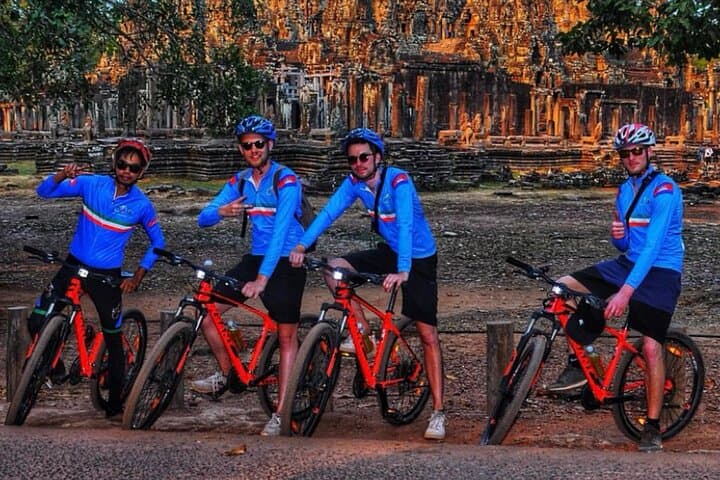
Expect 7–8 hours of riding with frequent stops for photos, short walks inside galleries, and a lunch break. Terrain is mostly flat but uneven in temple courtyards and shaded forest tracks; traffic appears on connector roads. Bring hydration, sun protection and a willingness to dismount for fragile sections. Helmets and quality mountain bikes are usually supplied, and a local guide will manage timing to avoid the hottest midday.
Riding here is both motion and museum: the bicycle keeps you moving through history while the stones, weathered and patient, keep you honest. Respect the paths, follow your guide, and let the temples do the storytelling.
moderate.
7–8 hours.
Should be comfortable cycling 20–35 km over a day, with repeated short walks and some standing; basic endurance is required.
Temple passes are usually not included; you can buy a 1‑day pass at the ticket center or online—guides often assist with the purchase.
Yes, high‑quality mountain bikes and helmets are typically supplied (brands like GT or Giant); if you prefer your own bike, confirm storage and transport options ahead of time.
It’s moderate: mostly flat cycling with periodic walking inside temples; expect 7–8 hours with breaks, suitable for people comfortable with a full day of activity.
Tours run in light rain—bikes and guides are prepared for wet conditions; heavy storms may force schedule changes for safety and to protect fragile temple surfaces.
Angkor was the capital of the Khmer Empire (9th–15th centuries), with temple layouts reflecting Hindu-Buddhist cosmology and imperial power concentrated around Angkor Thom and Angkor Wat.
The complex is managed under UNESCO guidelines; stick to designated paths, avoid touching bas‑reliefs and support local guides and community-run conservation efforts.
Blue Sky Bike Tour operates guided outdoor trips and adventures with an emphasis on safety, stewardship, and memorable experiences.
Morning light strips the mist from the reservoir as cyclists push off from Siem Reap toward limestone causeways and stone faces that have watched centuries pass. The air is humid, the path alternates between paved roads and compacted dirt, and the first silhouette you meet is Angkor Wat’s central spire rising like a carved horizon.
Morning light strips the mist from the reservoir as cyclists push off from Siem Reap toward limestone causeways and stone faces that have watched centuries pass. The air is humid, the path alternates between paved roads and compacted dirt, and the first silhouette you meet is Angkor Wat’s central spire rising like a carved horizon.
This ride threads through the heart of the Khmer Empire. Angkor Wat (12th century) anchors the circuit, while Angkor Thom, Bayon and Ta Prohm tell stories of kings, religious shifts and nature’s return—roots and ficus weaving through balustrades. Geologically the site sits on low, flat alluvial plains; sandstone blocks and laterite foundations define the temples’ textures and the slow weathering that gives each surface its age.
Local life remains visible: farmers tending rice paddies, ox carts on side lanes, and vendors selling cooling sugarcane. Guides explain cultural nuances—how Angkor’s temple layout reflects Hindu-Buddhist cosmology—and practical etiquette: modest dress, quiet reverence at singled-out carvings.
Expect 7–8 hours of riding with frequent stops for photos, short walks inside galleries, and a lunch break. Terrain is mostly flat but uneven in temple courtyards and shaded forest tracks; traffic appears on connector roads. Bring hydration, sun protection and a willingness to dismount for fragile sections. Helmets and quality mountain bikes are usually supplied, and a local guide will manage timing to avoid the hottest midday.
Riding here is both motion and museum: the bicycle keeps you moving through history while the stones, weathered and patient, keep you honest. Respect the paths, follow your guide, and let the temples do the storytelling.