THE ADVENTURE COLLECTIVE® · Independent discovery and booking for outdoor travel

Spend a full day exploring Angkor Wat, Angkor Thom and Ta Prohm with a local English-speaking guide. This guided circuit combines sunrise viewpoints, Bayon’s carved faces and Ta Prohm’s tree-entwined corridors with practical insight into logistics and etiquette.
Spend a full day exploring Angkor Wat, Angkor Thom and Ta Prohm with a local English-speaking guide. This guided circuit combines sunrise viewpoints, Bayon’s carved faces and Ta Prohm’s tree-entwined corridors with practical insight into logistics and etiquette.
Morning mist lifts off the moat as the first stone silhouettes of Angkor Wat slide into view—limestone and laterite caught between sky and water. On this full-day guided circuit, travelers move from the low-slung causeways of Angkor Wat into the vaulted faces of Bayon, then into Ta Prohm’s root-filled corridors, each site shifting the rhythm of the day.
Verified experiences and guided adventures in the surrounding area.
Operated by ASEAN Adventure · Siem Reap, Siem Reap Province
Morning mist lifts off the moat as the first stone silhouettes of Angkor Wat slide into view—limestone and laterite caught between sky and water. On this full-day guided circuit, travelers move from the low-slung causeways of Angkor Wat into the vaulted faces of Bayon, then into Ta Prohm’s root-filled corridors, each site shifting the rhythm of the day.
The temples here are 12th-century Khmer achievements built with sandstone blocks quarried and ferried by an empire centered on hydraulic agriculture. Angkor Wat began as a Hindu temple later layered with Buddhist imagery; Angkor Thom was planned as a fortified capital, its Bayon towers carved with more than 200 enigmatic faces. Ta Prohm remains half-jungle—fig and silk-cotton trees tug at lintels and force you to slow your pace.
Expect stone staircases, uneven galleries, open courtyards and patches of loose sand. The guide will frame architectural motifs, explain bas-reliefs of daily life and point out restoration efforts where steel and scaffold meet ancient carving.
Practicalities: depart early to avoid heat and crowds; bring a Cambodian temple ticket (Angkor Pass), comfortable walking shoes, sun protection and reusable water. Wear shoulders- and knee-covering clothing for entry. Lunch is typically at a local restaurant; currency and small notes are useful.
Timing matters—sunrise at Angkor Wat is iconic but crowded; late afternoon light softens reliefs and cools stone. Respect guided routes, follow conservation signage and leave no trace in these fragile ruins—the stones tell history, but visitors determine their future.
moderate.
6–8 hours.
Requires moderate fitness for walking on uneven terrain and climbing short flights of stone steps; expect several miles of walking across the day.
Yes—entry to the Angkor Archaeological Park requires a purchased Angkor Pass (1-day, 3-day, or 7-day) which is typically obtained near the park entrance or arranged by tour operators.
This particular tour often excludes the park entrance fee, so confirm at booking and be prepared to present your Angkor Pass at checkpoints.
The route is family-friendly but involves uneven ground and steps; travelers with mobility issues should check specific accessibility and consider private transport between sites.
This listing specifies an English-speaking local guide; other languages may be available on request but should be confirmed at booking.
Angkor was the center of the Khmer Empire (9th–15th centuries); many temples reflect religious shifts from Hinduism to Mahayana and Theravada Buddhism over centuries.
Conservation balances tourism revenue with fragile stone and root damage—follow signage, avoid leaning on carvings, and support local guide-led tours that fund preservation.
ASEAN Adventure operates guided outdoor trips and adventures with an emphasis on safety, stewardship, and memorable experiences.
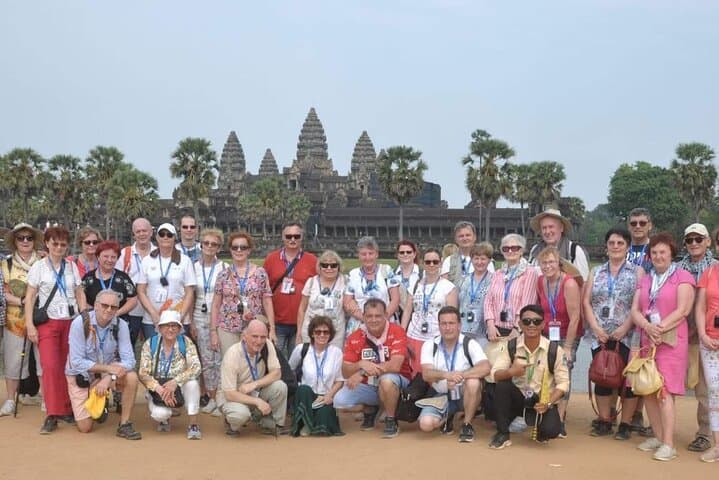
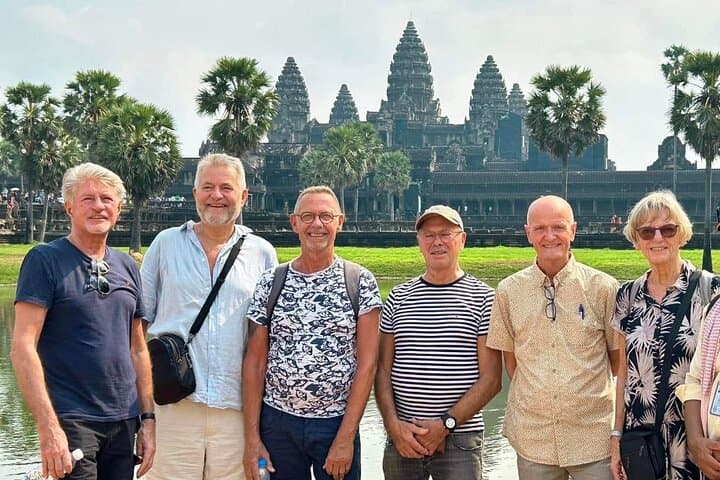
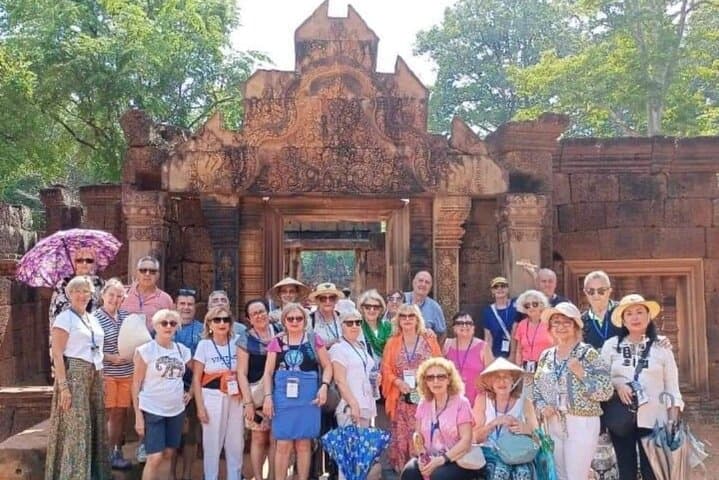
Morning mist lifts off the moat as the first stone silhouettes of Angkor Wat slide into view—limestone and laterite caught between sky and water. On this full-day guided circuit, travelers move from the low-slung causeways of Angkor Wat into the vaulted faces of Bayon, then into Ta Prohm’s root-filled corridors, each site shifting the rhythm of the day.
Morning mist lifts off the moat as the first stone silhouettes of Angkor Wat slide into view—limestone and laterite caught between sky and water. On this full-day guided circuit, travelers move from the low-slung causeways of Angkor Wat into the vaulted faces of Bayon, then into Ta Prohm’s root-filled corridors, each site shifting the rhythm of the day.
The temples here are 12th-century Khmer achievements built with sandstone blocks quarried and ferried by an empire centered on hydraulic agriculture. Angkor Wat began as a Hindu temple later layered with Buddhist imagery; Angkor Thom was planned as a fortified capital, its Bayon towers carved with more than 200 enigmatic faces. Ta Prohm remains half-jungle—fig and silk-cotton trees tug at lintels and force you to slow your pace.
Expect stone staircases, uneven galleries, open courtyards and patches of loose sand. The guide will frame architectural motifs, explain bas-reliefs of daily life and point out restoration efforts where steel and scaffold meet ancient carving.
Practicalities: depart early to avoid heat and crowds; bring a Cambodian temple ticket (Angkor Pass), comfortable walking shoes, sun protection and reusable water. Wear shoulders- and knee-covering clothing for entry. Lunch is typically at a local restaurant; currency and small notes are useful.
Timing matters—sunrise at Angkor Wat is iconic but crowded; late afternoon light softens reliefs and cools stone. Respect guided routes, follow conservation signage and leave no trace in these fragile ruins—the stones tell history, but visitors determine their future.