THE ADVENTURE COLLECTIVE® · Independent discovery and booking for outdoor travel

Spend a full day exploring Angkor’s major temples — Angkor Wat, Bayon and more — then finish with sunset at Pre Rup. Expect guided walks, short drives between sites, and rich historical context delivered by a local guide.
Spend a full day exploring Angkor’s major temples — Angkor Wat, Bayon and more — then finish with sunset at Pre Rup. Expect guided walks, short drives between sites, and rich historical context delivered by a local guide.
You step from the minivan into a humid Cambodian morning and the stone seems to breathe history: moss-streaked bas-reliefs, carved lintels and stairways worn by centuries of feet. The day threads through Angkor’s best-loved sites — Angkor Wat’s soaring galleries, the face towers of Bayon, and the sunset silhouette at Pre Rup — moving from carved myth to open sky.
Verified experiences and guided adventures in the surrounding area.
Operated by Angkor Express Boat · Siem Reap, Siem Reap Province
You step from the minivan into a humid Cambodian morning and the stone seems to breathe history: moss-streaked bas-reliefs, carved lintels and stairways worn by centuries of feet. The day threads through Angkor’s best-loved sites — Angkor Wat’s soaring galleries, the face towers of Bayon, and the sunset silhouette at Pre Rup — moving from carved myth to open sky.
These monuments grew from the Khmer Empire between the 9th and 15th centuries; Angkor Wat itself dates to the 12th century under Suryavarman II. Geologically the park sits on low, seasonally waterlogged plains; sandstone was quarried nearby and set into temple blocks whose joints have shifted with time and wet seasons. Culturally, the complex blends Hindu and Buddhist iconography and remains an active site of reverence for Cambodians.
Practically, expect a long, easy-paced day: short walks at each temple, occasional stair climbs and a few uneven surfaces beneathfoot. Distances between sites are covered by air-conditioned minivan; your guide narrates reliefs and points out quieter corners for photography. Bring an Angkor Pass (purchased at the ticket center), sun protection, and cash for lunch — lunch is not included on most full-day itineraries.
Timing matters: heat peaks midday, while late afternoon light softens the stone and marshes, making Pre Rup a dramatic sunset choice. Move respectfully through active shrines, carry water and a cool towel, and allow pauses — the temples reward calm attention. This is a day that balances strolling with focused moments in spaces that have watched empires rise and recede.
moderate.
10 hours.
Suitable for most fitness levels; requires standing and moderate walking with some stair climbs.
Most full-day tours do not include the Angkor Pass; you must purchase an entry ticket at the official ticket center before touring.
Expect several short walks and stair climbs at each temple, typically 15–60 minutes on foot per site with vehicle transfers between complexes.
Yes — this private tour includes an English-speaking guide, hotel pickup/drop-off, and transport by air-conditioned minivan as listed in the itinerary.
Photography is generally allowed in outdoor and most inner galleries, but avoid flash in some sanctuaries and be respectful during worship; tripods may be restricted at busy sites.
Angkor was the political and religious center of the Khmer Empire from the 9th to 15th centuries; Angkor Wat, built in the 1100s, later transitioned from Hindu to Buddhist use.
Heavy visitation affects fragile stone and local ecosystems; stay on marked paths, avoid touching bas-reliefs, and support local conservation efforts by following guide instructions.
Angkor Express Boat operates guided outdoor trips and adventures with an emphasis on safety, stewardship, and memorable experiences.
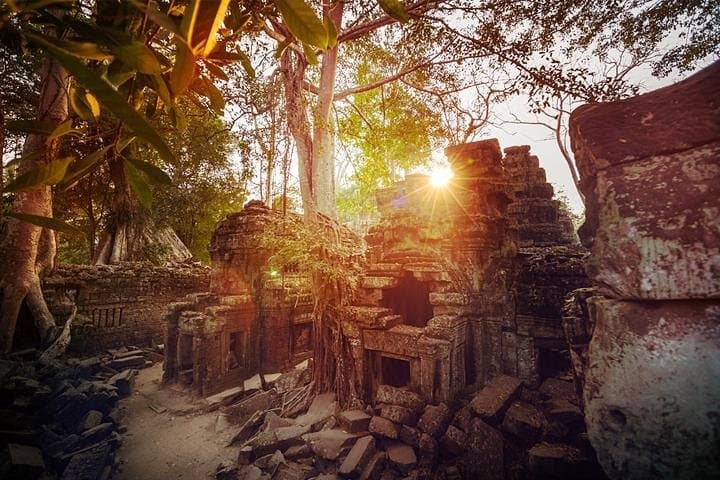
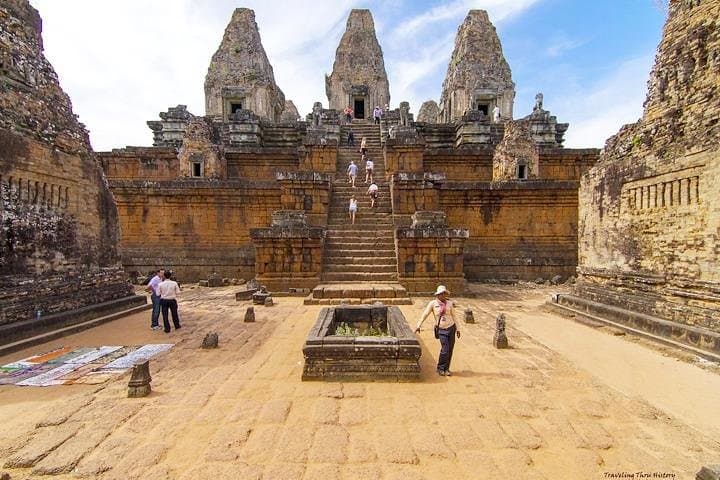
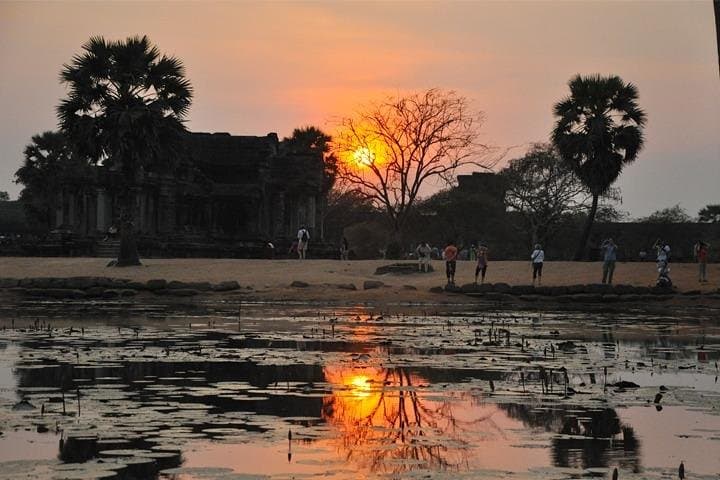
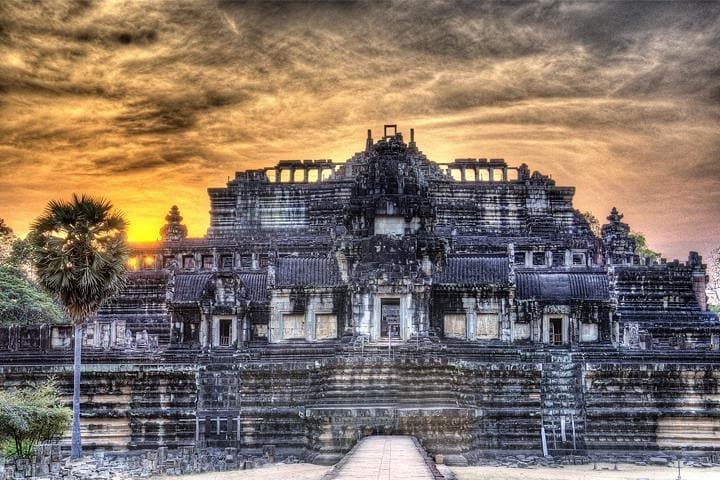
You step from the minivan into a humid Cambodian morning and the stone seems to breathe history: moss-streaked bas-reliefs, carved lintels and stairways worn by centuries of feet. The day threads through Angkor’s best-loved sites — Angkor Wat’s soaring galleries, the face towers of Bayon, and the sunset silhouette at Pre Rup — moving from carved myth to open sky.
You step from the minivan into a humid Cambodian morning and the stone seems to breathe history: moss-streaked bas-reliefs, carved lintels and stairways worn by centuries of feet. The day threads through Angkor’s best-loved sites — Angkor Wat’s soaring galleries, the face towers of Bayon, and the sunset silhouette at Pre Rup — moving from carved myth to open sky.
These monuments grew from the Khmer Empire between the 9th and 15th centuries; Angkor Wat itself dates to the 12th century under Suryavarman II. Geologically the park sits on low, seasonally waterlogged plains; sandstone was quarried nearby and set into temple blocks whose joints have shifted with time and wet seasons. Culturally, the complex blends Hindu and Buddhist iconography and remains an active site of reverence for Cambodians.
Practically, expect a long, easy-paced day: short walks at each temple, occasional stair climbs and a few uneven surfaces beneathfoot. Distances between sites are covered by air-conditioned minivan; your guide narrates reliefs and points out quieter corners for photography. Bring an Angkor Pass (purchased at the ticket center), sun protection, and cash for lunch — lunch is not included on most full-day itineraries.
Timing matters: heat peaks midday, while late afternoon light softens the stone and marshes, making Pre Rup a dramatic sunset choice. Move respectfully through active shrines, carry water and a cool towel, and allow pauses — the temples reward calm attention. This is a day that balances strolling with focused moments in spaces that have watched empires rise and recede.