THE ADVENTURE COLLECTIVE® · Independent discovery and booking for outdoor travel

Explore Angkor’s highlights in a single day: Angkor Wat, Bayon, Ta Prohm and a sunset from Phnom Bakheng. This private, air-conditioned tour pairs expert local commentary with practical comforts for an 8–9 hour cultural immersion.
Explore Angkor’s highlights in a single day: Angkor Wat, Bayon, Ta Prohm and a sunset from Phnom Bakheng. This private, air-conditioned tour pairs expert local commentary with practical comforts for an 8–9 hour cultural immersion.
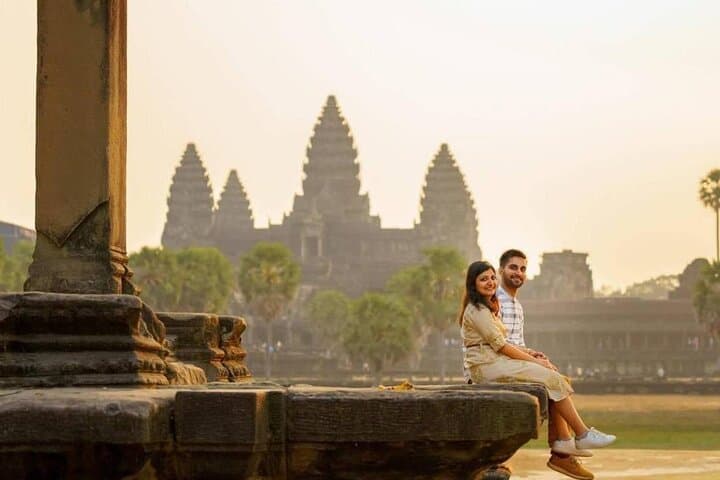
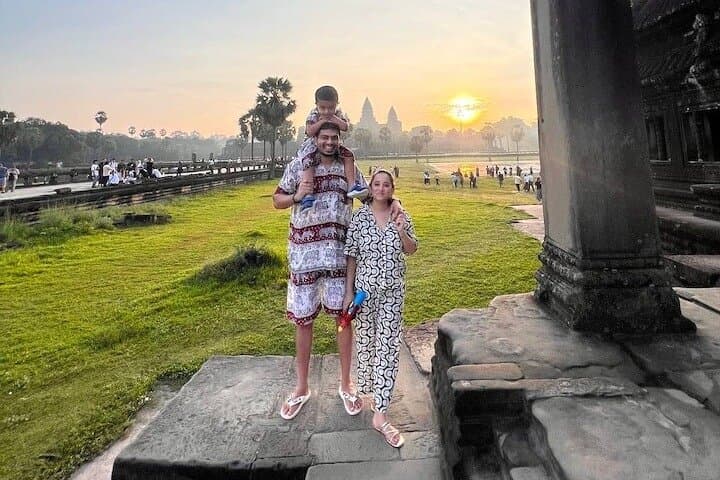
You step out of the cool, air-conditioned vehicle into a courtyard of warm stone and slow-moving shadows—Angkor Wat stretches before you like carved memory. The guide’s voice cuts through the heat with dates and dynasties; your first steps are on centuries-old paths where bas-reliefs still hold the gestures of another era.
Verified experiences and guided adventures in the surrounding area.
Operated by SARUS Co., Ltd · Siem Reap, Siem Reap Province
You step out of the cool, air-conditioned vehicle into a courtyard of warm stone and slow-moving shadows—Angkor Wat stretches before you like carved memory. The guide’s voice cuts through the heat with dates and dynasties; your first steps are on centuries-old paths where bas-reliefs still hold the gestures of another era.
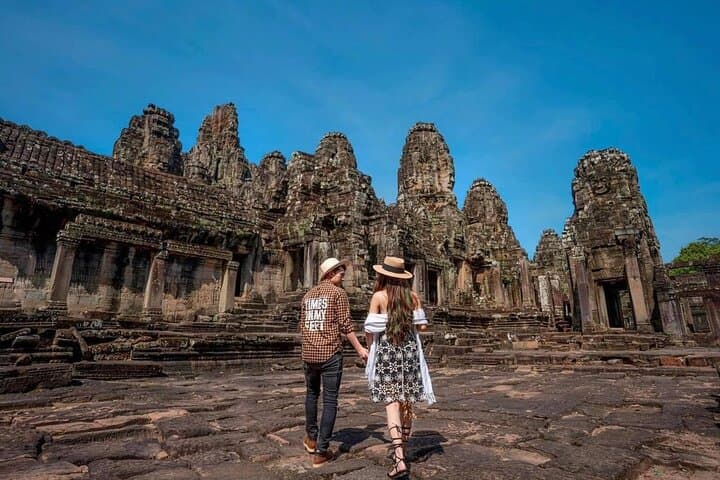
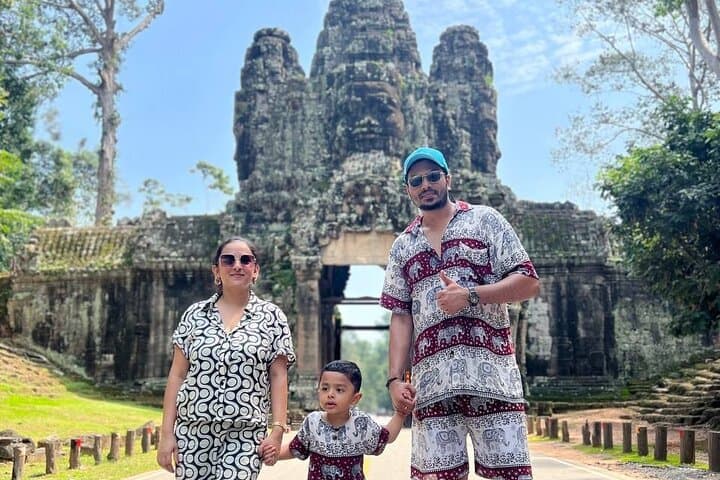
The route moves from the scale of Angkor Wat—built in the early 12th century as a Hindu-Buddhist state temple—into the urban heart of Angkor Thom, where the Bayon’s stone faces watch from the center of a lost capital. Ta Prohm arrives later in the day, a temple in active argument with roots and fig trees: Hollywood’s Tomb Raider brought it fame, but the real drama is the slow work of tree and temple reshaping one another. Phnom Bakheng’s hill is a final, cinematic perch for sunset, offering a wide sweep over temple spires and jungle canopy.
Geology here is low, stable sandstone beds; the Khmer quarried and moved it with an economy that still impresses. Culturally, the site marks the height of the Angkorian empire under Jayavarman VII and the shift to Mahayana Buddhism.
Practical beat: expect 8–9 hours with moderate walking on uneven stone and packed earth. Bring sturdy shoes, sun protection and water—the tour provides bottles and cold towels—but wear respectful clothing for temples (shoulders and knees covered). Sunrise and sunset vantage points fill quickly; timing and local guide knowledge matter. If you want quieter angles, ask your guide for side courtyards and less-traveled galleries. This is a full-day immersion: history, landscape and the tactile sense of time carved in stone.
easy.
8–9 hours.
Suitable for most fitness levels; involves several hours of standing and walking on uneven stone and steps
Angkor admission is not included in this tour price—you must purchase the Angkor pass separately at the entrance or via approved vendors beforehand.
The tour listing notes wheelchair accessibility for vehicle transfer; many temple interiors and stairways are uneven and may not be fully accessible beyond outer courtyards.
Phnom Bakheng can be very busy at sunset—arrive early and be prepared for limited seating and uphill steps; your guide can recommend alternate sunset viewpoints if preferred.
Restrooms and basic food stalls are available near major temples; the tour includes water and cold towels and typically has stops for restroom breaks and lunch (not always included).
Angkor was the center of the Khmer Empire (9th–15th centuries); many monuments date to Jayavarman VII’s reign and show a shift to Mahayana Buddhist iconography.
Visitor pressure is a concern—follow marked paths, avoid touching bas-reliefs and support guides who practice conservation-minded tourism.
SARUS Co., Ltd operates guided outdoor trips and adventures with an emphasis on safety, stewardship, and memorable experiences.
You step out of the cool, air-conditioned vehicle into a courtyard of warm stone and slow-moving shadows—Angkor Wat stretches before you like carved memory. The guide’s voice cuts through the heat with dates and dynasties; your first steps are on centuries-old paths where bas-reliefs still hold the gestures of another era.
You step out of the cool, air-conditioned vehicle into a courtyard of warm stone and slow-moving shadows—Angkor Wat stretches before you like carved memory. The guide’s voice cuts through the heat with dates and dynasties; your first steps are on centuries-old paths where bas-reliefs still hold the gestures of another era.
The route moves from the scale of Angkor Wat—built in the early 12th century as a Hindu-Buddhist state temple—into the urban heart of Angkor Thom, where the Bayon’s stone faces watch from the center of a lost capital. Ta Prohm arrives later in the day, a temple in active argument with roots and fig trees: Hollywood’s Tomb Raider brought it fame, but the real drama is the slow work of tree and temple reshaping one another. Phnom Bakheng’s hill is a final, cinematic perch for sunset, offering a wide sweep over temple spires and jungle canopy.
Geology here is low, stable sandstone beds; the Khmer quarried and moved it with an economy that still impresses. Culturally, the site marks the height of the Angkorian empire under Jayavarman VII and the shift to Mahayana Buddhism.
Practical beat: expect 8–9 hours with moderate walking on uneven stone and packed earth. Bring sturdy shoes, sun protection and water—the tour provides bottles and cold towels—but wear respectful clothing for temples (shoulders and knees covered). Sunrise and sunset vantage points fill quickly; timing and local guide knowledge matter. If you want quieter angles, ask your guide for side courtyards and less-traveled galleries. This is a full-day immersion: history, landscape and the tactile sense of time carved in stone.