THE ADVENTURE COLLECTIVE® · Independent discovery and booking for outdoor travel

Explore Angkor Wat, Angkor Thom and Ta Prohm in a focused full-day shared tour timed for sunset. Learn Khmer history and temple architecture while walking on uneven sandstone and laterite—ideal for travelers who want a high-value cultural day with practical guidance.
Explore Angkor Wat, Angkor Thom and Ta Prohm in a focused full-day shared tour timed for sunset. Learn Khmer history and temple architecture while walking on uneven sandstone and laterite—ideal for travelers who want a high-value cultural day with practical guidance.
The day begins before the sun has fully warmed the cracked laterite and sandstone of Angkor—cool air and the sound of distant bicycles set the pace as a small convoy slips through the park gates. Walkways lead past reflection pools where early light sharpens bas-reliefs; the stone seems to hold its own history like a patient witness.
Verified experiences and guided adventures in the surrounding area.
Operated by Private Tour Guide-Cambodia · Siem Reap, Siem Reap Province
The day begins before the sun has fully warmed the cracked laterite and sandstone of Angkor—cool air and the sound of distant bicycles set the pace as a small convoy slips through the park gates. Walkways lead past reflection pools where early light sharpens bas-reliefs; the stone seems to hold its own history like a patient witness.
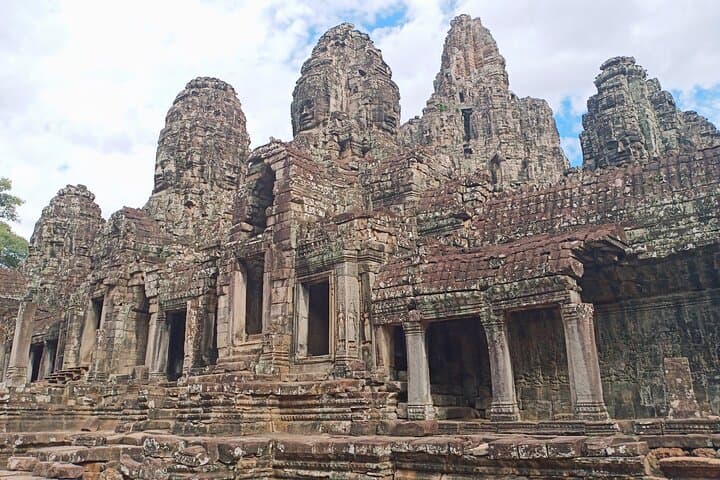
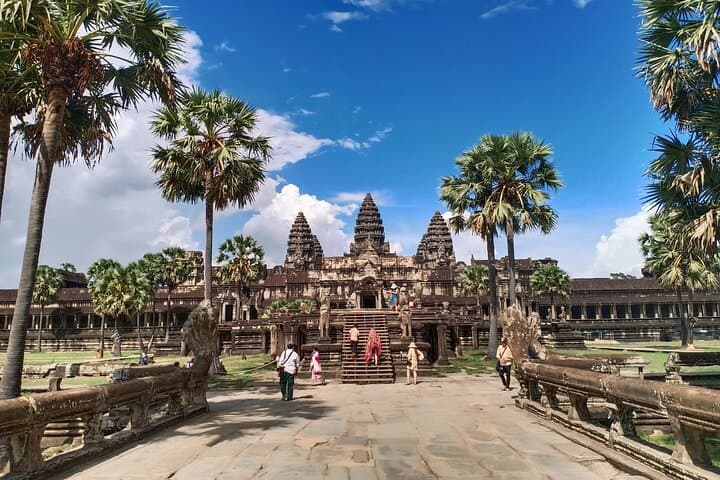
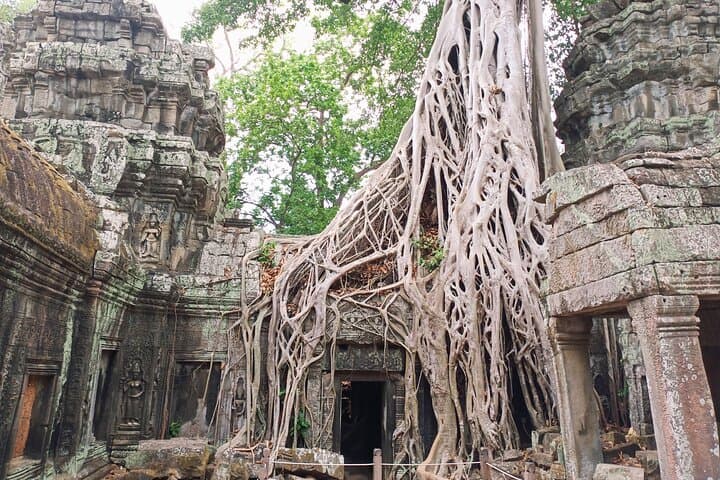
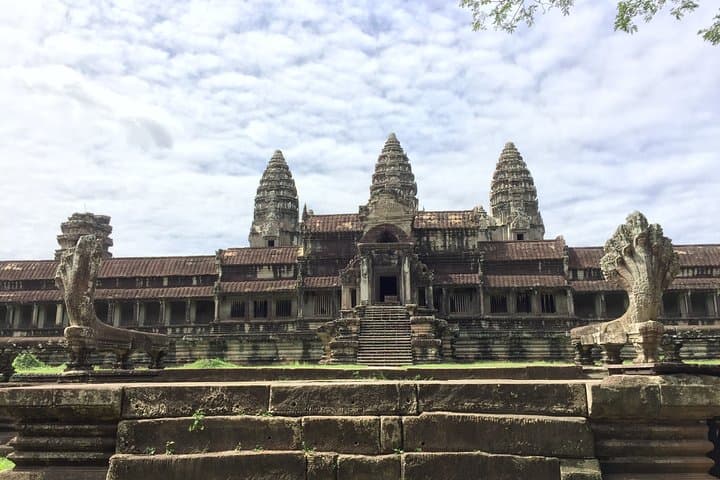
This full-day shared tour threads three of the park’s signature sites. Angkor Wat, raised by King Suryavarman II in the early 12th century, presents its carved bas-reliefs and rows of Apsara dancers across polished galleries. Angkor Thom’s laterite walls (roughly 3x3 km) and the Bayon’s 216 carved faces offer collision points of art, ritual and royal power; the Baphuon and Terrace of the Elephants map courtly life and processional space. Ta Prohm shows another story—Tetrameles roots threading through blocks, trees practically daring the stones to hold on.
Expect uneven footing, steep temple steps, and shifting light that makes for great photos but also demands steady pacing. Guides typically cover context on Khmer cosmology, colonial-era discoveries and the postwar restoration that rebuilt temples like the Baphuon.
Practical edge: start early to avoid heat and crowds, wear sun- and mosquito-protective clothing, and respect temple dress codes (shoulders and knees covered). Carry a refillable bottle—free drinking water is often supplied—and plan for 4–7 hours on foot across packed earth and carved stone. For travelers who want history with a manageable hike, this circuit delivers both spectacle and real-world logistics in equal measure.
moderate.
4–7 hours.
Moderate fitness—comfortable walking for several hours, able to ascend steep temple steps.
No. The Angkor Archaeological Park pass is separate from the tour price and must be purchased on arrival or in advance; guides usually help with directions to the ticket counters.
Lunch may not be included—confirm at booking. The itinerary mentions a lunch break but many shared tours stop at a local restaurant where travelers can choose and pay for their meal.
Some towers (like Bakan) have age or safety restrictions—children under 12 may be restricted and steep, narrow steps can be hazardous; check with the guide on-site.
This tour is listed as easy physically but is not recommended for travelers with spinal, cardiovascular, or pregnancy concerns due to uneven ground and long day schedules.
Angkor was the political and religious heart of the Khmer empire from the 9th to 15th centuries; Angkor Wat was dedicated to Vishnu and later became a Buddhist site.
The park balances tourism and conservation—stay on marked paths, avoid climbing fragile carvings, and use local guides who support site protection and community programs.
Private Tour Guide-Cambodia operates guided outdoor trips and adventures with an emphasis on safety, stewardship, and memorable experiences.
The day begins before the sun has fully warmed the cracked laterite and sandstone of Angkor—cool air and the sound of distant bicycles set the pace as a small convoy slips through the park gates. Walkways lead past reflection pools where early light sharpens bas-reliefs; the stone seems to hold its own history like a patient witness.
The day begins before the sun has fully warmed the cracked laterite and sandstone of Angkor—cool air and the sound of distant bicycles set the pace as a small convoy slips through the park gates. Walkways lead past reflection pools where early light sharpens bas-reliefs; the stone seems to hold its own history like a patient witness.
This full-day shared tour threads three of the park’s signature sites. Angkor Wat, raised by King Suryavarman II in the early 12th century, presents its carved bas-reliefs and rows of Apsara dancers across polished galleries. Angkor Thom’s laterite walls (roughly 3x3 km) and the Bayon’s 216 carved faces offer collision points of art, ritual and royal power; the Baphuon and Terrace of the Elephants map courtly life and processional space. Ta Prohm shows another story—Tetrameles roots threading through blocks, trees practically daring the stones to hold on.
Expect uneven footing, steep temple steps, and shifting light that makes for great photos but also demands steady pacing. Guides typically cover context on Khmer cosmology, colonial-era discoveries and the postwar restoration that rebuilt temples like the Baphuon.
Practical edge: start early to avoid heat and crowds, wear sun- and mosquito-protective clothing, and respect temple dress codes (shoulders and knees covered). Carry a refillable bottle—free drinking water is often supplied—and plan for 4–7 hours on foot across packed earth and carved stone. For travelers who want history with a manageable hike, this circuit delivers both spectacle and real-world logistics in equal measure.