THE ADVENTURE COLLECTIVE® · Independent discovery and booking for outdoor travel

Move through centuries in a single day on a private full-day tour of Angkor—Bayon’s carved faces, the root-wrapped halls of Ta Prohm, and the vast bas-reliefs of Angkor Wat—finished with sunset from Bakheng. Practical tips on timing, dress, and pacing help you make the most of eight to ten hours in this extraordinary archaeological landscape.
Move through centuries in a single day on a private full-day tour of Angkor—Bayon’s carved faces, the root-wrapped halls of Ta Prohm, and the vast bas-reliefs of Angkor Wat—finished with sunset from Bakheng. Practical tips on timing, dress, and pacing help you make the most of eight to ten hours in this extraordinary archaeological landscape.
You step out of the minivan into humid air that tastes of wet stone and earth; giant sandstone faces peer down from Bayon as the avenue of trees guides you toward ruins that still hold grit from centuries of empire. The day moves in chapters—Angkor Thom’s gate, the quietly overgrown courtyards of Ta Prohm, the slow procession through bas-reliefs at Angkor Wat—and each site shifts the light and temperature until the sun leans west for a final climb at Bakheng.
Verified experiences and guided adventures in the surrounding area.
Operated by Serva Travel · Siem Reap, Siem Reap Province
You step out of the minivan into humid air that tastes of wet stone and earth; giant sandstone faces peer down from Bayon as the avenue of trees guides you toward ruins that still hold grit from centuries of empire. The day moves in chapters—Angkor Thom’s gate, the quietly overgrown courtyards of Ta Prohm, the slow procession through bas-reliefs at Angkor Wat—and each site shifts the light and temperature until the sun leans west for a final climb at Bakheng.
Angkor was the heart of the Khmer Empire between the 9th and 15th centuries. Angkor Wat, built under King Suryavarman II in the 12th century, is both a religious complex and a map in stone—carved galleries recount myth, war, and everyday life. Geologically, the sandstone blocks were quarried and transported across a landscape of ancient reservoirs; today the surrounding moats and ponds feed birds and reclaiming roots. Local culture remains steeped in living ritual—monks, markets, and restoration projects coexist with tourism.
Practical guidance: expect 8–10 hours of mostly flat walking on packed dirt and stone; wear sturdy, broken-in shoes and bring at least 2 liters of water. Dress respectfully—covered shoulders and knees—especially at active temples. Sunrise is busiest at Angkor Wat; this full-day route times visits to avoid the thickest crowds but still packs long stretches between stops. Insect repellent and a light rain shell are smart during wet months. If you opt to climb Phnom Bakheng for sunset, arrive early—access may be limited for crowd control. Your guide provides historical context and logistics; keep a small tip for temple caretakers and support local conservation fees when possible.
easy.
8–10 hours.
Suitable for most fitness levels; you should be comfortable walking several miles on flat but uneven surfaces over a long day.
Yes—Angkor Park tickets are required for entry; full-day and multi-day passes are available and your operator will usually advise on purchase locations.
Please note
Sunset from Phnom Bakheng is popular and can be restricted when crowds reach capacity; if included, arrive early or choose a nearby viewpoint as a backup.
Expect several kilometers of walking spread across the day with mostly flat terrain, though surfaces are often uneven and involve steps at temple entrances.
Angkor was the political and religious center of the Khmer Empire; Angkor Wat was constructed in the 12th century as a symbolic mountain and cosmological monument under King Suryavarman II.
Visitor pressure and vegetation growth threaten fragile masonry; follow path restrictions, avoid touching carvings, and support entrance fees and local conservation initiatives.
Serva Travel operates guided outdoor trips and adventures with an emphasis on safety, stewardship, and memorable experiences.
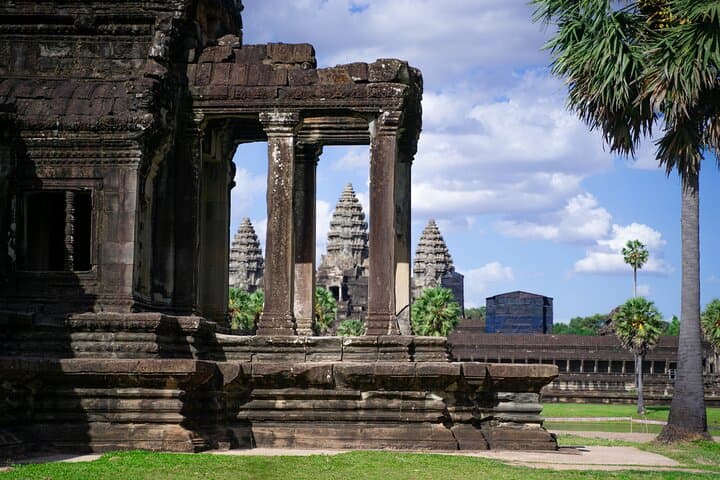
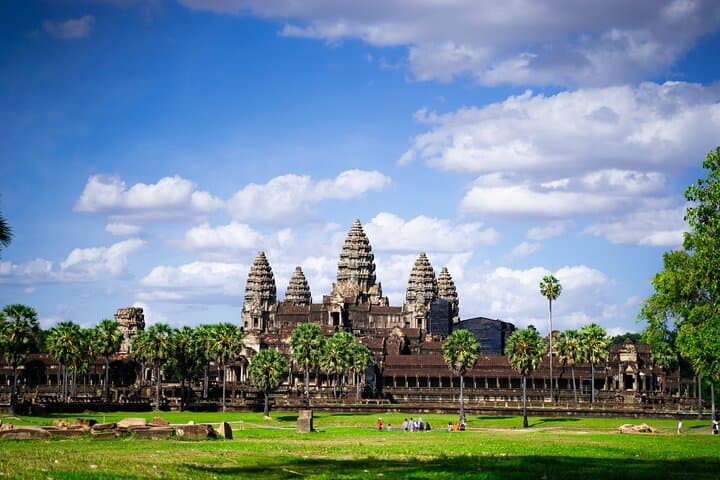

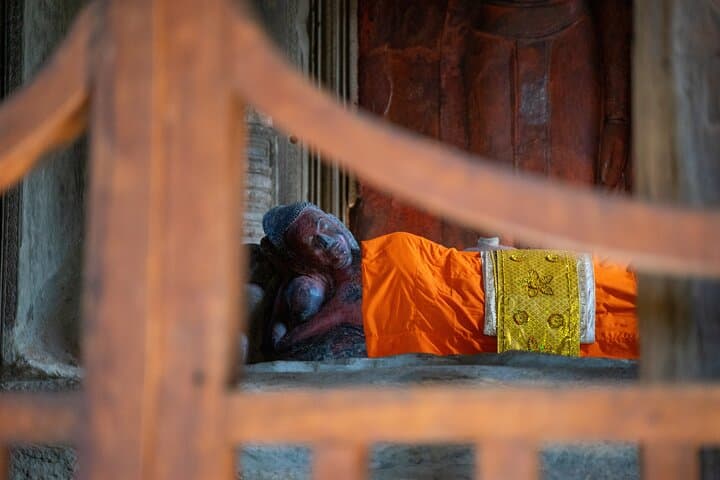
You step out of the minivan into humid air that tastes of wet stone and earth; giant sandstone faces peer down from Bayon as the avenue of trees guides you toward ruins that still hold grit from centuries of empire. The day moves in chapters—Angkor Thom’s gate, the quietly overgrown courtyards of Ta Prohm, the slow procession through bas-reliefs at Angkor Wat—and each site shifts the light and temperature until the sun leans west for a final climb at Bakheng.
You step out of the minivan into humid air that tastes of wet stone and earth; giant sandstone faces peer down from Bayon as the avenue of trees guides you toward ruins that still hold grit from centuries of empire. The day moves in chapters—Angkor Thom’s gate, the quietly overgrown courtyards of Ta Prohm, the slow procession through bas-reliefs at Angkor Wat—and each site shifts the light and temperature until the sun leans west for a final climb at Bakheng.
Angkor was the heart of the Khmer Empire between the 9th and 15th centuries. Angkor Wat, built under King Suryavarman II in the 12th century, is both a religious complex and a map in stone—carved galleries recount myth, war, and everyday life. Geologically, the sandstone blocks were quarried and transported across a landscape of ancient reservoirs; today the surrounding moats and ponds feed birds and reclaiming roots. Local culture remains steeped in living ritual—monks, markets, and restoration projects coexist with tourism.
Practical guidance: expect 8–10 hours of mostly flat walking on packed dirt and stone; wear sturdy, broken-in shoes and bring at least 2 liters of water. Dress respectfully—covered shoulders and knees—especially at active temples. Sunrise is busiest at Angkor Wat; this full-day route times visits to avoid the thickest crowds but still packs long stretches between stops. Insect repellent and a light rain shell are smart during wet months. If you opt to climb Phnom Bakheng for sunset, arrive early—access may be limited for crowd control. Your guide provides historical context and logistics; keep a small tip for temple caretakers and support local conservation fees when possible.