THE ADVENTURE COLLECTIVE® · Independent discovery and booking for outdoor travel

Spend a full day by tuk-tuk exploring Angkor’s major temples—Bayon, Ta Prohm and Angkor Wat—then watch sunset from Bakheng or Pre Rup. This tour pairs an off-the-beaten-path village walk with the region’s monumental history and accessible transport.
Spend a full day by tuk-tuk exploring Angkor’s major temples—Bayon, Ta Prohm and Angkor Wat—then watch sunset from Bakheng or Pre Rup. This tour pairs an off-the-beaten-path village walk with the region’s monumental history and accessible transport.
You step onto a shaded tuk-tuk as the morning heat lifts off Siem Reap, the narrow chassis humming toward the temple horizon. The vehicle threads rice paddies and village lanes; morning light picks out crumbling laterite and carved lintels as your guide outlines the day.
Verified experiences and guided adventures in the surrounding area.
Operated by Journey Cambodia · Siem Reap, Siem Reap Province
You step onto a shaded tuk-tuk as the morning heat lifts off Siem Reap, the narrow chassis humming toward the temple horizon. The vehicle threads rice paddies and village lanes; morning light picks out crumbling laterite and carved lintels as your guide outlines the day.
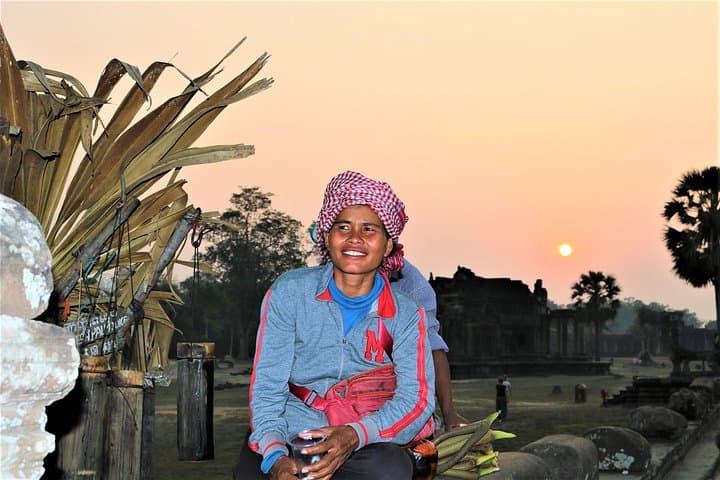
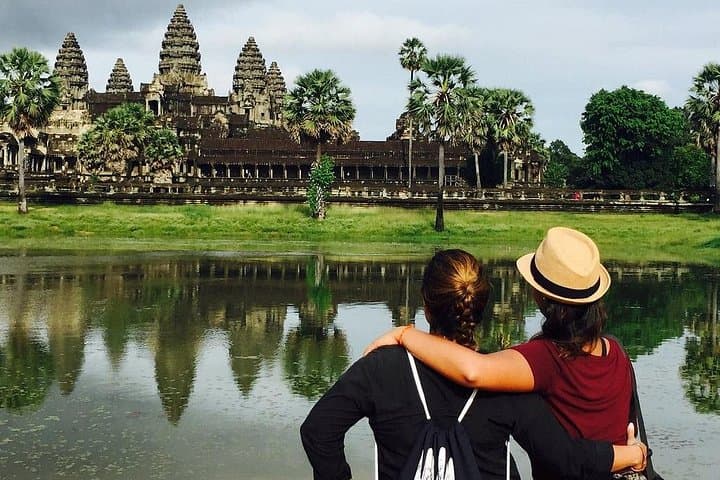
Angkor’s temples record roughly six centuries of Khmer statecraft (802–1432). Angkor Wat, raised in the 12th century, was conceived as a stone model of Mount Meru; Bayon’s carved faces speak to Jayavarman VII’s Mahayana patronage. Geologically the site sits on floodplain silt above sandstone bedrock, which explains the temple builders’ use of sandstone blocks and laterite cores. Culturally, the complex remains a living place—monks, vendors, and local farmers intersect with centuries-old stonework.
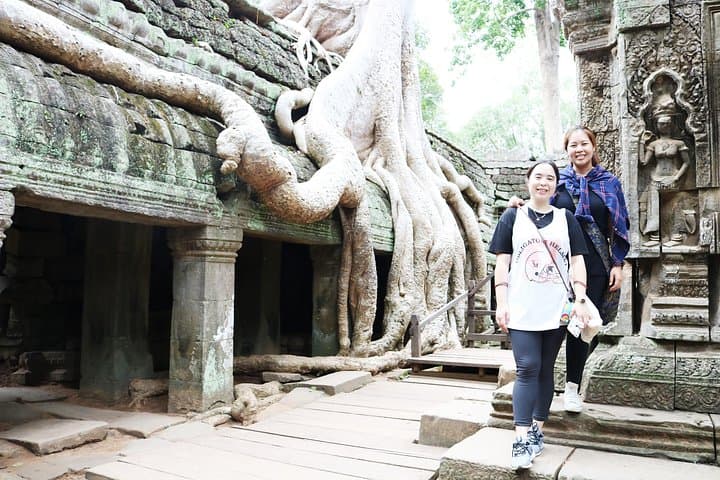
Your itinerary moves from village walk to Bayon, Ta Prohm’s tree-entwined corridors, and the eastern approach to Angkor Wat, ending at Bakheng or Pre Rup for sunset. Expect uneven flagstones, short walks of 1–3 km between highlights, and stairways with steep treads. The tuk-tuk keeps travel efficient and gives access off the main circuit.
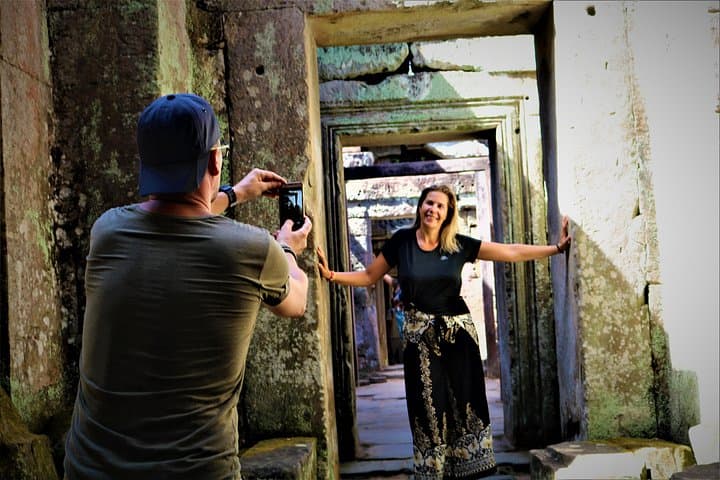
Practical guidance: bring a refillable water bottle, sun protection, and a scarf or lightweight sleeves for temple dress codes. Wear sturdy, closed-toe shoes for rooty paths and sandstone steps. Plan for a 9-hour day with breaks—lunch is usually at a local restaurant (own expense). Follow your guide’s instructions at fragile carvings and early/late light for the best photography. With simple preparation, this full-day loop delivers both the drama of major monuments and an intimate glimpse of contemporary Cambodian life.
easy.
9 hours.
Suitable for most fitness levels; involves multiple short walks (1–3 km segments) and standing while exploring temple chambers
Yes—entry to Angkor Archaeological Park requires a paid pass (available 1, 3, or 7 days); this tour does not include the park pass fee.
Tuk-tuks are open-sided and ventilated, good for short transfers; expect basic seating and occasional bumps—breaks are included between sites.
Lunch is at a local Khmer restaurant (own expense); vendors near main temples offer snacks but limited full meal options inside the park.
Most major temples have uneven stone and steps; accessibility is limited—contact your operator ahead to arrange alternatives or minimized walking routes.
Angkor was the seat of the Khmer Empire from the 9th to 15th centuries; Angkor Wat was built in the 12th century by Suryavarman II as a state temple and mausoleum.
Visitor pressure has stressed painted reliefs and sandstone; follow marked paths, avoid touching carvings, and hire licensed guides to support local conservation efforts.
Journey Cambodia operates guided outdoor trips and adventures with an emphasis on safety, stewardship, and memorable experiences.
You step onto a shaded tuk-tuk as the morning heat lifts off Siem Reap, the narrow chassis humming toward the temple horizon. The vehicle threads rice paddies and village lanes; morning light picks out crumbling laterite and carved lintels as your guide outlines the day.
You step onto a shaded tuk-tuk as the morning heat lifts off Siem Reap, the narrow chassis humming toward the temple horizon. The vehicle threads rice paddies and village lanes; morning light picks out crumbling laterite and carved lintels as your guide outlines the day.
Angkor’s temples record roughly six centuries of Khmer statecraft (802–1432). Angkor Wat, raised in the 12th century, was conceived as a stone model of Mount Meru; Bayon’s carved faces speak to Jayavarman VII’s Mahayana patronage. Geologically the site sits on floodplain silt above sandstone bedrock, which explains the temple builders’ use of sandstone blocks and laterite cores. Culturally, the complex remains a living place—monks, vendors, and local farmers intersect with centuries-old stonework.
Your itinerary moves from village walk to Bayon, Ta Prohm’s tree-entwined corridors, and the eastern approach to Angkor Wat, ending at Bakheng or Pre Rup for sunset. Expect uneven flagstones, short walks of 1–3 km between highlights, and stairways with steep treads. The tuk-tuk keeps travel efficient and gives access off the main circuit.
Practical guidance: bring a refillable water bottle, sun protection, and a scarf or lightweight sleeves for temple dress codes. Wear sturdy, closed-toe shoes for rooty paths and sandstone steps. Plan for a 9-hour day with breaks—lunch is usually at a local restaurant (own expense). Follow your guide’s instructions at fragile carvings and early/late light for the best photography. With simple preparation, this full-day loop delivers both the drama of major monuments and an intimate glimpse of contemporary Cambodian life.