THE ADVENTURE COLLECTIVE® · Independent discovery and booking for outdoor travel

Spend a full day exploring Angkor’s most iconic temples with an English-speaking guide and lunch included. From the carved galleries of Angkor Wat to Ta Prohm’s tree-wrapped ruins, this small-group tour packs history and local insight into an efficient eight-hour circuit.
Spend a full day exploring Angkor’s most iconic temples with an English-speaking guide and lunch included. From the carved galleries of Angkor Wat to Ta Prohm’s tree-wrapped ruins, this small-group tour packs history and local insight into an efficient eight-hour circuit.
You step out of an air-conditioned minivan into the heat and the low-slung horizon of Angkor Archaeological Park, flanked by stone causeways and lotus-filled moats. Morning light skims the bas-reliefs of Angkor Wat, where the carved narratives seem to shift as you circle the galleries; later the jungle leans its roots into Ta Prohm, its strangler figs tugging at lintels as if reminding the ruins that time moves in both directions.
Verified experiences and guided adventures in the surrounding area.
Operated by Tour East Cambodia · Siem Reap, Siem Reap Province
You step out of an air-conditioned minivan into the heat and the low-slung horizon of Angkor Archaeological Park, flanked by stone causeways and lotus-filled moats. Morning light skims the bas-reliefs of Angkor Wat, where the carved narratives seem to shift as you circle the galleries; later the jungle leans its roots into Ta Prohm, its strangler figs tugging at lintels as if reminding the ruins that time moves in both directions.
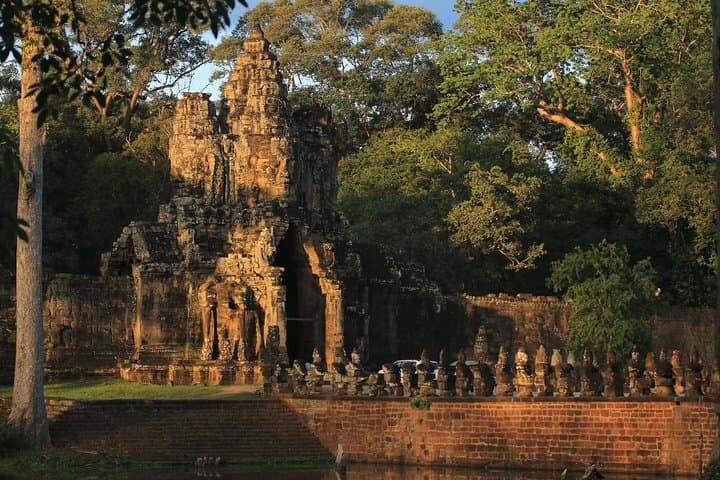
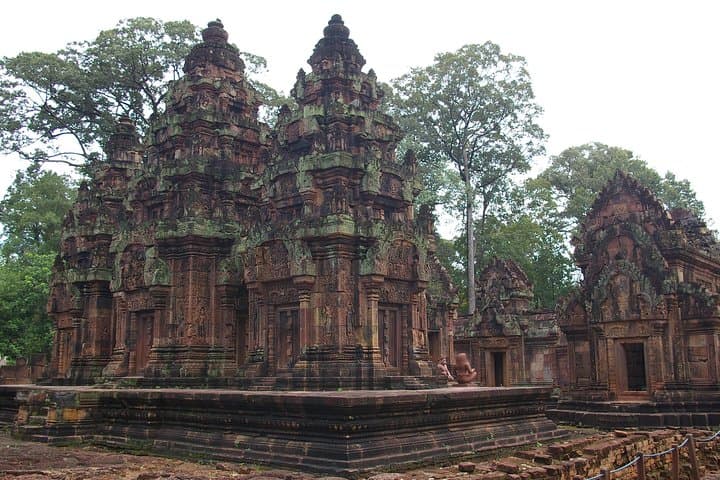
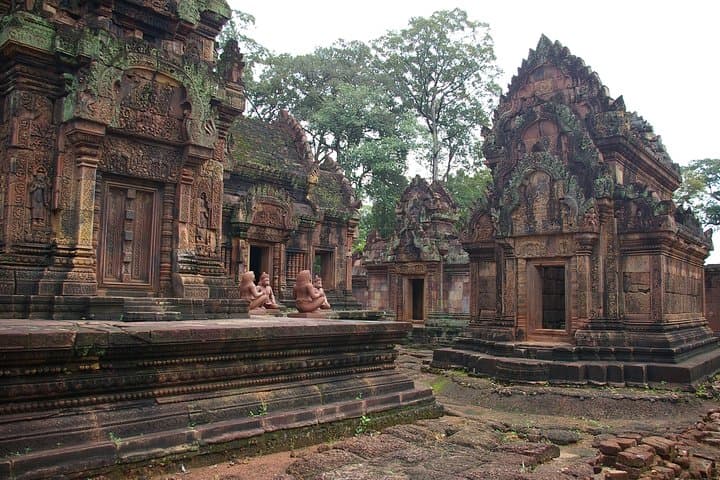
The temples you’ll visit span the Khmer Empire’s classic age: Angkor Wat’s 12th-century devotion to Vishnu built in sandstone and laterite; Banteay Srei’s 10th-century red sandstone finesse; Bayon’s late-12th-century towers with serene carved faces that watch the old capital of Angkor Thom. Geologically the stones tell a coastal story—quarried, ferried and raised into monuments that survived monsoon seasons and cycles of reforestation.
Culturally, the park remains alive: monks pass in saffron, local food markets hum near Siem Reap, and guides translate inscription fragments into civic memory. Expect a paced day: photo stops, a guided walkthrough of bas-reliefs, a restaurant lunch break, and time to climb Baphuon or linger among Ta Prohm’s roots.
Practical guidance: wear breathable, respectful clothing that covers shoulders/knees, sturdy walking shoes for uneven temple floors, sunscreen and insect repellent, and carry water—the tour provides two bottles but refill options are sparse inside the park. Timing matters: mornings are cooler and less crowded; late afternoon light softens the carvings. Bring a small daypack, and be prepared to follow your guide’s route—getting the most from an expert’s local context makes the full day feel efficient rather than rushed.
easy.
8 hours.
Suitable for all fitness levels; requires short walks on uneven ground and some stairs.
This tour’s description notes admission is not included; purchase an Angkor Pass separately at park entry before the tour if required.
Yes—pick-up and drop-off are included by air-conditioned shared vehicle, with wheelchair-accessible options noted.
Special dietary requests should be sent to the operator prior to departure to ensure the restaurant can accommodate them.
The tour is stroller accessible for short distances, but many temple interiors have steps and uneven ground; infants must sit on laps per provider policy.
Angkor was the capital of the Khmer Empire (9th–15th centuries); the park’s temples reflect Hindu and later Buddhist devotion, royal power, and large-scale hydraulic engineering.
Visitor impact is managed by the APSARA Authority and local guides; follow pathways, avoid touching carvings, and use refill stations to minimize plastic waste.
Tour East Cambodia operates guided outdoor trips and adventures with an emphasis on safety, stewardship, and memorable experiences.
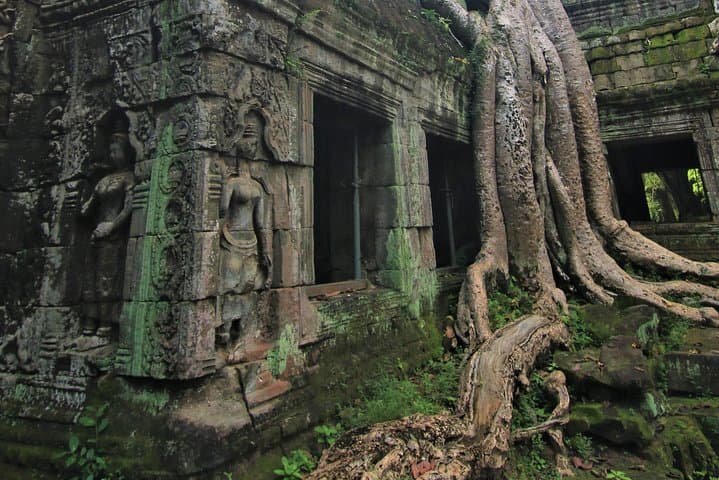
You step out of an air-conditioned minivan into the heat and the low-slung horizon of Angkor Archaeological Park, flanked by stone causeways and lotus-filled moats. Morning light skims the bas-reliefs of Angkor Wat, where the carved narratives seem to shift as you circle the galleries; later the jungle leans its roots into Ta Prohm, its strangler figs tugging at lintels as if reminding the ruins that time moves in both directions.
You step out of an air-conditioned minivan into the heat and the low-slung horizon of Angkor Archaeological Park, flanked by stone causeways and lotus-filled moats. Morning light skims the bas-reliefs of Angkor Wat, where the carved narratives seem to shift as you circle the galleries; later the jungle leans its roots into Ta Prohm, its strangler figs tugging at lintels as if reminding the ruins that time moves in both directions.
The temples you’ll visit span the Khmer Empire’s classic age: Angkor Wat’s 12th-century devotion to Vishnu built in sandstone and laterite; Banteay Srei’s 10th-century red sandstone finesse; Bayon’s late-12th-century towers with serene carved faces that watch the old capital of Angkor Thom. Geologically the stones tell a coastal story—quarried, ferried and raised into monuments that survived monsoon seasons and cycles of reforestation.
Culturally, the park remains alive: monks pass in saffron, local food markets hum near Siem Reap, and guides translate inscription fragments into civic memory. Expect a paced day: photo stops, a guided walkthrough of bas-reliefs, a restaurant lunch break, and time to climb Baphuon or linger among Ta Prohm’s roots.
Practical guidance: wear breathable, respectful clothing that covers shoulders/knees, sturdy walking shoes for uneven temple floors, sunscreen and insect repellent, and carry water—the tour provides two bottles but refill options are sparse inside the park. Timing matters: mornings are cooler and less crowded; late afternoon light softens the carvings. Bring a small daypack, and be prepared to follow your guide’s route—getting the most from an expert’s local context makes the full day feel efficient rather than rushed.