THE ADVENTURE COLLECTIVE® · Independent discovery and booking for outdoor travel

Walk among the stone faces of Angkor Thom, feel Ta Prohm’s roots press against temple walls, and spend a full day exploring Angkor Wat with a private guide. This private full‑day tour covers Bayon, Ta Prohm and Angkor Wat with transport, guide and lunch included.
Walk among the stone faces of Angkor Thom, feel Ta Prohm’s roots press against temple walls, and spend a full day exploring Angkor Wat with a private guide. This private full‑day tour covers Bayon, Ta Prohm and Angkor Wat with transport, guide and lunch included.
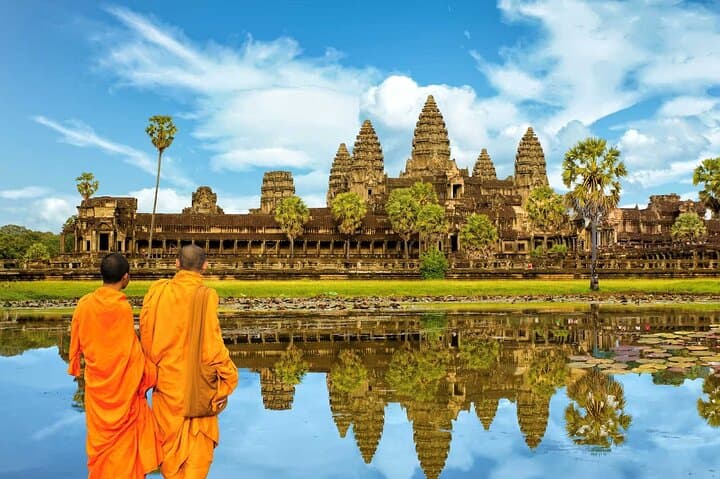
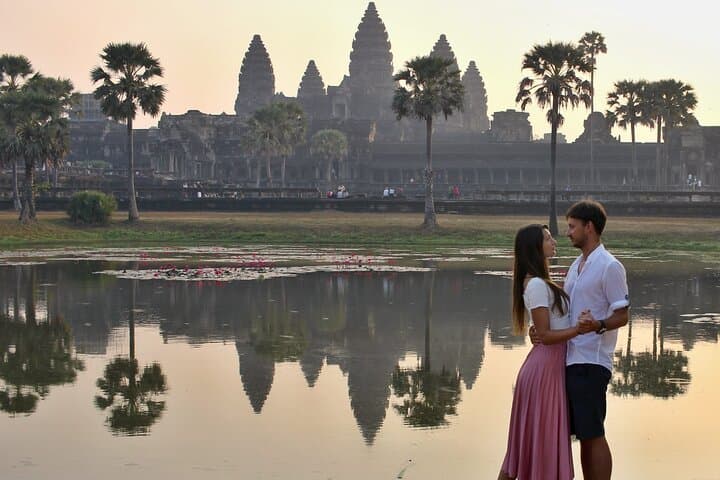
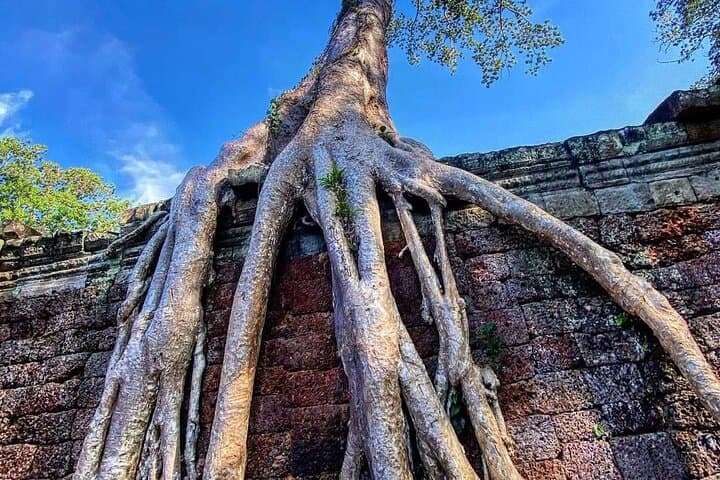
A pre-dawn tuk‑tuk hums toward the moat, the rising sun throwing long shadows across the causeway to Angkor Wat. Stone faces watch from terraces; the air fills with insect calls and the distant flap of bird wings. By midmorning the temple courtyards glow warm, and the jungle breathes against Ta Prohm’s roots as they press and pry at sandy sandstone blocks.
Verified experiences and guided adventures in the surrounding area.
Operated by Angkor Focus Travel · Siem Reap, Siem Reap Province
A pre-dawn tuk‑tuk hums toward the moat, the rising sun throwing long shadows across the causeway to Angkor Wat. Stone faces watch from terraces; the air fills with insect calls and the distant flap of bird wings. By midmorning the temple courtyards glow warm, and the jungle breathes against Ta Prohm’s roots as they press and pry at sandy sandstone blocks.
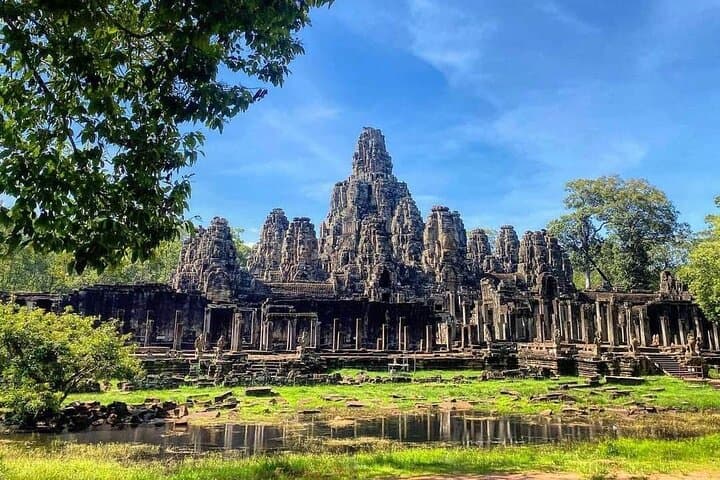
This full‑day discovery follows the arc of the Khmer Empire — Angkor Thom’s 12th‑century plan, the many-faced Bayon, Ta Prohm’s iconic tree‑root ruins, and finally Angkor Wat, built as a Vishnu temple before evolving into a Buddhist complex. Geologically, the monuments are crafted from sandstone and laterite laid over man‑made mounds and ringed by moats that regulate water and reflect the temples’ silhouettes.
Local culture remains threaded through the experience: monks in saffron robes at first light, vendors selling sticky rice, and guides who translate both the bas‑reliefs and contemporary village life. Note practical limits — Phnom Bakheng caps visitors for sunset — and expect heat, humidity, and uneven stone underfoot.
Plan for a 6–7 hour day: start early to avoid crowds, carry drinking water and sun protection, and wear clothing that covers shoulders and knees out of respect. The tour includes hotel pickup, temple admissions, guide, Khmer lunch and transport, but still requires steady walking and basic mobility. Move deliberately through the sites; pause on terraces to let the place absorb you, and leave room in the afternoon for quieter corners where the stones have stories of their own.
moderate.
6–7 hours.
Moderate fitness: expect 6–10 km of walking on uneven ground, steps and occasional steep climbs.
Yes — this tour lists the temple admission (Angkor Pass) as included in the price.
Possibly; Phnom Bakheng limits visitors (about 300) for sunset — ask your guide to adjust timing and secure a spot early.
Expect several hours of walking over mixed terrain, stairs and uneven stone; the day totals roughly 6–10 km depending on stops.
Many areas have steps and narrow passageways; accessibility is limited and varies by temple — contact the operator for specific arrangements.
Angkor was the political and religious heart of the Khmer Empire (9th–15th centuries); Angkor Wat was built in the 12th century as a state temple to Vishnu and later became Buddhist.
The APSARA Authority manages conservation and visitor limits at sensitive sites; stay on marked paths, avoid touching bas‑reliefs, and support local guides who follow preservation rules.
Angkor Focus Travel operates guided outdoor trips and adventures with an emphasis on safety, stewardship, and memorable experiences.
A pre-dawn tuk‑tuk hums toward the moat, the rising sun throwing long shadows across the causeway to Angkor Wat. Stone faces watch from terraces; the air fills with insect calls and the distant flap of bird wings. By midmorning the temple courtyards glow warm, and the jungle breathes against Ta Prohm’s roots as they press and pry at sandy sandstone blocks.
A pre-dawn tuk‑tuk hums toward the moat, the rising sun throwing long shadows across the causeway to Angkor Wat. Stone faces watch from terraces; the air fills with insect calls and the distant flap of bird wings. By midmorning the temple courtyards glow warm, and the jungle breathes against Ta Prohm’s roots as they press and pry at sandy sandstone blocks.
This full‑day discovery follows the arc of the Khmer Empire — Angkor Thom’s 12th‑century plan, the many-faced Bayon, Ta Prohm’s iconic tree‑root ruins, and finally Angkor Wat, built as a Vishnu temple before evolving into a Buddhist complex. Geologically, the monuments are crafted from sandstone and laterite laid over man‑made mounds and ringed by moats that regulate water and reflect the temples’ silhouettes.
Local culture remains threaded through the experience: monks in saffron robes at first light, vendors selling sticky rice, and guides who translate both the bas‑reliefs and contemporary village life. Note practical limits — Phnom Bakheng caps visitors for sunset — and expect heat, humidity, and uneven stone underfoot.
Plan for a 6–7 hour day: start early to avoid crowds, carry drinking water and sun protection, and wear clothing that covers shoulders and knees out of respect. The tour includes hotel pickup, temple admissions, guide, Khmer lunch and transport, but still requires steady walking and basic mobility. Move deliberately through the sites; pause on terraces to let the place absorb you, and leave room in the afternoon for quieter corners where the stones have stories of their own.