THE ADVENTURE COLLECTIVE® · Independent discovery and booking for outdoor travel

Cycle 25 km through the Angkor archaeological park from Angkor Wat to Ta Prohm, Bayon and up Phnom Bakheng for sunset. This private, full‑day trip blends early‑morning cool with late‑day panoramas and a guided, temple‑focused route.
Cycle 25 km through the Angkor archaeological park from Angkor Wat to Ta Prohm, Bayon and up Phnom Bakheng for sunset. This private, full‑day trip blends early‑morning cool with late‑day panoramas and a guided, temple‑focused route.
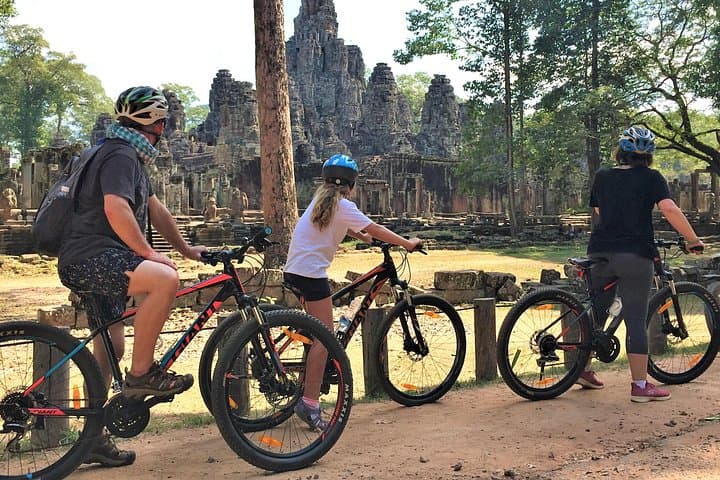
The morning opens cool and spare as you roll out at 7:00, tires whispering on the raised causeway toward Angkor Wat’s rising silhouette. Damp earth gives the scent of the Tonle Sap plain; the first rays pick out bas-reliefs and the slow, deliberate geometry of temple towers. Bicycles are efficient companions here — nimble enough for narrow galleries, steady on the wide avenues of the ancient city.
Verified experiences and guided adventures in the surrounding area.
Operated by Siem Reap Biking Tour · Siem Reap, Siem Reap Province
The morning opens cool and spare as you roll out at 7:00, tires whispering on the raised causeway toward Angkor Wat’s rising silhouette. Damp earth gives the scent of the Tonle Sap plain; the first rays pick out bas-reliefs and the slow, deliberate geometry of temple towers. Bicycles are efficient companions here — nimble enough for narrow galleries, steady on the wide avenues of the ancient city.
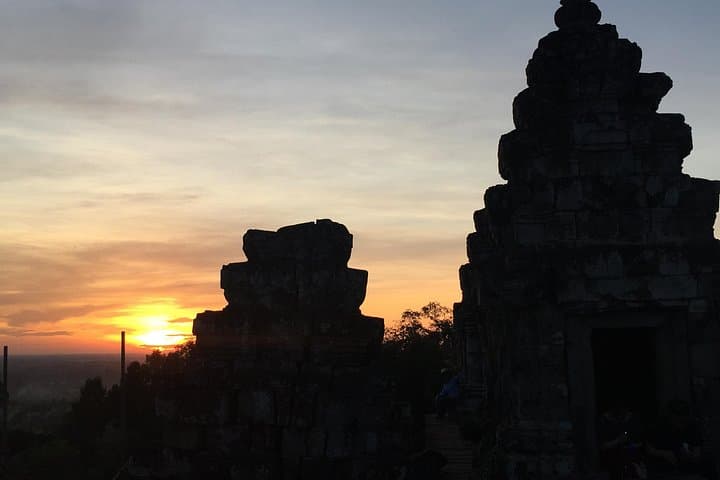
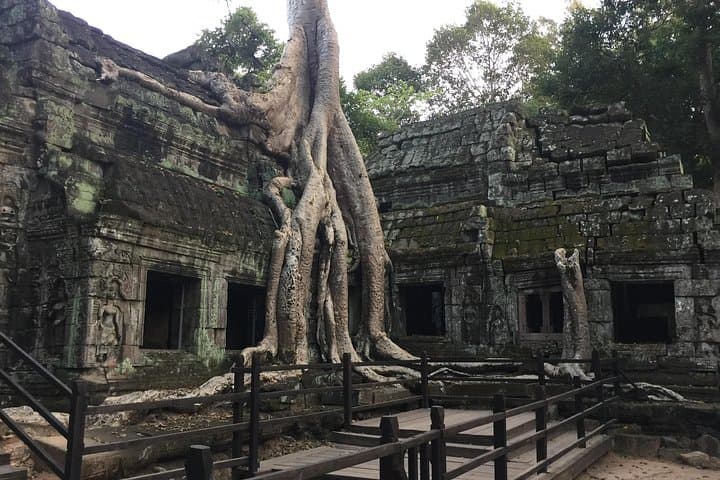
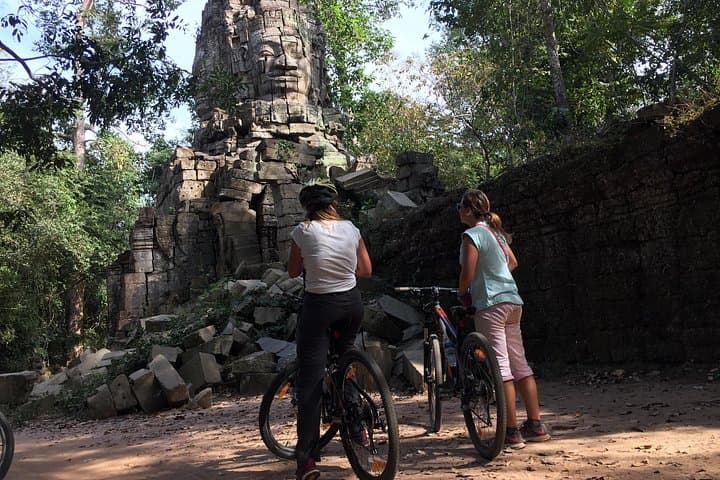
This route threads the essentials of the Angkor archaeological park. Angkor Wat’s sandstone galleries record Hindu epics; Ta Prohm is a living argument between fig roots and carved lintels; Ta Nei and the ruined jungle complexes show later expansion and abandonment. Bayon’s many-faced towers reflect the Mahayana influence that colored the 12th-century Khmer court. Phnom Bakheng (Bakeng) is a small hill temple built as a cosmological marker — its summit gives a panoramic curtain call at sunset over temple spires and the flat Tonle Sap basin.
Expect roughly 25 km of mostly flat cycling with short, steep steps to climb at Phnom Bakheng and temple platforms. Temperatures climb fast; start early, keep to shaded tracks where possible, and plan a midday pause for the included set-menu lunch. Guides will handle permits and route choices; groups of three may transfer by tuk‑tuk for return legs, larger groups by van.
Practicalities: carry your Angkor pass (children under 12 do not need one but must have passports), wear clothing that covers shoulders and knees at temples, bring plenty of water, sunscreen and insect repellent, and be prepared for some uneven sandstone and packed laterite under your wheels.
moderate.
10 hours.
Moderate fitness: able to ride ~25 km over mixed surfaces in hot, humid conditions and walk short temple stairs.
Yes — your guide will help with passes; children under 12 do not require a pass but must carry passports for verification.
Operators often provide helmets, but availability varies — confirm in advance if you prefer your own helmet for fit and comfort.
The tour covers about 25 km on mostly flat roads with some short climbs and stairs; expect frequent stops to explore temples, so endurance-level is moderate.
A set-menu lunch and cool bottled water are included; bring snacks if you prefer particular dietary items and notify the operator of restrictions ahead of time.
Angkor was the heart of the Khmer Empire (9th–15th centuries), a hydraulic and religious capital where sandstone architecture recorded both Hindu and later Buddhist statecraft.
Stay on defined paths, don’t climb fragile carvings, and use refillable bottles — visitor pressure and humidity accelerate sandstone erosion and lichen growth.
Siem Reap Biking Tour operates guided outdoor trips and adventures with an emphasis on safety, stewardship, and memorable experiences.
The morning opens cool and spare as you roll out at 7:00, tires whispering on the raised causeway toward Angkor Wat’s rising silhouette. Damp earth gives the scent of the Tonle Sap plain; the first rays pick out bas-reliefs and the slow, deliberate geometry of temple towers. Bicycles are efficient companions here — nimble enough for narrow galleries, steady on the wide avenues of the ancient city.
The morning opens cool and spare as you roll out at 7:00, tires whispering on the raised causeway toward Angkor Wat’s rising silhouette. Damp earth gives the scent of the Tonle Sap plain; the first rays pick out bas-reliefs and the slow, deliberate geometry of temple towers. Bicycles are efficient companions here — nimble enough for narrow galleries, steady on the wide avenues of the ancient city.
This route threads the essentials of the Angkor archaeological park. Angkor Wat’s sandstone galleries record Hindu epics; Ta Prohm is a living argument between fig roots and carved lintels; Ta Nei and the ruined jungle complexes show later expansion and abandonment. Bayon’s many-faced towers reflect the Mahayana influence that colored the 12th-century Khmer court. Phnom Bakheng (Bakeng) is a small hill temple built as a cosmological marker — its summit gives a panoramic curtain call at sunset over temple spires and the flat Tonle Sap basin.
Expect roughly 25 km of mostly flat cycling with short, steep steps to climb at Phnom Bakheng and temple platforms. Temperatures climb fast; start early, keep to shaded tracks where possible, and plan a midday pause for the included set-menu lunch. Guides will handle permits and route choices; groups of three may transfer by tuk‑tuk for return legs, larger groups by van.
Practicalities: carry your Angkor pass (children under 12 do not need one but must have passports), wear clothing that covers shoulders and knees at temples, bring plenty of water, sunscreen and insect repellent, and be prepared for some uneven sandstone and packed laterite under your wheels.