THE ADVENTURE COLLECTIVE® · Independent discovery and booking for outdoor travel

Explore Al Ain’s UNESCO-listed oasis, historic Jahili Fort and the limestone heights of Jebel Hafeet on a private full-day tour that mixes archaeology, pastoral landscapes, and panoramic mountain views. Ideal for travelers seeking cultural depth with easy walking and air‑conditioned transport.
Explore Al Ain’s UNESCO-listed oasis, historic Jahili Fort and the limestone heights of Jebel Hafeet on a private full-day tour that mixes archaeology, pastoral landscapes, and panoramic mountain views. Ideal for travelers seeking cultural depth with easy walking and air‑conditioned transport.
Morning light spills across the date palms as the vehicle pulls away from Al Ain's low-rise streets and into a landscape where water still pushes life through desert ground. The tour moves between shaded falaj channels, mud-brick fort walls, and the rising flank of Jebel Hafeet—each stop a different voice in the region's story.
Verified experiences and guided adventures in the surrounding area.
Operated by Voyagerista · Al Ain, Abu Dhabi
Morning light spills across the date palms as the vehicle pulls away from Al Ain's low-rise streets and into a landscape where water still pushes life through desert ground. The tour moves between shaded falaj channels, mud-brick fort walls, and the rising flank of Jebel Hafeet—each stop a different voice in the region's story.
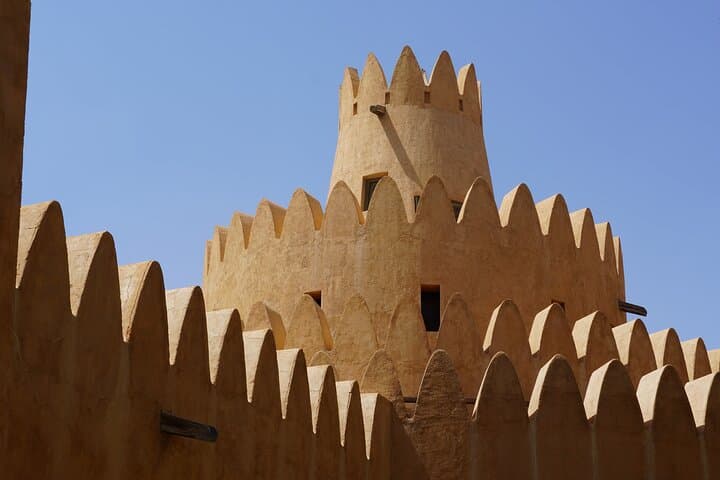
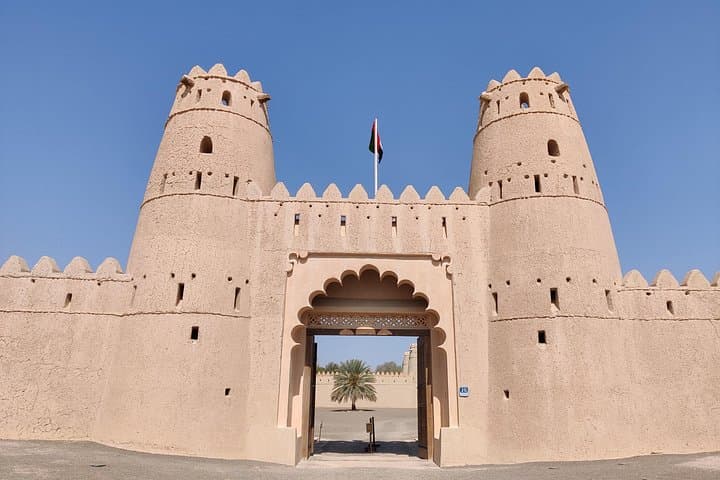
Visitors begin at Al Qattara Arts Centre and the Oasis, where a sequence of archaeological layers traces human settlement and irrigation practices over millennia. Al Jahili Fort offers late-19th-century military architecture and a small museum on Sir Wilfred Thesiger, while Al Ain Oasis demonstrates the falaj irrigation that sustained communities here for about 3,000 years. The route rises to Green Mubazzarah and then Jebel Hafeet, a 1,240 m (4,070 ft) limestone ridge whose summit rewards the drive with sweeping views of the oasis and desert plain.
Geologically, Jebel Hafeet is a folded carbonate dome—old rock upended by tectonics—while the oases remain living examples of human water management in arid environments. Culturally, the tour threads traditional Emirati life, archaeology, and more recent national history under Sheikh Zayed's patronage.
Practical guidance: start early to avoid mid-day heat, carry sun protection and 2–3 liters of water per person, and wear comfortable closed shoes for oasis paths and light walking around forts. Expect mostly short walks on shaded paths and paved roads; some sites have stairs. Bring camera, light layers for the summit breeze, and small local currency for optional entry fees or refreshments. The full-day private format includes air-conditioned transport and bottled water, making it accessible for a wide range of travelers.
easy.
10 hours.
Suitable for most fitness levels; involves short, easy walks and getting in/out of vehicles throughout the day.
Admission is not automatically included unless specified; the itinerary lists sites where entry may require separate payment on-site.
Yes—infant seats are available and the tour is rated easy, but inform the operator of ages and needs when booking.
Walking is mostly short and gentle—45-minute visits at several sites with paved paths, courtyard steps, and brief trails at the oasis and viewpoints.
Full refund if canceled at least 24 hours before departure; tours may be canceled for bad weather per the operator's policy.
Al Ain's oases and falaj irrigation networks reflect 3,000 years of continuous human settlement; Al Jahili Fort dates to the late 19th century under Sheikh Zayed bin Khalifa.
The oases are UNESCO-listed and local efforts focus on protecting falaj systems and date palms; visitors should avoid off-path walking and minimize water use to reduce impact.
Voyagerista operates guided outdoor trips and adventures with an emphasis on safety, stewardship, and memorable experiences.
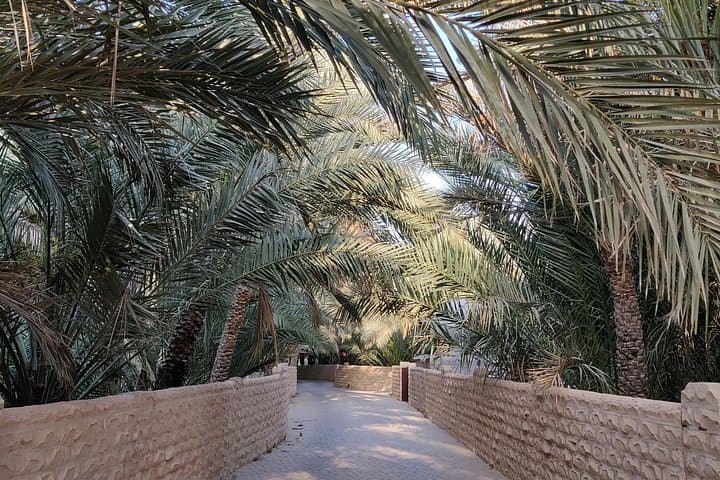
Morning light spills across the date palms as the vehicle pulls away from Al Ain's low-rise streets and into a landscape where water still pushes life through desert ground. The tour moves between shaded falaj channels, mud-brick fort walls, and the rising flank of Jebel Hafeet—each stop a different voice in the region's story.
Morning light spills across the date palms as the vehicle pulls away from Al Ain's low-rise streets and into a landscape where water still pushes life through desert ground. The tour moves between shaded falaj channels, mud-brick fort walls, and the rising flank of Jebel Hafeet—each stop a different voice in the region's story.
Visitors begin at Al Qattara Arts Centre and the Oasis, where a sequence of archaeological layers traces human settlement and irrigation practices over millennia. Al Jahili Fort offers late-19th-century military architecture and a small museum on Sir Wilfred Thesiger, while Al Ain Oasis demonstrates the falaj irrigation that sustained communities here for about 3,000 years. The route rises to Green Mubazzarah and then Jebel Hafeet, a 1,240 m (4,070 ft) limestone ridge whose summit rewards the drive with sweeping views of the oasis and desert plain.
Geologically, Jebel Hafeet is a folded carbonate dome—old rock upended by tectonics—while the oases remain living examples of human water management in arid environments. Culturally, the tour threads traditional Emirati life, archaeology, and more recent national history under Sheikh Zayed's patronage.
Practical guidance: start early to avoid mid-day heat, carry sun protection and 2–3 liters of water per person, and wear comfortable closed shoes for oasis paths and light walking around forts. Expect mostly short walks on shaded paths and paved roads; some sites have stairs. Bring camera, light layers for the summit breeze, and small local currency for optional entry fees or refreshments. The full-day private format includes air-conditioned transport and bottled water, making it accessible for a wide range of travelers.