THE ADVENTURE COLLECTIVE® · Independent discovery and booking for outdoor travel

Spend a long day in eastern Rwanda searching for the Big Five across lakes, papyrus wetlands, and rolling savanna. This private full-day safari from Kigali combines conservation history, a stop at Imigongo arts, and focused game drives for high-probability wildlife viewing.
Spend a long day in eastern Rwanda searching for the Big Five across lakes, papyrus wetlands, and rolling savanna. This private full-day safari from Kigali combines conservation history, a stop at Imigongo arts, and focused game drives for high-probability wildlife viewing.
You leave Kigali before dawn, the city loosening its grip as tea fields and patchwork farmland scroll past the van window. By mid-morning the road tilts into the eastern hills and the air holds more birdsong than traffic noise. At Akagera’s ranger gates the landscape opens: ribbon lakes rimmed by papyrus, rolling savanna, and forested kopjes where lions slip into shadow.
Verified experiences and guided adventures in the surrounding area.
Operated by Journey Africa Wild · Kayonza, Eastern Province
You leave Kigali before dawn, the city loosening its grip as tea fields and patchwork farmland scroll past the van window. By mid-morning the road tilts into the eastern hills and the air holds more birdsong than traffic noise. At Akagera’s ranger gates the landscape opens: ribbon lakes rimmed by papyrus, rolling savanna, and forested kopjes where lions slip into shadow.
Akagera sits on Rwanda’s eastern escarpment and its mosaic of lakes and wetlands is one of the country’s most important freshwater systems. The park’s recent conservation story is central to the visit — rhinos were reintroduced and lions returned after decades away, transforming Akagera into Rwanda’s only Big Five destination. Geology here is gentle: low volcanic ridges give way to shallow lake basins carved by tectonic uplift and seasonal rivers.
Cultural touches appear at roadside stops — the Imigongo art center for geometric cow-dung painting and coffee from local vendors add human scale to the wilderness.
Practical guidance: this is a full 10–11 hour outing with long stretches on dirt tracks; expect bumpy roads and plentiful wildlife viewing from a safari vehicle. Dress in muted layers, bring sun protection and insect repellent, and keep a steady supply of water. Binoculars and a telephoto lens make wildlife sightings more rewarding, and a small motion-sickness kit can be useful for the unsteady roads. Drivers and guides know where to find animals, but patience wins the day — a sleeping rhino or lazy hippo can hold your attention as much as a sprinting hunt.
easy.
10–11 hours.
Suitable for most fitness levels; activities are vehicle-based but require getting in/out of open safari vehicles.
Expect about a 2.5–3 hour drive each way depending on traffic and road conditions; the full outing is roughly 10–11 hours including game drives and stops.
The tour targets locations where elephants, buffalo, lions, leopards and rhinos have been reliably seen; sightings cannot be guaranteed but the park’s conservation program has increased encounter rates.
Yes — infant seats are available and the activity is vehicle-based and low-impact, but it’s not recommended for pregnant travelers or those with serious heart conditions.
Consult your healthcare provider before travel; malaria prophylaxis is commonly recommended for Rwanda and routine vaccinations should be up to date.
Akagera was established in 1934 and has evolved from overuse toward an active conservation model that reintroduced key species and expanded anti-poaching efforts.
Rangers and conservation partners have restored populations through translocations and anti-poaching programs; visitors support the park’s economy but should avoid disturbing wildlife or leaving waste.
Journey Africa Wild operates guided outdoor trips and adventures with an emphasis on safety, stewardship, and memorable experiences.


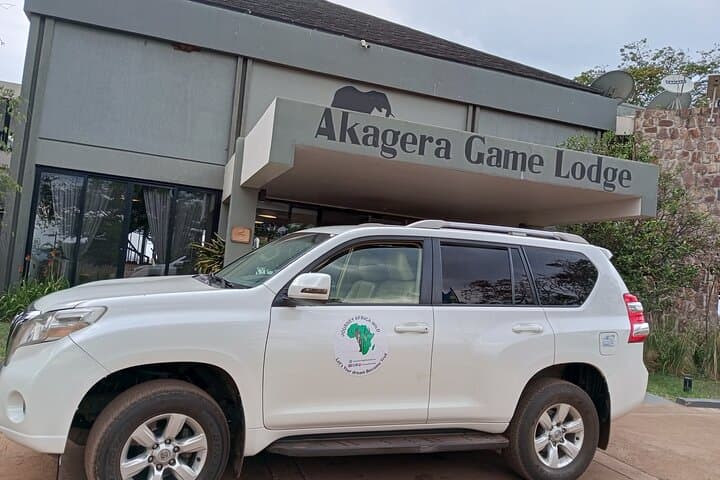

You leave Kigali before dawn, the city loosening its grip as tea fields and patchwork farmland scroll past the van window. By mid-morning the road tilts into the eastern hills and the air holds more birdsong than traffic noise. At Akagera’s ranger gates the landscape opens: ribbon lakes rimmed by papyrus, rolling savanna, and forested kopjes where lions slip into shadow.
You leave Kigali before dawn, the city loosening its grip as tea fields and patchwork farmland scroll past the van window. By mid-morning the road tilts into the eastern hills and the air holds more birdsong than traffic noise. At Akagera’s ranger gates the landscape opens: ribbon lakes rimmed by papyrus, rolling savanna, and forested kopjes where lions slip into shadow.
Akagera sits on Rwanda’s eastern escarpment and its mosaic of lakes and wetlands is one of the country’s most important freshwater systems. The park’s recent conservation story is central to the visit — rhinos were reintroduced and lions returned after decades away, transforming Akagera into Rwanda’s only Big Five destination. Geology here is gentle: low volcanic ridges give way to shallow lake basins carved by tectonic uplift and seasonal rivers.
Cultural touches appear at roadside stops — the Imigongo art center for geometric cow-dung painting and coffee from local vendors add human scale to the wilderness.
Practical guidance: this is a full 10–11 hour outing with long stretches on dirt tracks; expect bumpy roads and plentiful wildlife viewing from a safari vehicle. Dress in muted layers, bring sun protection and insect repellent, and keep a steady supply of water. Binoculars and a telephoto lens make wildlife sightings more rewarding, and a small motion-sickness kit can be useful for the unsteady roads. Drivers and guides know where to find animals, but patience wins the day — a sleeping rhino or lazy hippo can hold your attention as much as a sprinting hunt.