THE ADVENTURE COLLECTIVE® · Independent discovery and booking for outdoor travel

See the Taj Mahal, Agra Fort and Baby Taj in one carefully timed day. This private, all-inclusive tour pairs expert narration with practical logistics to maximize your time on site.
See the Taj Mahal, Agra Fort and Baby Taj in one carefully timed day. This private, all-inclusive tour pairs expert narration with practical logistics to maximize your time on site.
You step off an air-conditioned vehicle into a courtyard where stone and river meet; the Yamuna moves like a slow companion, pushing the heat aside as the marble of the Taj Mahal catches the light. This full-day Agra tour compresses centuries into hours, giving you the famous white mausoleum, the red ramparts of Agra Fort, and the quieter charms of the so-called Baby Taj.
Verified experiences and guided adventures in the surrounding area.
Operated by Private Tour Guide in Agra (Atiq Akhtar) · Agra, Uttar Pradesh
You step off an air-conditioned vehicle into a courtyard where stone and river meet; the Yamuna moves like a slow companion, pushing the heat aside as the marble of the Taj Mahal catches the light. This full-day Agra tour compresses centuries into hours, giving you the famous white mausoleum, the red ramparts of Agra Fort, and the quieter charms of the so-called Baby Taj.
The region’s history is Mughal at its clearest: imperial planning, marble inlay, and defensive red sandstone laid out along the Yamuna floodplain. The geology beneath—alluvial silt—made the site practical for large monuments and gardens; the river once defined ceremonial approaches and remains part of the setting. Culturally, Agra is a crossroads of crafts: pietra dura inlay, carpet weaving and Mughlai cuisine shaped by courtly tastes.
Expect guided narration about Shah Jahan and the architects, clear sightlines across formal gardens, and interpretive stops at key chambers inside Agra Fort. The itinerary often includes entry fees and practical extras like shoe covers and bottled water; guards and ticket checks regulate access, and photography rules vary by site.
Practical guidance: aim for early or late day light to avoid mid-day heat and crowds; wear sturdy closed shoes for uneven stone floors; keep modest clothing for sensitive cultural settings. Bring a charged camera battery and ID for ticket checks. Allow about six hours for a relaxed pace and a private guide who will shape the visit to your interests—architecture, history or photography.
easy.
6 hours.
Suitable for most travelers with light mobility—expect walking and standing for several hours.
Yes — entrance to the Taj Mahal and Agra Fort is listed as included in the tour’s inclusions.
The tour notes wheelchair accessibility, but some interiors and uneven historic floors may limit full access; check with the operator for site-specific arrangements.
The Taj Mahal is closed to visitors on Fridays for prayers; plan your booking around that weekly closure.
The tour includes sealed bottled water and may provide short breaks; meals are typically not included unless specified by the operator.
Agra rose to prominence as a Mughal capital in the 16th–17th centuries; the Taj Mahal was completed in 1653 as a mausoleum for Mumtaz Mahal.
Visitor pressure and river pollution threaten the monuments’ setting; many tours encourage low-impact behavior and the use of provided shoe covers to protect flooring.
Private Tour Guide in Agra (Atiq Akhtar) operates guided outdoor trips and adventures with an emphasis on safety, stewardship, and memorable experiences.

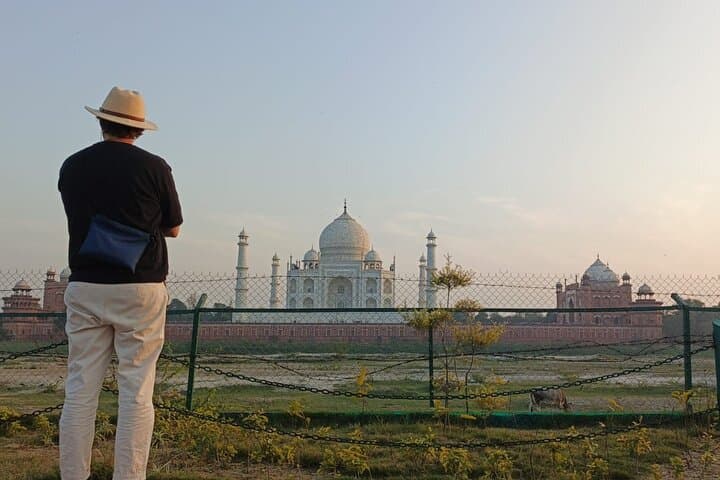


You step off an air-conditioned vehicle into a courtyard where stone and river meet; the Yamuna moves like a slow companion, pushing the heat aside as the marble of the Taj Mahal catches the light. This full-day Agra tour compresses centuries into hours, giving you the famous white mausoleum, the red ramparts of Agra Fort, and the quieter charms of the so-called Baby Taj.
You step off an air-conditioned vehicle into a courtyard where stone and river meet; the Yamuna moves like a slow companion, pushing the heat aside as the marble of the Taj Mahal catches the light. This full-day Agra tour compresses centuries into hours, giving you the famous white mausoleum, the red ramparts of Agra Fort, and the quieter charms of the so-called Baby Taj.
The region’s history is Mughal at its clearest: imperial planning, marble inlay, and defensive red sandstone laid out along the Yamuna floodplain. The geology beneath—alluvial silt—made the site practical for large monuments and gardens; the river once defined ceremonial approaches and remains part of the setting. Culturally, Agra is a crossroads of crafts: pietra dura inlay, carpet weaving and Mughlai cuisine shaped by courtly tastes.
Expect guided narration about Shah Jahan and the architects, clear sightlines across formal gardens, and interpretive stops at key chambers inside Agra Fort. The itinerary often includes entry fees and practical extras like shoe covers and bottled water; guards and ticket checks regulate access, and photography rules vary by site.
Practical guidance: aim for early or late day light to avoid mid-day heat and crowds; wear sturdy closed shoes for uneven stone floors; keep modest clothing for sensitive cultural settings. Bring a charged camera battery and ID for ticket checks. Allow about six hours for a relaxed pace and a private guide who will shape the visit to your interests—architecture, history or photography.