THE ADVENTURE COLLECTIVE® · Independent discovery and booking for outdoor travel

Spend a day in Addo Elephant National Park with a guided, all‑inclusive safari that covers abundant elephant populations, diverse habitats and easy logistics from Gqeberha. Expect guided game drives, lunch, binoculars and an interpreter sharing local ecology and history.
Spend a day in Addo Elephant National Park with a guided, all‑inclusive safari that covers abundant elephant populations, diverse habitats and easy logistics from Gqeberha. Expect guided game drives, lunch, binoculars and an interpreter sharing local ecology and history.
Morning light hits the broken silhouette of camelthorn trees as a convoy of open-sided vehicles threads a red-dust track into Addo Elephant National Park. The air carries the low rumble of elephants and the metallic cry of an osprey; the animals set the tempo here, slow and certain, and the vehicle settles into their pace.
Verified experiences and guided adventures in the surrounding area.
Operated by Urban Africa Tours · Addo, Eastern Cape
Morning light hits the broken silhouette of camelthorn trees as a convoy of open-sided vehicles threads a red-dust track into Addo Elephant National Park. The air carries the low rumble of elephants and the metallic cry of an osprey; the animals set the tempo here, slow and certain, and the vehicle settles into their pace.
Founded in 1931 to protect eleven surviving elephants, Addo has expanded into the third-largest national park in South Africa, a mosaic of thornveld, dunes and coastal thicket. Geologically, the park sits on ancient Karoo sediments that give way eastward to coastal formations; this shift creates pockets of dense scrub that hide black rhino and leopard. The Xhosa people have long historical ties to the region—local guides often weave stories of landscape and livestock into sightings—while conservation efforts have reintroduced species and restored former grazing zones.
Practical guidance begins with timing: game activity peaks at dawn and late afternoon, so expect the best sightings in those windows. Dress in muted layers—mornings can be brisk, midday hot—and bring a wide-brim hat and sunscreen. Vehicles are air-conditioned for transfers, but the game drive portion benefits from binoculars and a camera with a telephoto lens; keep voices low and follow your guide’s distance rules for close encounters with elephants and buffalo.
This full-day, guided experience includes admission, bottled water, lunch and onboard Wi‑Fi; pick-up and drop-off from Gqeberha make logistics simple. Respect park rules, arrive with charged devices and patience—the park’s rhythms reward quiet observation and good timing.
moderate.
8 hours.
Suitable for most fitness levels—mostly vehicle-based with short on-foot stretches; be prepared for bumpy roads and occasional standing.
This is a full-day tour of approximately 8 hours, including transfer time from Gqeberha and a guided game drive in the park.
Addo has a high density of elephants and frequent sightings of buffalo, antelope and predators, but wildlife sightings cannot be guaranteed—timing, season and animal movement affect viewing.
Yes—transfers and drives are vehicle-based and suitable for most ages and fitness levels, though prolonged standing or rough roads may be uncomfortable for some passengers.
The tour includes park admission, guided drives, bottled water, lunch, onboard Wi‑Fi, binocular use and pick-up/drop-off from accommodation in the area.
Established in 1931 to protect the last surviving local elephants, the park has grown from a small reserve into a landscape-scale protected area supporting many species.
Addo operates active translocation and habitat-restoration programs; visitors are asked to follow park rules to reduce disturbance and litter, supporting long-term conservation.
Urban Africa Tours operates guided outdoor trips and adventures with an emphasis on safety, stewardship, and memorable experiences.
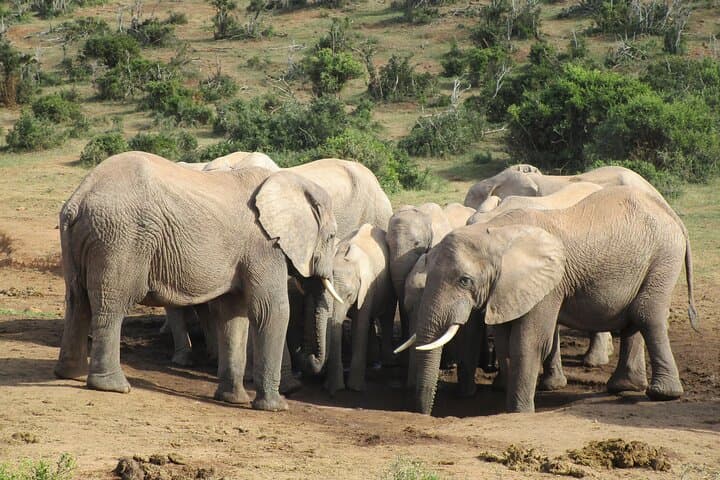
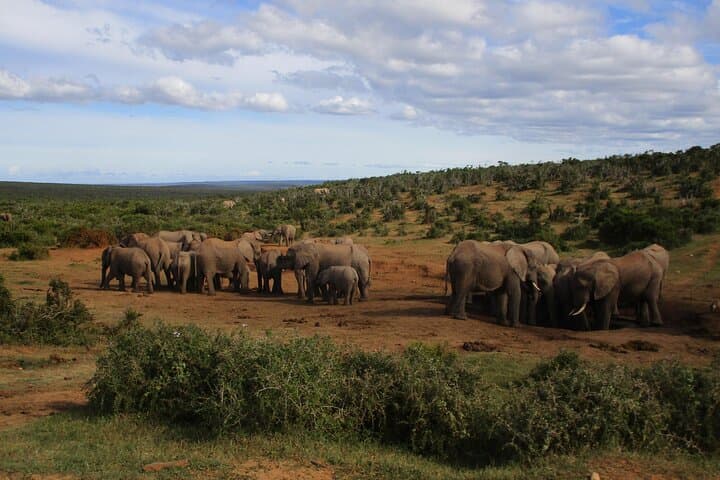
Morning light hits the broken silhouette of camelthorn trees as a convoy of open-sided vehicles threads a red-dust track into Addo Elephant National Park. The air carries the low rumble of elephants and the metallic cry of an osprey; the animals set the tempo here, slow and certain, and the vehicle settles into their pace.
Morning light hits the broken silhouette of camelthorn trees as a convoy of open-sided vehicles threads a red-dust track into Addo Elephant National Park. The air carries the low rumble of elephants and the metallic cry of an osprey; the animals set the tempo here, slow and certain, and the vehicle settles into their pace.
Founded in 1931 to protect eleven surviving elephants, Addo has expanded into the third-largest national park in South Africa, a mosaic of thornveld, dunes and coastal thicket. Geologically, the park sits on ancient Karoo sediments that give way eastward to coastal formations; this shift creates pockets of dense scrub that hide black rhino and leopard. The Xhosa people have long historical ties to the region—local guides often weave stories of landscape and livestock into sightings—while conservation efforts have reintroduced species and restored former grazing zones.
Practical guidance begins with timing: game activity peaks at dawn and late afternoon, so expect the best sightings in those windows. Dress in muted layers—mornings can be brisk, midday hot—and bring a wide-brim hat and sunscreen. Vehicles are air-conditioned for transfers, but the game drive portion benefits from binoculars and a camera with a telephoto lens; keep voices low and follow your guide’s distance rules for close encounters with elephants and buffalo.
This full-day, guided experience includes admission, bottled water, lunch and onboard Wi‑Fi; pick-up and drop-off from Gqeberha make logistics simple. Respect park rules, arrive with charged devices and patience—the park’s rhythms reward quiet observation and good timing.