THE ADVENTURE COLLECTIVE® · Independent discovery and booking for outdoor travel

Leave Luxor before dawn to stand beneath the colossal figures of Ramses II at Abu Simbel. This full-day excursion pairs a long travel day with a compact, unforgettable visit to two of Egypt’s most iconic temples.
Leave Luxor before dawn to stand beneath the colossal figures of Ramses II at Abu Simbel. This full-day excursion pairs a long travel day with a compact, unforgettable visit to two of Egypt’s most iconic temples.
You arrive before sunrise, the desert air cool against your face as the vehicle eases toward the Nile’s southern reaches. Roads flatten; the world narrows to ochre and sky. At Abu Simbel the temple facades rise like carved cliffs—four colossal seated figures of Ramses II catching the first light, their stone faces watching the horizon.
Verified experiences and guided adventures in the surrounding area.
Operated by Special trips · Abu Simbel, Aswan Governorate
You arrive before sunrise, the desert air cool against your face as the vehicle eases toward the Nile’s southern reaches. Roads flatten; the world narrows to ochre and sky. At Abu Simbel the temple facades rise like carved cliffs—four colossal seated figures of Ramses II catching the first light, their stone faces watching the horizon.
Carved into the Nubian sandstone in the 13th century BCE, Abu Simbel was both showpiece and political message: temples that proclaimed pharaonic power and celebrated solar rites. Geological forces and the creation of Lake Nasser in the 1960s threatened the site; a coordinated UNESCO relocation effort lifted and reassembled the complex to higher ground, an engineering story as compelling as the original build.
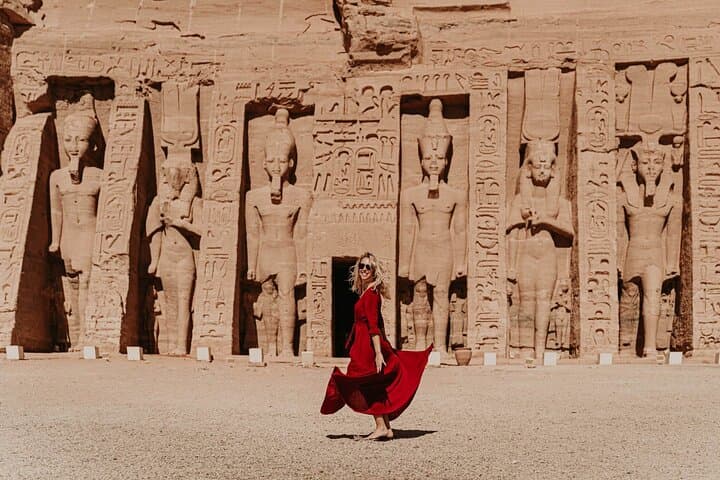
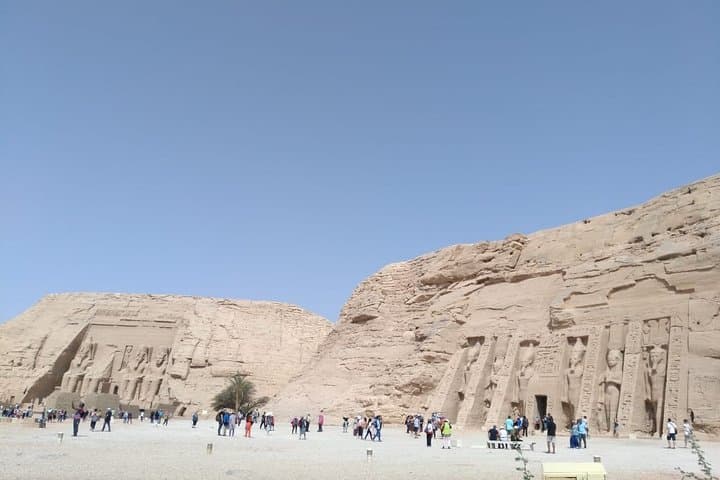
Culturally the twin complexes—Ramses II’s Great Temple and the smaller Temple of Hathor for Nefertari—offer reliefs, processional scenes, and an atmospheric sense of antiquity. Expect wide, dry vistas, a compact visitor loop, and an interpreter’s narrative that ties iconography to ritual and royal propaganda.
Practicalities are straightforward but firm: this is a long, early-start day (pickups often around 2:30–3:00 a.m.), with significant travel by train and road. Bring layered sun protection, plenty of water, and copies of travel documents. The on-site walkways are short but exposed; plan time for photos, quiet observation, and returning to Luxor late in the evening. For travelers seeking a concentrated dose of New Kingdom grandeur, Abu Simbel delivers clarity and scale—an architectural encounter that rewards early rising and patience.
easy.
Approx. 16 hours.
Suitable for travelers of average fitness; involves short walks on flat, exposed surfaces but long travel time.
Pickups are typically very early—around 2:30–3:00 a.m.—and the operator confirms your exact time 48 hours beforehand.
The site has short, mostly flat walkways; however, transfers and the long travel day can be tiring—check specific accessibility needs with the operator.
Photography is generally allowed in the open areas and façades; interior flash rules can vary—follow on-site signage and guide instructions.
A lunch box and bottled water are included, but consider bringing extra water and snacks for the long travel legs.
The twin temples were carved during the reign of Ramses II in the 13th century BCE and later relocated in the 1960s to avoid Lake Nasser’s rising waters after the Aswan High Dam was built.
The 1960s UNESCO relocation is a landmark example of archaeological conservation; visitors are asked to stay on paths and avoid touching reliefs to limit erosion and wear.
Special trips operates guided outdoor trips and adventures with an emphasis on safety, stewardship, and memorable experiences.
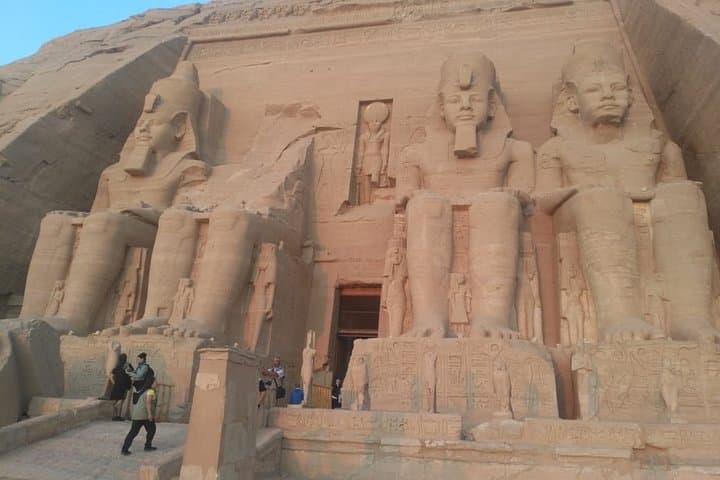

You arrive before sunrise, the desert air cool against your face as the vehicle eases toward the Nile’s southern reaches. Roads flatten; the world narrows to ochre and sky. At Abu Simbel the temple facades rise like carved cliffs—four colossal seated figures of Ramses II catching the first light, their stone faces watching the horizon.
You arrive before sunrise, the desert air cool against your face as the vehicle eases toward the Nile’s southern reaches. Roads flatten; the world narrows to ochre and sky. At Abu Simbel the temple facades rise like carved cliffs—four colossal seated figures of Ramses II catching the first light, their stone faces watching the horizon.
Carved into the Nubian sandstone in the 13th century BCE, Abu Simbel was both showpiece and political message: temples that proclaimed pharaonic power and celebrated solar rites. Geological forces and the creation of Lake Nasser in the 1960s threatened the site; a coordinated UNESCO relocation effort lifted and reassembled the complex to higher ground, an engineering story as compelling as the original build.
Culturally the twin complexes—Ramses II’s Great Temple and the smaller Temple of Hathor for Nefertari—offer reliefs, processional scenes, and an atmospheric sense of antiquity. Expect wide, dry vistas, a compact visitor loop, and an interpreter’s narrative that ties iconography to ritual and royal propaganda.
Practicalities are straightforward but firm: this is a long, early-start day (pickups often around 2:30–3:00 a.m.), with significant travel by train and road. Bring layered sun protection, plenty of water, and copies of travel documents. The on-site walkways are short but exposed; plan time for photos, quiet observation, and returning to Luxor late in the evening. For travelers seeking a concentrated dose of New Kingdom grandeur, Abu Simbel delivers clarity and scale—an architectural encounter that rewards early rising and patience.