THE ADVENTURE COLLECTIVE® · Independent discovery and booking for outdoor travel

A full-day shared bus tour from Aswan delivers the colossal temples of Ramses II at Abu Simbel and the dramatic story of their 1960s relocation. Expect a 3–4 hour drive each way, guided interpretation, and time to explore the carved interiors and relocation exhibits.
A full-day shared bus tour from Aswan delivers the colossal temples of Ramses II at Abu Simbel and the dramatic story of their 1960s relocation. Expect a 3–4 hour drive each way, guided interpretation, and time to explore the carved interiors and relocation exhibits.
A long, straight road bends into the desert and the sun sharpens every edge; by midmorning the two colossal faces of Ramses II loom out of the sandstone like an intentional interruption of the horizon. Travelers arrive from Aswan by air-conditioned minibus, trading the slow green of the Nile for the dry, bright plain around Abu Simbel. The desert seems to hold its breath as you approach the carved facades.
Verified experiences and guided adventures in the surrounding area.
Operated by Egypt Lifetime Tours · Abu Simbel, Aswan Governorate
A long, straight road bends into the desert and the sun sharpens every edge; by midmorning the two colossal faces of Ramses II loom out of the sandstone like an intentional interruption of the horizon. Travelers arrive from Aswan by air-conditioned minibus, trading the slow green of the Nile for the dry, bright plain around Abu Simbel. The desert seems to hold its breath as you approach the carved facades.
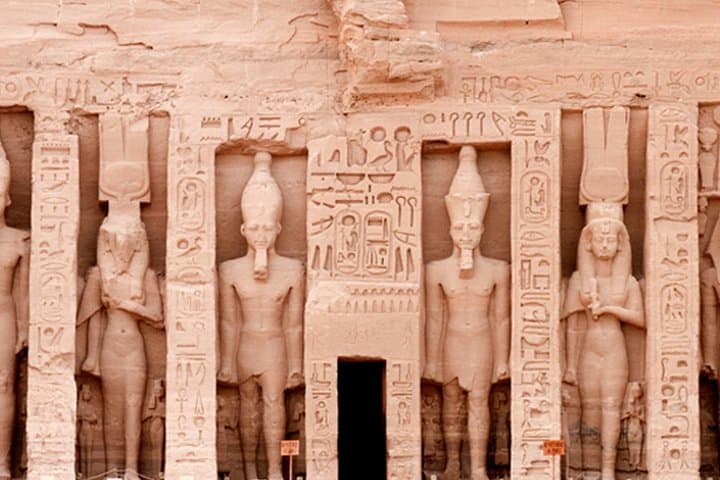
The twin complexes — the Great Temple of Ramses II and the smaller temple to Nefertari — were cut from rock in the 13th century BCE and later revealed to European explorers in the early 19th century. Their modern history is dramatic: in the 1960s a UNESCO-led relocation lifted and rebuilt the temples higher on the shore to save them from Lake Nasser. Geologically the site is hard sandstone sculpted by wind and time; culturally the reliefs celebrate pharaonic power and Nubian ties through depictions of gods and processions.
Visitors can expect a guided Egyptology talk followed by independent exploration of interior chambers and the relocation exhibition, where conservation documents and plans are displayed. Practicalities matter: it’s a 3–4 hour drive each way from Aswan, entrance fees are paid on-site (cards accepted), and temperatures can spike — plan hydration, sun protection, and modest clothing out of respect for local customs. Allow at least 2–3 hours at the complex to take in the façades, interior hypostyle halls and the relocation story. Arriving early or late in the day improves light for photography and reduces heat; the desert’s quiet gives the carvings a rare clarity that feels almost conversational.
easy.
9 hours (approx.).
Suitable for most fitness levels; involves short walks on uneven stone surfaces and standing indoors for guided talks.
Expect about 3–4 hours each way by bus or minibus depending on traffic and stops.
Entrance fees to the Abu Simbel temples are not included in the shared tour price and are paid on-site; cards are generally accepted.
The site offers basic accessibility but there are stone steps and uneven surfaces inside; wheelchair access is listed as available for parts of the site—confirm specifics with the operator in advance.
Early morning or late afternoon offers softer light and slightly fewer visitors; avoid peak midday heat in summer months.
The temples were carved under Ramses II (13th century BCE) and famously moved in the 1960s to save them from inundation after the Aswan High Dam project.
Tourism is concentrated and the site relies on careful visitor behavior; stay on designated paths, avoid touching reliefs, and follow guide instructions to minimize wear.
Egypt Lifetime Tours operates guided outdoor trips and adventures with an emphasis on safety, stewardship, and memorable experiences.
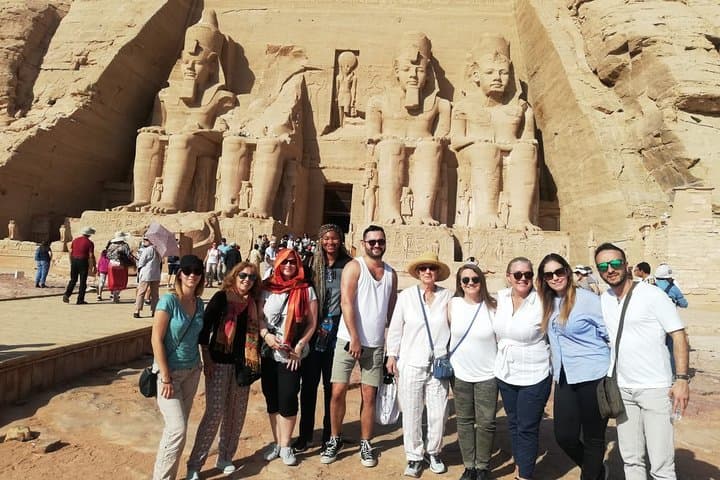

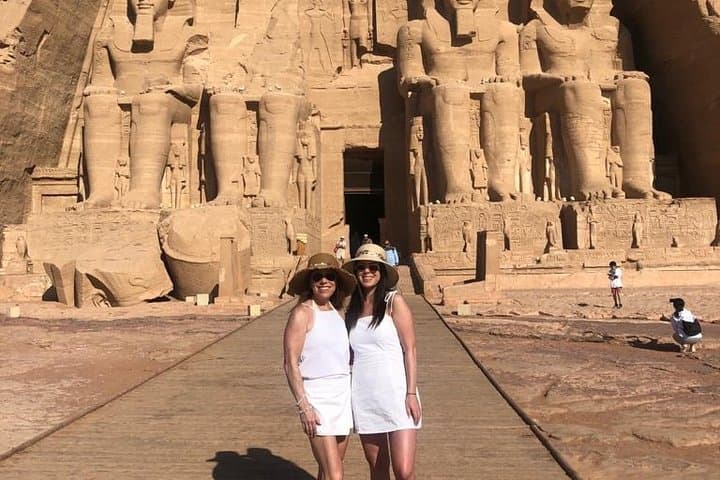
A long, straight road bends into the desert and the sun sharpens every edge; by midmorning the two colossal faces of Ramses II loom out of the sandstone like an intentional interruption of the horizon. Travelers arrive from Aswan by air-conditioned minibus, trading the slow green of the Nile for the dry, bright plain around Abu Simbel. The desert seems to hold its breath as you approach the carved facades.
A long, straight road bends into the desert and the sun sharpens every edge; by midmorning the two colossal faces of Ramses II loom out of the sandstone like an intentional interruption of the horizon. Travelers arrive from Aswan by air-conditioned minibus, trading the slow green of the Nile for the dry, bright plain around Abu Simbel. The desert seems to hold its breath as you approach the carved facades.
The twin complexes — the Great Temple of Ramses II and the smaller temple to Nefertari — were cut from rock in the 13th century BCE and later revealed to European explorers in the early 19th century. Their modern history is dramatic: in the 1960s a UNESCO-led relocation lifted and rebuilt the temples higher on the shore to save them from Lake Nasser. Geologically the site is hard sandstone sculpted by wind and time; culturally the reliefs celebrate pharaonic power and Nubian ties through depictions of gods and processions.
Visitors can expect a guided Egyptology talk followed by independent exploration of interior chambers and the relocation exhibition, where conservation documents and plans are displayed. Practicalities matter: it’s a 3–4 hour drive each way from Aswan, entrance fees are paid on-site (cards accepted), and temperatures can spike — plan hydration, sun protection, and modest clothing out of respect for local customs. Allow at least 2–3 hours at the complex to take in the façades, interior hypostyle halls and the relocation story. Arriving early or late in the day improves light for photography and reduces heat; the desert’s quiet gives the carvings a rare clarity that feels almost conversational.