THE ADVENTURE COLLECTIVE® · Independent discovery and booking for outdoor travel

A full-day shared trip from Aswan to Abu Simbel delivers the spectacle of Ramses II’s colossal temples and a long desert drive across Nubia. Learn what to expect on the road, the essentials to pack, and the practicalities of visiting these moved monuments.
A full-day shared trip from Aswan to Abu Simbel delivers the spectacle of Ramses II’s colossal temples and a long desert drive across Nubia. Learn what to expect on the road, the essentials to pack, and the practicalities of visiting these moved monuments.
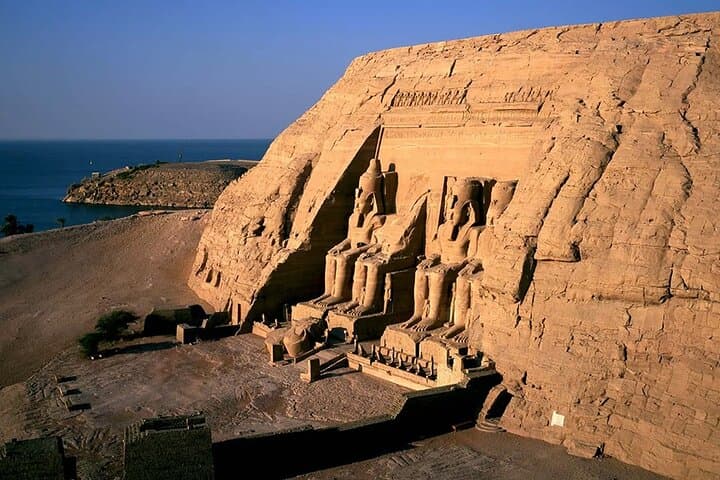
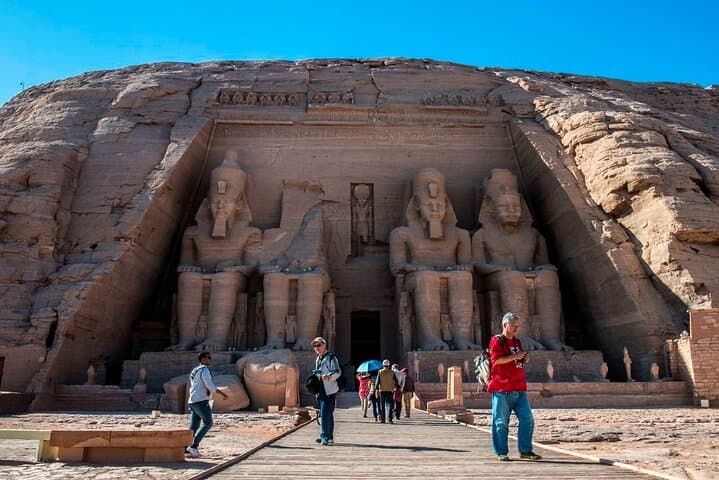
You arrive before the heat presses down: the road from Aswan opens into pale desert, and the first silhouette of stone—four colossal seated figures—grows until the cliff-face fills your windshield. The van eases into the small parking terrace and the air smells of warm sand and diesel; the statues stare south, watching the sky.
Verified experiences and guided adventures in the surrounding area.
Operated by Egypt Best Day Tours · Abu Simbel, Aswan Governorate
You arrive before the heat presses down: the road from Aswan opens into pale desert, and the first silhouette of stone—four colossal seated figures—grows until the cliff-face fills your windshield. The van eases into the small parking terrace and the air smells of warm sand and diesel; the statues stare south, watching the sky.
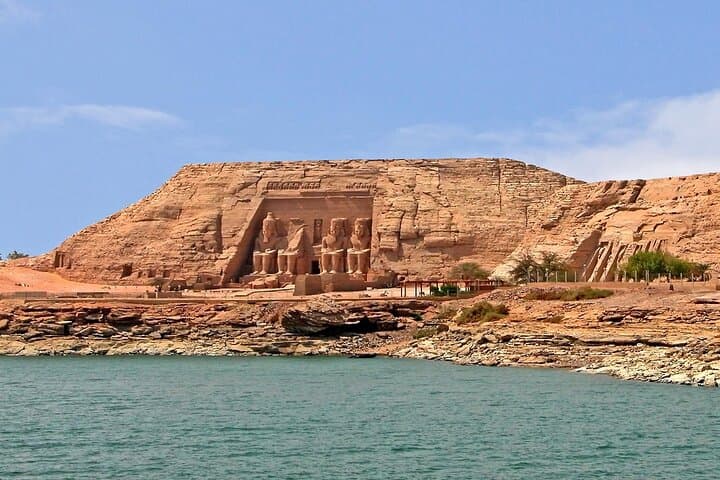
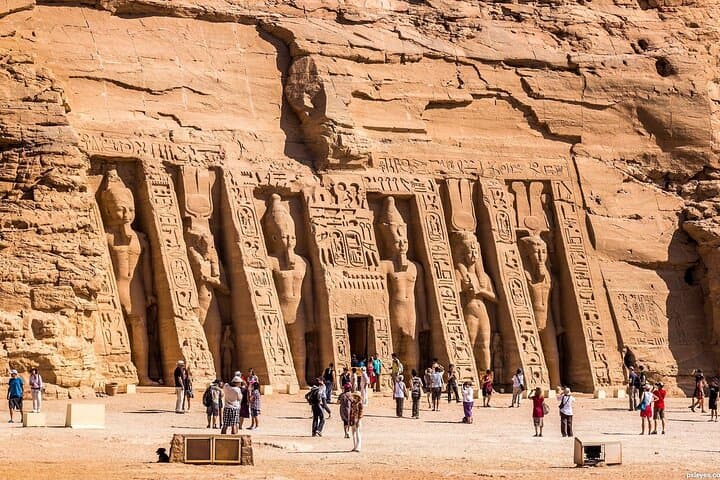
Carved from the living rock during the reign of Ramses II in the 13th century BCE, Abu Simbel's twin temples celebrate royal power and divine order. The Great Temple honors Ramses; the smaller temple is dedicated to Nefertari and Hathor. In the 1960s the whole complex was painstakingly moved higher to avoid Lake Nasser after the Aswan High Dam—an engineering rescue that preserved ancient stone and modern stories.
Geologically the temples sit in Nubian sandstone on the edge of Lake Nasser’s shore, where wind-scoured desert meets a broad artificial lake. Culturally the site underscores Egypt’s pharaonic reach south toward Nubia; your Egyptologist guide will unpack hieroglyphic panels and the famous solar alignment that still draws visitors twice a year.
Practically: this is a long but straightforward day—expect roughly 3–4 hours each way by air-conditioned van for an 8‑hour outing, small shared groups of 8–10, hotel pickup and drop-off included, but entrance fees are typically paid on site. Bring sun protection, 2–3 liters of water, cash for tickets and tips, comfortable shoes for stone steps, and your passport for ticketing. Visit early in the morning to avoid peak heat and crowds; move with respect across fragile floors and follow path signage. The trip pairs historic spectacle with a desert drive that is as much about the light and distance as it is about the monuments.
easy.
8 hours.
Minimal walking on mostly flat paved areas and stone steps—suitable for travelers in average fitness; expect long periods of sitting during transit.
No, admission is typically not included in the shared tour price and is paid on site; bring cash in Egyptian pounds for tickets and any onsite purchases.
Expect roughly 3 to 4 hours each way by van depending on traffic and stops—plan on a full 8‑hour day including touring time at the temples.
The forecourt and inner chambers have stone steps and narrow passages; some parts are accessible but visitors with mobility issues should contact the operator in advance to discuss assistance and pickup locations.
Early morning outside peak summer months (May–September) is best for cooler temperatures and softer light; winter mornings are cool and pleasant but bring a light layer.
Abu Simbel was carved under Ramses II and later relocated during the 1960s UNESCO campaign to protect it from flooding caused by the Aswan High Dam.
Visitor numbers and temperatures stress ancient stone—follow marked paths, avoid touching reliefs, and carry out all trash to reduce wear on the site.
Egypt Best Day Tours operates guided outdoor trips and adventures with an emphasis on safety, stewardship, and memorable experiences.
You arrive before the heat presses down: the road from Aswan opens into pale desert, and the first silhouette of stone—four colossal seated figures—grows until the cliff-face fills your windshield. The van eases into the small parking terrace and the air smells of warm sand and diesel; the statues stare south, watching the sky.
You arrive before the heat presses down: the road from Aswan opens into pale desert, and the first silhouette of stone—four colossal seated figures—grows until the cliff-face fills your windshield. The van eases into the small parking terrace and the air smells of warm sand and diesel; the statues stare south, watching the sky.
Carved from the living rock during the reign of Ramses II in the 13th century BCE, Abu Simbel's twin temples celebrate royal power and divine order. The Great Temple honors Ramses; the smaller temple is dedicated to Nefertari and Hathor. In the 1960s the whole complex was painstakingly moved higher to avoid Lake Nasser after the Aswan High Dam—an engineering rescue that preserved ancient stone and modern stories.
Geologically the temples sit in Nubian sandstone on the edge of Lake Nasser’s shore, where wind-scoured desert meets a broad artificial lake. Culturally the site underscores Egypt’s pharaonic reach south toward Nubia; your Egyptologist guide will unpack hieroglyphic panels and the famous solar alignment that still draws visitors twice a year.
Practically: this is a long but straightforward day—expect roughly 3–4 hours each way by air-conditioned van for an 8‑hour outing, small shared groups of 8–10, hotel pickup and drop-off included, but entrance fees are typically paid on site. Bring sun protection, 2–3 liters of water, cash for tickets and tips, comfortable shoes for stone steps, and your passport for ticketing. Visit early in the morning to avoid peak heat and crowds; move with respect across fragile floors and follow path signage. The trip pairs historic spectacle with a desert drive that is as much about the light and distance as it is about the monuments.