THE ADVENTURE COLLECTIVE® · Independent discovery and booking for outdoor travel

Walk the full circuit of Derry’s famous 17th-century walls with a local historian. This small-group tour blends siege-era stories, civic landmarks and compact city views into an accessible 90–120 minute experience.
Walk the full circuit of Derry’s famous 17th-century walls with a local historian. This small-group tour blends siege-era stories, civic landmarks and compact city views into an accessible 90–120 minute experience.
Morning light slips along the stone ramparts as you step onto Derry’s walls, the city opening in layered frames: red brick guildhall, the curve of the River Foyle, narrow lanes spilling down from the bastions.
Verified experiences and guided adventures in the surrounding area.
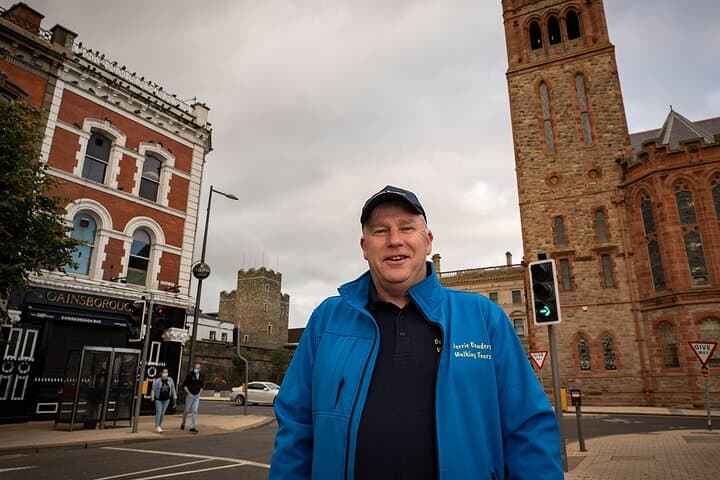
Operated by Derrie Danders Walking and Audio Tours · Derry / Londonderry, Northern Ireland
Morning light slips along the stone ramparts as you step onto Derry’s walls, the city opening in layered frames: red brick guildhall, the curve of the River Foyle, narrow lanes spilling down from the bastions.
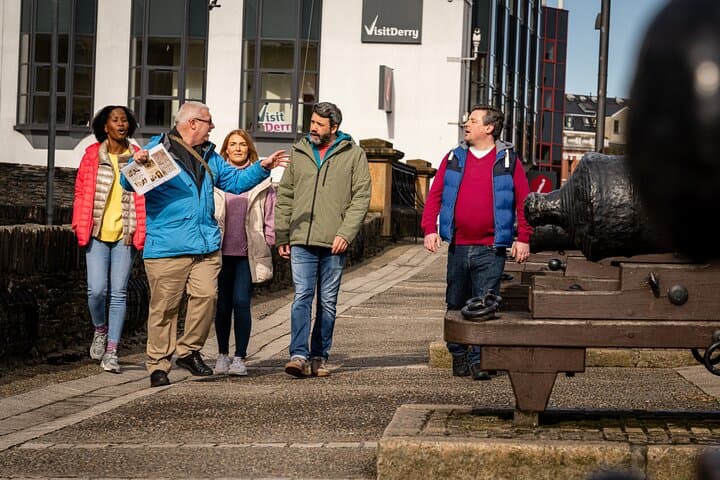
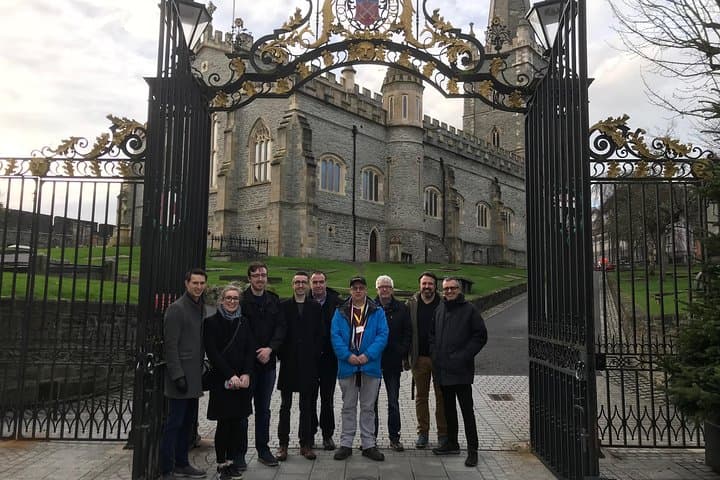
The full-circuit walk follows the defensive ring first raised in the early 17th century during the Plantation of Ulster; those same stones still recall the 1688–89 siege and the city's industrial boom in the 19th century. The route traces military engineering—bastions, cannon platforms, gates—while passing civic landmarks: Guildhall, St Columb’s Cathedral and the compact Craft Village where trades persist.
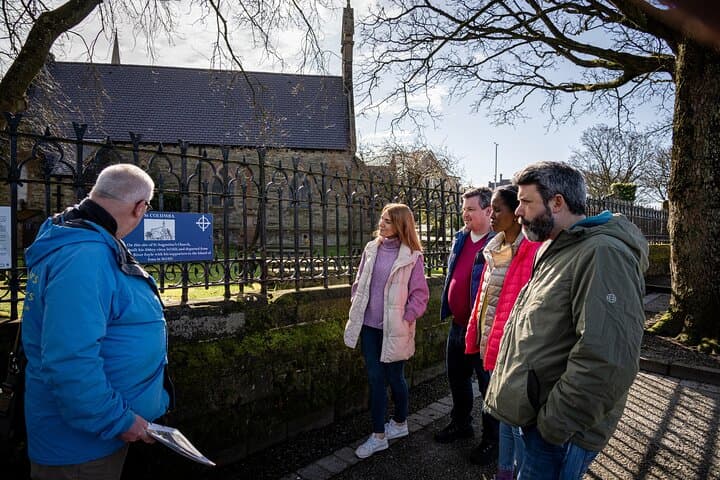
Geology here is quiet but telling: glacial-smoothed river terraces feed into the mud and shale of the Foyle, shaping the city’s waterfront and the viewpoints from the walls. Culturally, expect layered narratives—Gaelic origins, plantation-era settlements, waves of emigration and more recent peace-building—delivered by a local guide who links architecture to lives lived in these streets.
Practical: the standard public walk runs about 90 minutes; private options extend to two hours with accessible routing available. Surfaces are paved and stone; moderate footing is required. Dress for changeable Irish weather and plan for frequent stops to hear stories and take photos from key bastions. Bring a water bottle, sturdy shoes, and a lightweight rain layer.
The circuit is compact but dense: come curious, move deliberately, and let the walls set the pace—each gate a chapter, each cannon a prompt to look closer at the city beneath your feet.
easy.
1.5–2 hours.
Suitable for most fitness levels; involves walking on paved and stone surfaces with short stair sections.
Public tours run about 90 minutes; private tours typically last up to two hours but can be extended by request.
Yes—private tours can be adapted to a wheelchair and stroller-accessible route if requested at booking.
Service animals are permitted; pets are not generally accommodated on public tours—check with the operator for private arrangements.
There are short stair sections on the walls and some uneven paving; guides can avoid stairs for accessible routes if arranged in advance.
Derry’s stone walls were constructed during the Plantation of Ulster in the early 1600s and survived a major siege in 1688–89, giving the circuit its historic significance.
The walls are a scheduled historic monument; stick to marked paths, avoid climbing parapets, and leave no trace to help preserve masonry and nearby heritage sites.
Derrie Danders Walking and Audio Tours operates guided outdoor trips and adventures with an emphasis on safety, stewardship, and memorable experiences.
Morning light slips along the stone ramparts as you step onto Derry’s walls, the city opening in layered frames: red brick guildhall, the curve of the River Foyle, narrow lanes spilling down from the bastions.
Morning light slips along the stone ramparts as you step onto Derry’s walls, the city opening in layered frames: red brick guildhall, the curve of the River Foyle, narrow lanes spilling down from the bastions.
The full-circuit walk follows the defensive ring first raised in the early 17th century during the Plantation of Ulster; those same stones still recall the 1688–89 siege and the city's industrial boom in the 19th century. The route traces military engineering—bastions, cannon platforms, gates—while passing civic landmarks: Guildhall, St Columb’s Cathedral and the compact Craft Village where trades persist.
Geology here is quiet but telling: glacial-smoothed river terraces feed into the mud and shale of the Foyle, shaping the city’s waterfront and the viewpoints from the walls. Culturally, expect layered narratives—Gaelic origins, plantation-era settlements, waves of emigration and more recent peace-building—delivered by a local guide who links architecture to lives lived in these streets.
Practical: the standard public walk runs about 90 minutes; private options extend to two hours with accessible routing available. Surfaces are paved and stone; moderate footing is required. Dress for changeable Irish weather and plan for frequent stops to hear stories and take photos from key bastions. Bring a water bottle, sturdy shoes, and a lightweight rain layer.
The circuit is compact but dense: come curious, move deliberately, and let the walls set the pace—each gate a chapter, each cannon a prompt to look closer at the city beneath your feet.