THE ADVENTURE COLLECTIVE® · Independent discovery and booking for outdoor travel

Train from cavern basics to full cave diver across the Yucatán’s famous cenotes. This multi-day TDI package combines classroom theory, confined-water skills and progressive cave dives under professional instruction.
Train from cavern basics to full cave diver across the Yucatán’s famous cenotes. This multi-day TDI package combines classroom theory, confined-water skills and progressive cave dives under professional instruction.
You surface into green light and the cenote exhales cool air across your mask—the limestone roof above punctured by shafts of sun that seem to push the water into motion. In the Yucatán, caverns and underwater passages curve away like veins, and this course package puts you inside that hidden network, training divers from sidemount basics through full cave exploration.
Verified experiences and guided adventures in the surrounding area.
Operated by Diversland Mexico · Playa del Carmen, Quintana Roo
You surface into green light and the cenote exhales cool air across your mask—the limestone roof above punctured by shafts of sun that seem to push the water into motion. In the Yucatán, caverns and underwater passages curve away like veins, and this course package puts you inside that hidden network, training divers from sidemount basics through full cave exploration.
The region sits on a karst plateau: rainwater dissolved limestone for millennia, creating the world’s densest concentration of submerged caves and cenotes. Maya communities treated many cenotes as sacred wells and portals; today these same sinkholes are classrooms for technical diving. Geology here matters—fragile stalactites and thin haloclines mark transitions between fresh and salt water, and proper technique keeps both you and the cavern intact.
Expect a mix of dry theory, confined-water drills, line-tracing exercises and progressive open-cave navigations under guided supervision. Instructors focus on gas management, buoyancy and communication, then add sidemount trim and long-distance planning for full cave certification. Conservational practice is emphasized: no fins-on-silt, minimal lighting disturbance and strict kit protocols.
Plan for back-to-back dive days, early starts to avoid afternoon storms, and strict no-fly windows after repetitive dives. Bring personal-fit gear where possible, maintain surface hydration, and practice buoyancy before arrival. For adventurous divers wanting to move from certified open-water diving to exploring passages measured in kilometers, this program is an efficient, safety-first route into true cave exploration.
expert.
10–14 days.
Good cardiovascular fitness and comfort with confined spaces; expect repetitive dives, equipment handling and moderate hauling.
Yes—evidence of open-water certification is required; the package builds from sidemount and cavern skills toward full cave diver training.
The full package runs roughly 10–14 days depending on pacing and skill progression; the listed itinerary accounts for theory, drills and staged cave dives.
The program includes entry-level cavern training, but cave diving remains technical; students must demonstrate strong buoyancy, comfort in confined spaces and follow instructor limits.
The Yucatán has a wet season (May–October) with short heavy rains and a hurricane season peak in August–September; instructors schedule dives to avoid storms and poor visibility.
Many cenotes were ritual sites for the Maya and later became mapped as freshwater sources and passageways during colonial and modern exploration.
Cenotes are chemically sensitive—avoid lotions, secure gear to prevent loss, and follow guide rules to minimize silt and pollution.
Diversland Mexico operates guided outdoor trips and adventures with an emphasis on safety, stewardship, and memorable experiences.


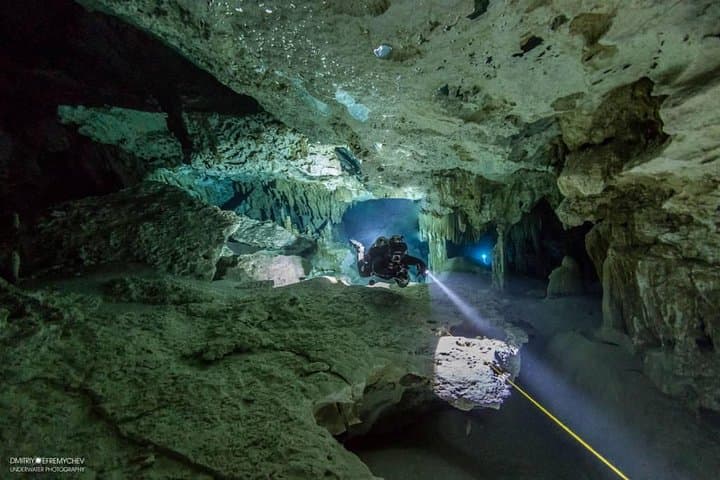
You surface into green light and the cenote exhales cool air across your mask—the limestone roof above punctured by shafts of sun that seem to push the water into motion. In the Yucatán, caverns and underwater passages curve away like veins, and this course package puts you inside that hidden network, training divers from sidemount basics through full cave exploration.
You surface into green light and the cenote exhales cool air across your mask—the limestone roof above punctured by shafts of sun that seem to push the water into motion. In the Yucatán, caverns and underwater passages curve away like veins, and this course package puts you inside that hidden network, training divers from sidemount basics through full cave exploration.
The region sits on a karst plateau: rainwater dissolved limestone for millennia, creating the world’s densest concentration of submerged caves and cenotes. Maya communities treated many cenotes as sacred wells and portals; today these same sinkholes are classrooms for technical diving. Geology here matters—fragile stalactites and thin haloclines mark transitions between fresh and salt water, and proper technique keeps both you and the cavern intact.
Expect a mix of dry theory, confined-water drills, line-tracing exercises and progressive open-cave navigations under guided supervision. Instructors focus on gas management, buoyancy and communication, then add sidemount trim and long-distance planning for full cave certification. Conservational practice is emphasized: no fins-on-silt, minimal lighting disturbance and strict kit protocols.
Plan for back-to-back dive days, early starts to avoid afternoon storms, and strict no-fly windows after repetitive dives. Bring personal-fit gear where possible, maintain surface hydration, and practice buoyancy before arrival. For adventurous divers wanting to move from certified open-water diving to exploring passages measured in kilometers, this program is an efficient, safety-first route into true cave exploration.