THE ADVENTURE COLLECTIVE® · Independent discovery and booking for outdoor travel

Choose two off-the-beaten-path Fuling highlights — the Cold War 816 tunnels, the Baiheliang underwater inscriptions, or Wuling’s karst canyon — on a private 6–7 hour tour with hotel pickup in Chongqing.
Choose two off-the-beaten-path Fuling highlights — the Cold War 816 tunnels, the Baiheliang underwater inscriptions, or Wuling’s karst canyon — on a private 6–7 hour tour with hotel pickup in Chongqing.
A low, armored van peels away from downtown Chongqing as the river narrows and the city’s skyline fades. On the way to Fuling you feel the landscape change: industrial bunds give way to karst-framed hills and the Yangtze opens like a moving map. The tour slates 6–7 hours; you choose two sites from three very different worlds—Cold War tunnels, submerged stone inscriptions, or a dramatic karst canyon with a glass skywalk.
Verified experiences and guided adventures in the surrounding area.
Operated by Unique Beijing Tours · Fuling, Chongqing
A low, armored van peels away from downtown Chongqing as the river narrows and the city’s skyline fades. On the way to Fuling you feel the landscape change: industrial bunds give way to karst-framed hills and the Yangtze opens like a moving map. The tour slates 6–7 hours; you choose two sites from three very different worlds—Cold War tunnels, submerged stone inscriptions, or a dramatic karst canyon with a glass skywalk.
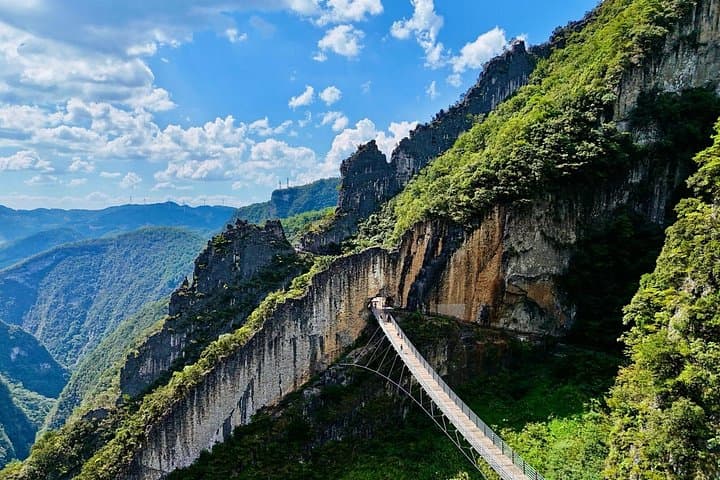
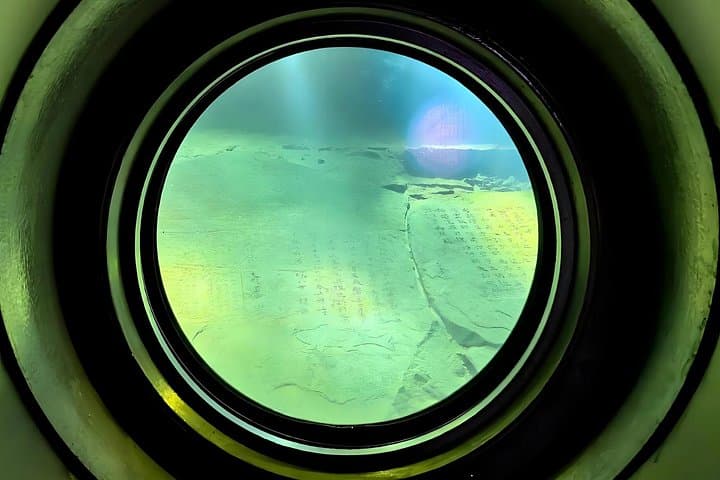
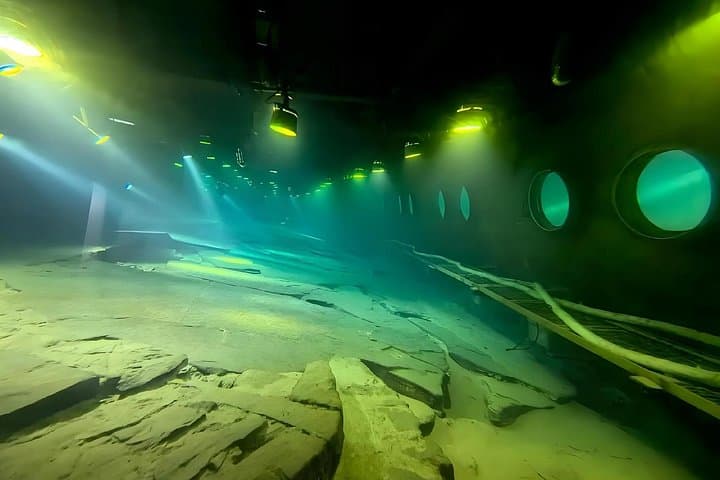
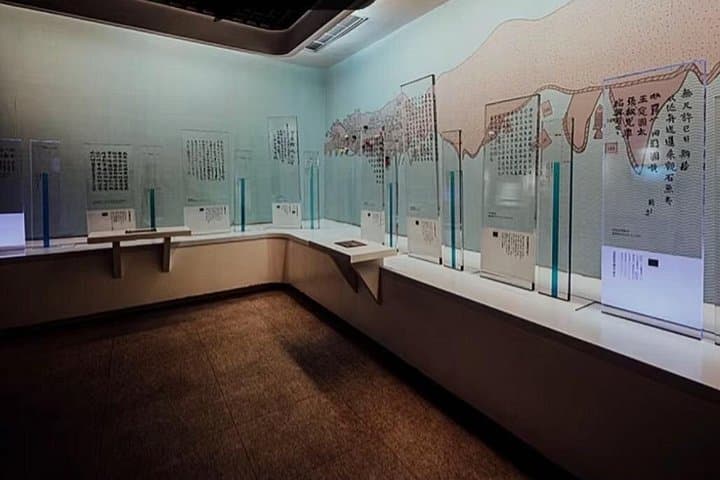
The 816 Nuclear Military Plant sits inside Jinzi Mountain and reads like a frozen industrial novel—104,000 m² of tunnels, a 79.6 m main cavern, and preserved reactor areas that tell a mid-20th-century story of military urgency and engineering. Baiheliang Underwater Museum preserves a 1,600 m rock reef and 165 inscriptions, some Tang dynasty calligraphy now viewed through pressure-resistant windows 40 m below water. Wuling Mountain Grand Canyon exposes classic karst geology: sheer cliffs, waterfalls, and trails carved into limestone; the skywalk gives a vertiginous vantage on strata and river valleys.
Culturally, Fuling is a river town shaped by navigation, salt trade and hydrology; locals still celebrate river festivals and sell pickled mustard—an edible local specialty. Practically: expect 60–120 minutes at each stop, light walking, stairs and an elevator at the museum, and roughly 1.5–2 hours driving each way depending on traffic. Bring photo ID for tickets, comfortable walking shoes for uneven stone and glass platforms, a light jacket for cooler underground corridors, and bottled water. With a private guide and door-to-door transport, this is a compact, flexible way to see Chongqing’s lesser-known technical history and karst drama in a single day.
easy.
6–7 hours.
Suitable for most walkers — light to moderate walking, some stairs and short hikes; not strenuous.
Yes — the tour is customizable; you select any two of the three sites when you book.
Expect roughly 1.5–2 hours each way depending on traffic; the full tour lasts about 6–7 hours including visits.
The operator lists the tour as physically easy and stroller-accessible, but some sites have stairs and uneven ground—notify the guide at booking for assistance.
Entrance to the two chosen attractions is included in the tour price as listed in the itinerary.
Fuling’s riverside position shaped its role in navigation, salt trade and 20th-century military projects; Baiheliang records over 1,200 years of hydrological data.
The underwater museum preserves fragile stone inscriptions with strict climate and preservation systems; visitors should avoid touching exhibits and stick to marked paths to protect karst vegetation.
Unique Beijing Tours operates guided outdoor trips and adventures with an emphasis on safety, stewardship, and memorable experiences.
A low, armored van peels away from downtown Chongqing as the river narrows and the city’s skyline fades. On the way to Fuling you feel the landscape change: industrial bunds give way to karst-framed hills and the Yangtze opens like a moving map. The tour slates 6–7 hours; you choose two sites from three very different worlds—Cold War tunnels, submerged stone inscriptions, or a dramatic karst canyon with a glass skywalk.
A low, armored van peels away from downtown Chongqing as the river narrows and the city’s skyline fades. On the way to Fuling you feel the landscape change: industrial bunds give way to karst-framed hills and the Yangtze opens like a moving map. The tour slates 6–7 hours; you choose two sites from three very different worlds—Cold War tunnels, submerged stone inscriptions, or a dramatic karst canyon with a glass skywalk.
The 816 Nuclear Military Plant sits inside Jinzi Mountain and reads like a frozen industrial novel—104,000 m² of tunnels, a 79.6 m main cavern, and preserved reactor areas that tell a mid-20th-century story of military urgency and engineering. Baiheliang Underwater Museum preserves a 1,600 m rock reef and 165 inscriptions, some Tang dynasty calligraphy now viewed through pressure-resistant windows 40 m below water. Wuling Mountain Grand Canyon exposes classic karst geology: sheer cliffs, waterfalls, and trails carved into limestone; the skywalk gives a vertiginous vantage on strata and river valleys.
Culturally, Fuling is a river town shaped by navigation, salt trade and hydrology; locals still celebrate river festivals and sell pickled mustard—an edible local specialty. Practically: expect 60–120 minutes at each stop, light walking, stairs and an elevator at the museum, and roughly 1.5–2 hours driving each way depending on traffic. Bring photo ID for tickets, comfortable walking shoes for uneven stone and glass platforms, a light jacket for cooler underground corridors, and bottled water. With a private guide and door-to-door transport, this is a compact, flexible way to see Chongqing’s lesser-known technical history and karst drama in a single day.