THE ADVENTURE COLLECTIVE® · Independent discovery and booking for outdoor travel

Explore Fukuoka on a private, six-hour walking tour with a government-licensed English guide who customizes the day to your interests—history, food, or modern design. From castle ruins to waterfront yatai, this tour balances cultural depth with practical pacing for confident city walkers.
Explore Fukuoka on a private, six-hour walking tour with a government-licensed English guide who customizes the day to your interests—history, food, or modern design. From castle ruins to waterfront yatai, this tour balances cultural depth with practical pacing for confident city walkers.
Morning light slices across Hakata Bay as you step onto a quieter street in Fukuoka, the guide at your side mapping a day that can shift from samurai-era ruins to neon-lit yatai by night. This is a private, six-hour walking tour led by a government-licensed English-speaking guide who tailors the route to your interests—history, food, or contemporary design.
Verified experiences and guided adventures in the surrounding area.
Operated by Japan Guide Agency · Fukuoka, Fukuoka Prefecture
Morning light slices across Hakata Bay as you step onto a quieter street in Fukuoka, the guide at your side mapping a day that can shift from samurai-era ruins to neon-lit yatai by night. This is a private, six-hour walking tour led by a government-licensed English-speaking guide who tailors the route to your interests—history, food, or contemporary design.
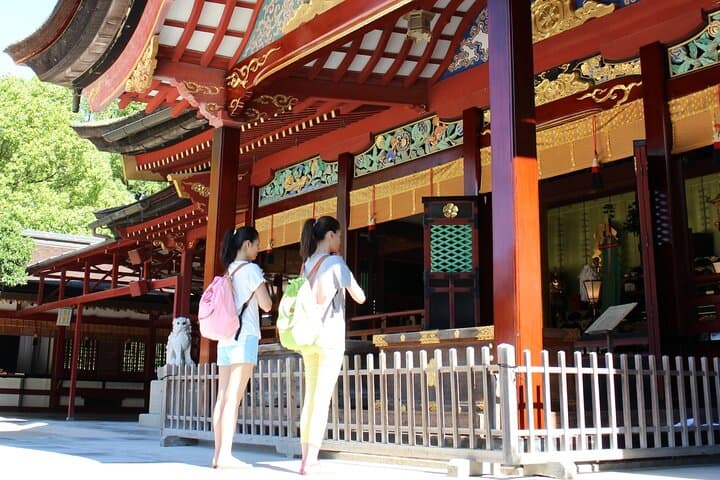
Fukuoka’s story is coastal and continental: a gateway between Kyushu, Korea and China. Visit castle earthworks and moats that recall Edo logistics, then move to Kushida-jinja and Tochoji where centuries of Shinto and Buddhist practice still shape daily life. Geological hints of the region—low rolling hills, reclaimed waterfronts at Momochi, and sandy peninsulas like Uminonakamichi—explain why ports and temples clustered here.
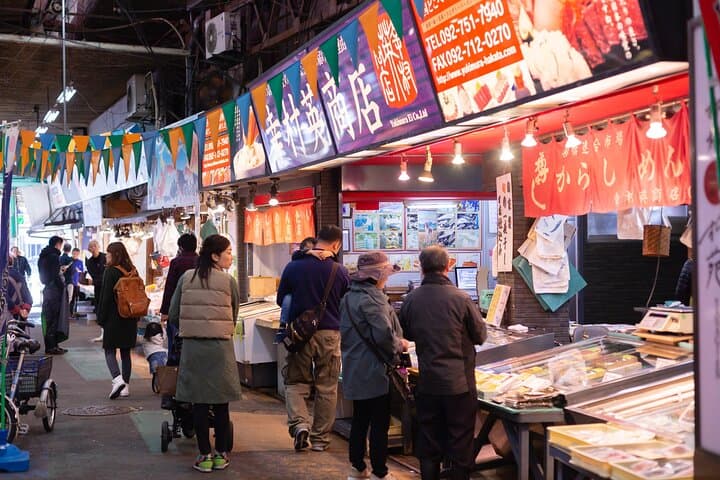
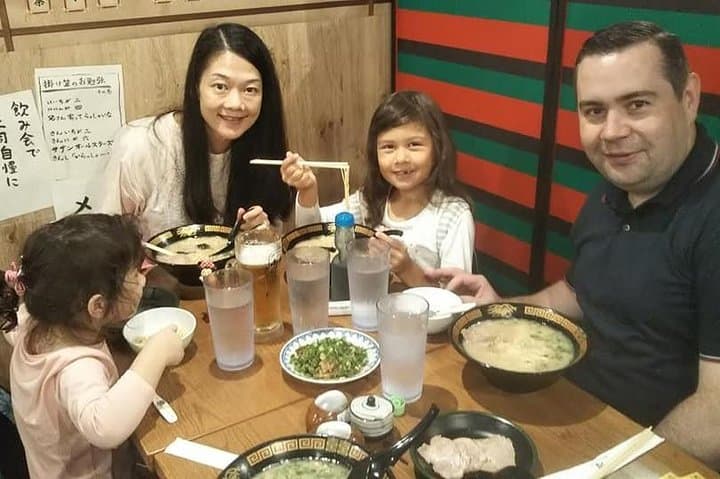
Culture is tactile: ramen steam from Hakata stalls, the clang of markets at Yanagibashi, and the ebb of ferryboats to Nokonoshima. Your guide folds local lore into each stop—festival routes, shrine rituals, and the city’s postwar rebirth around Canal City.
Practical side: this is predominantly on-foot city exploration with gentle grades and short transit hops by public transport if needed. Expect up to six hours of walking with frequent stops, restroom access, and flexible pacing for food and photos.
Plan for layered clothing, public-transport IC cards, and modest temple etiquette. Book a morning start to avoid midday heat in summer and leave evening open for yatai dining along Nakasu’s riverbanks.
easy.
6 hours.
Suitable for most people who can walk 2–4 miles spread across a day with short breaks
Yes—this private tour is built around your selected 3–4 must-see sites; discuss priorities when booking or at pickup.
Guides meet on foot at a designated spot in central Fukuoka or at your hotel entrance if within the city; confirm the exact pickup during booking.
Many stops and transit routes are accessible, and the operator notes wheelchair accessibility—tell them your needs so they can plan suitable routes.
Most sites listed are public or viewed from outside; any museum or attraction entrance fees are typically not included unless specified—confirm with the operator.
Fukuoka grew as Hakata, an international trade and diplomatic gateway; Dazaifu served as Kyushu’s ancient administrative center linking Japan to the Asian mainland.
Respect temple grounds and public parks by using bin stations and minimizing single-use plastics; coastal islands like Nokonoshima have fragile dunes—stick to marked trails.
Japan Guide Agency operates guided outdoor trips and adventures with an emphasis on safety, stewardship, and memorable experiences.
Morning light slices across Hakata Bay as you step onto a quieter street in Fukuoka, the guide at your side mapping a day that can shift from samurai-era ruins to neon-lit yatai by night. This is a private, six-hour walking tour led by a government-licensed English-speaking guide who tailors the route to your interests—history, food, or contemporary design.
Morning light slices across Hakata Bay as you step onto a quieter street in Fukuoka, the guide at your side mapping a day that can shift from samurai-era ruins to neon-lit yatai by night. This is a private, six-hour walking tour led by a government-licensed English-speaking guide who tailors the route to your interests—history, food, or contemporary design.
Fukuoka’s story is coastal and continental: a gateway between Kyushu, Korea and China. Visit castle earthworks and moats that recall Edo logistics, then move to Kushida-jinja and Tochoji where centuries of Shinto and Buddhist practice still shape daily life. Geological hints of the region—low rolling hills, reclaimed waterfronts at Momochi, and sandy peninsulas like Uminonakamichi—explain why ports and temples clustered here.
Culture is tactile: ramen steam from Hakata stalls, the clang of markets at Yanagibashi, and the ebb of ferryboats to Nokonoshima. Your guide folds local lore into each stop—festival routes, shrine rituals, and the city’s postwar rebirth around Canal City.
Practical side: this is predominantly on-foot city exploration with gentle grades and short transit hops by public transport if needed. Expect up to six hours of walking with frequent stops, restroom access, and flexible pacing for food and photos.
Plan for layered clothing, public-transport IC cards, and modest temple etiquette. Book a morning start to avoid midday heat in summer and leave evening open for yatai dining along Nakasu’s riverbanks.