THE ADVENTURE COLLECTIVE® · Independent discovery and booking for outdoor travel

Cross the channel from Lanzarote for a full day exploring Corralejo’s wind-swept dunes, Cotillo’s fishing harbor, and long white beaches. This guided 8‑hour trip includes ferry transfers, coach transport, and free time to swim, stroll, and photograph the landscape.
Cross the channel from Lanzarote for a full day exploring Corralejo’s wind-swept dunes, Cotillo’s fishing harbor, and long white beaches. This guided 8‑hour trip includes ferry transfers, coach transport, and free time to swim, stroll, and photograph the landscape.
You step onto the ferry at Playa Blanca as the Atlantic pushes the bow forward; Lanzarote recedes and a long ribbon of white sand and wind-sculpted dunes emerges on the horizon. Within half an hour the ferry docks at Corralejo and the smell of salt, sun-warmed rock and drifting sand fills the air.
Verified experiences and guided adventures in the surrounding area.
Operated by Lineas Romero · Corralejo, Las Palmas (Canary Islands)
You step onto the ferry at Playa Blanca as the Atlantic pushes the bow forward; Lanzarote recedes and a long ribbon of white sand and wind-sculpted dunes emerges on the horizon. Within half an hour the ferry docks at Corralejo and the smell of salt, sun-warmed rock and drifting sand fills the air.
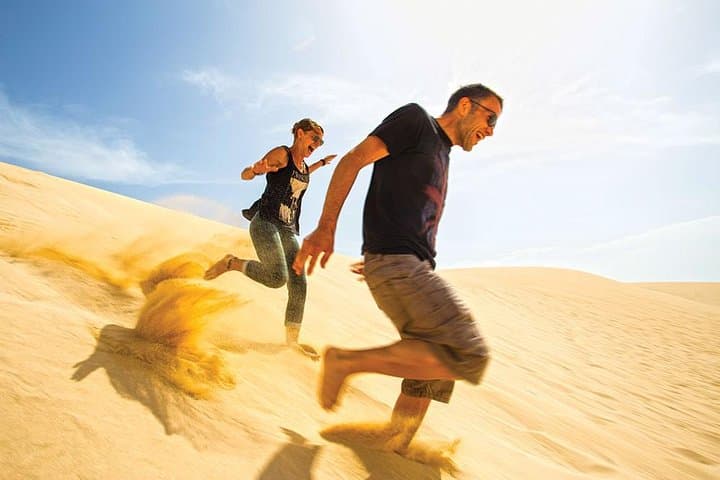
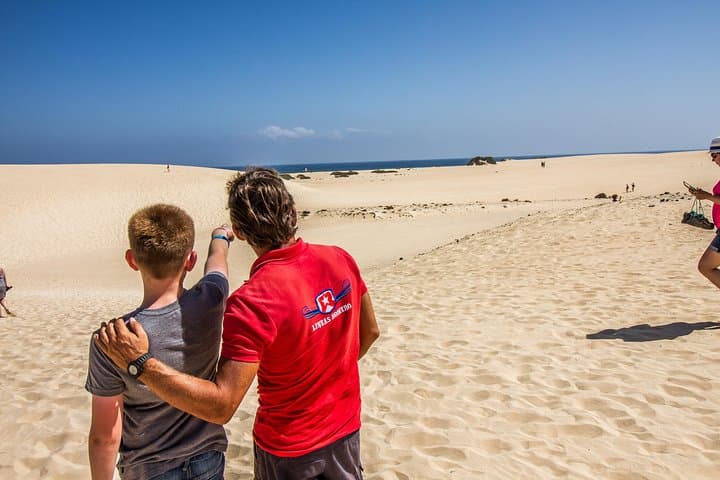
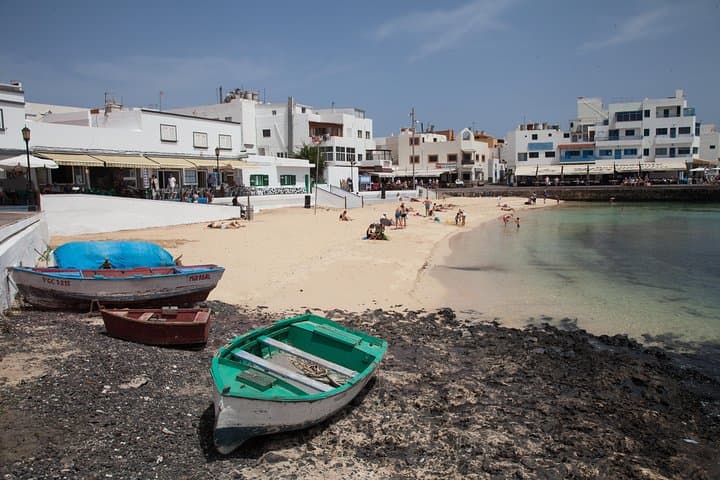
Corralejo sits at the northern tip of Fuerteventura, an island shaped by volcanic flows and coastal currents. The dunes of the Parque Natural de Corralejo are Holocene sand fields blown north from ancient beaches, now climbing in broad slopes where wind dares you to run. Nearby El Cotillo is a small fishing village whose harbor and tide pools speak to a fishing culture that predates tourism, while Corralejo’s strip of cafés and surf shops reflects the island’s modern seaside economy.
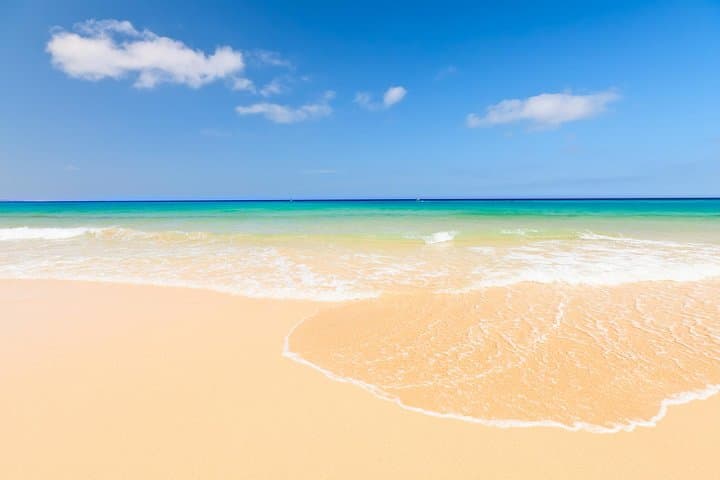
Geology here is simple and honest: dark volcanic basalt buttresses white aeolian sand, and currents carve the shoreline into long, clean beaches. Locals still fish from small boats and serve freshly caught fish in family-run restaurants. Conservation efforts focus on limiting vehicle access to the dune system and protecting migratory bird habitat.
Practicalities: this is an 8‑hour guided excursion with ferry crossings and coach transfers; expect walking on soft sand and short strolls through village streets. Bring sun protection, a swimsuit, water and comfortable shoes that can handle sand. Hotel pickup in Lanzarote is usually offered; carry ID for the ferry. Time your visit for morning or late afternoon light if you want photos—the dunes glow when the sun hangs low.
easy.
8 hours.
Suitable for most fitness levels; expect short walks on soft sand and standing during transfers
The fast ferry takes about 25–30 minutes each way between Playa Blanca and Corralejo.
Lunch is not included; you’ll have free time in El Cotillo and Corralejo to eat at local restaurants.
Yes. A valid passport or national ID card is required for each traveler, including children.
Yes—infants and small children can ride in a pram and the tour is rated physically easy, though dune terrain may limit stroller use on soft sand.
Fuerteventura’s settlements grew from fishing and pastoralism; Corralejo expanded with tourism after the 20th century while nearby dunes have been shaped by centuries of coastal winds.
The Corralejo Natural Park restricts vehicle access to protect dunes and bird habitat; visitors are asked to stay on marked routes and avoid trampling vegetation.
Lineas Romero operates guided outdoor trips and adventures with an emphasis on safety, stewardship, and memorable experiences.
You step onto the ferry at Playa Blanca as the Atlantic pushes the bow forward; Lanzarote recedes and a long ribbon of white sand and wind-sculpted dunes emerges on the horizon. Within half an hour the ferry docks at Corralejo and the smell of salt, sun-warmed rock and drifting sand fills the air.
You step onto the ferry at Playa Blanca as the Atlantic pushes the bow forward; Lanzarote recedes and a long ribbon of white sand and wind-sculpted dunes emerges on the horizon. Within half an hour the ferry docks at Corralejo and the smell of salt, sun-warmed rock and drifting sand fills the air.
Corralejo sits at the northern tip of Fuerteventura, an island shaped by volcanic flows and coastal currents. The dunes of the Parque Natural de Corralejo are Holocene sand fields blown north from ancient beaches, now climbing in broad slopes where wind dares you to run. Nearby El Cotillo is a small fishing village whose harbor and tide pools speak to a fishing culture that predates tourism, while Corralejo’s strip of cafés and surf shops reflects the island’s modern seaside economy.
Geology here is simple and honest: dark volcanic basalt buttresses white aeolian sand, and currents carve the shoreline into long, clean beaches. Locals still fish from small boats and serve freshly caught fish in family-run restaurants. Conservation efforts focus on limiting vehicle access to the dune system and protecting migratory bird habitat.
Practicalities: this is an 8‑hour guided excursion with ferry crossings and coach transfers; expect walking on soft sand and short strolls through village streets. Bring sun protection, a swimsuit, water and comfortable shoes that can handle sand. Hotel pickup in Lanzarote is usually offered; carry ID for the ferry. Time your visit for morning or late afternoon light if you want photos—the dunes glow when the sun hangs low.