THE ADVENTURE COLLECTIVE® · Independent discovery and booking for outdoor travel

Rumble through Bayuyo’s lava fields, visit El Cotillo’s black-sand coast and end with cava at a west-facing viewpoint. This two-hour 4x4 safari pairs volcanic geology with coastal culture and sunset views.
Rumble through Bayuyo’s lava fields, visit El Cotillo’s black-sand coast and end with cava at a west-facing viewpoint. This two-hour 4x4 safari pairs volcanic geology with coastal culture and sunset views.
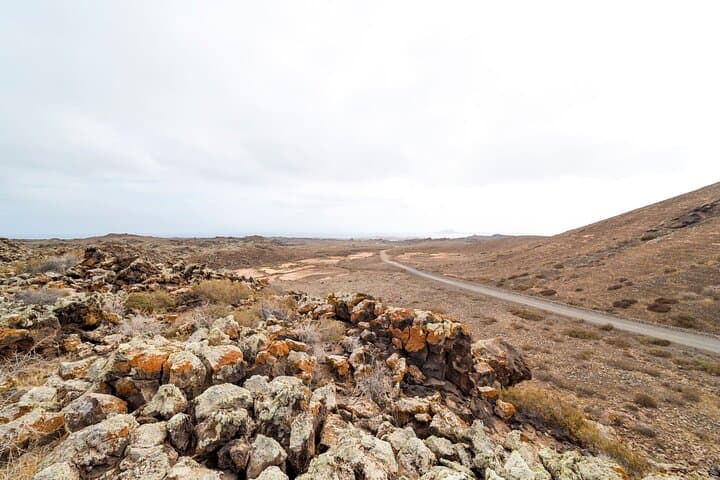
The 4x4 kicks up a dry, ochre spray as it drops off the coastal ridge and into Bayuyo’s lava-strewn badlands. Wind scours the ridges; low scrub bends like a living barometer. In this rough, open landscape the vehicles feel less like transport and more like a way to read the island: tracks, spatter cones and craters marking recent geologic episodes.
Verified experiences and guided adventures in the surrounding area.
Operated by Destination Services Spain · El Cotillo, Canary Islands
The 4x4 kicks up a dry, ochre spray as it drops off the coastal ridge and into Bayuyo’s lava-strewn badlands. Wind scours the ridges; low scrub bends like a living barometer. In this rough, open landscape the vehicles feel less like transport and more like a way to read the island: tracks, spatter cones and craters marking recent geologic episodes.
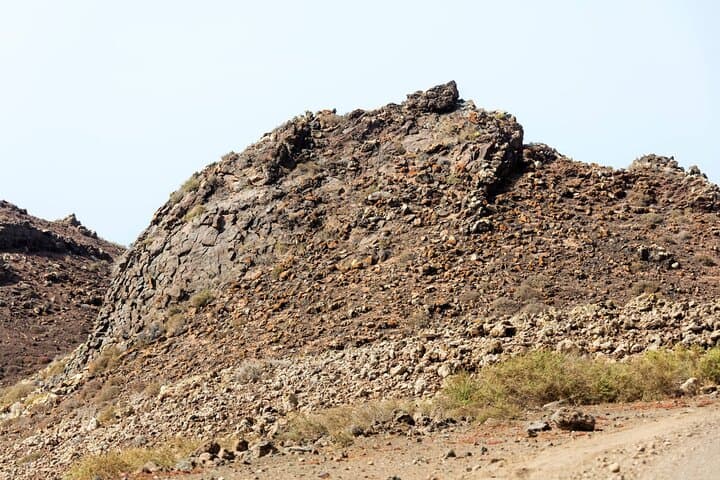
Fuerteventura is one of the oldest of the Canary Islands, formed by volcanic eruptions millions of years ago. The Bayuyo zone is a field of basalt flows and cinder cones where the earth’s skin split and cooled into rough, black fields. Coastal villages like El Cotillo grew as fishing outposts; their plain stone towers and the Toston lighthouse were built to watch the sea and warn mariners.
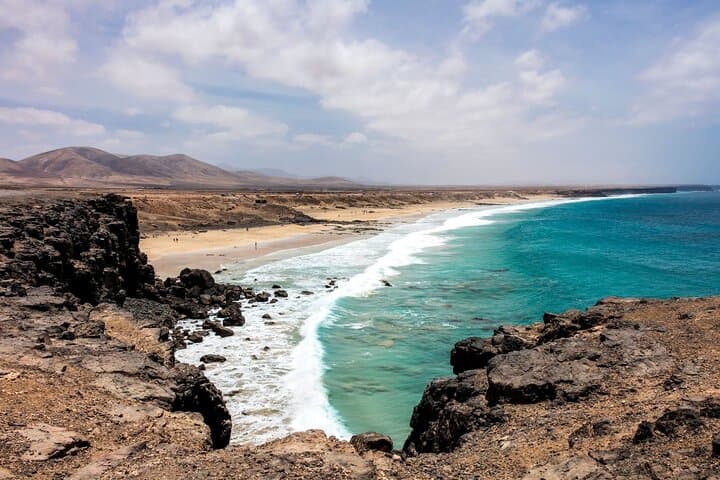
The tour moves from raw volcanics to the human coast — black-sand beaches, weathered masonry and a small surf culture that follows Atlantic swells daring riders into the line-up. Guides point out local uses of volcanic stone and recount island life: fish smoked traditionally, old watchtowers converted into photo spots, and small hamlets such as Majanicho preserving a slower rhythm.
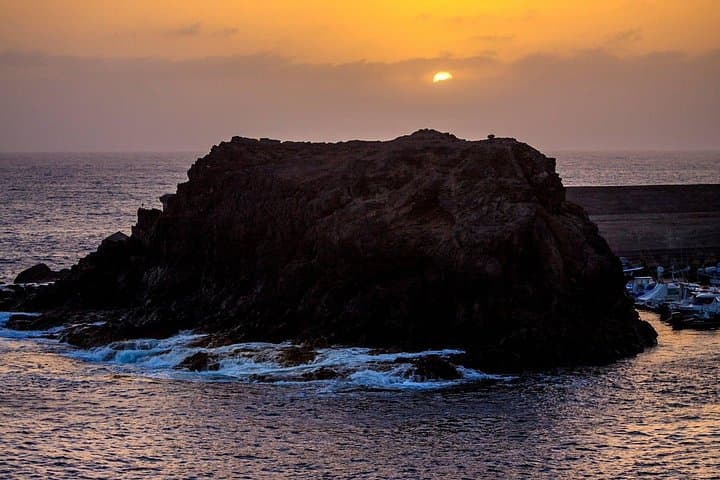
Practical guidance: wear sturdy closed shoes for rocky stops, bring a windproof layer and sun protection, and carry water — the island’s wind can dehydrate quickly. Timing matters: late afternoon trips catch the best light and a sunset cava moment on the west-facing viewpoint. Expect short photo stops rather than long hikes; the terrain favors off-road vehicles over long foot travel.
easy.
2 hours.
Suitable for most fitness levels; requires short, easy walks at stops
The experience lasts approximately 2 hours, including off-road driving and photo stops.
Infants are not permitted (0–1 years); children may join but infants must sit on an adult’s lap per provider rules.
No technical hiking skills are required; stops involve short, easy walks on uneven ground.
A glass of cava is included at the sunset stop; the tour mentions time for a bite in El Cotillo but check the booking for the exact lunch inclusion details.
Fuerteventura’s coastlines were shaped by maritime trade and fisheries; watchtowers and lighthouses once guarded against corsairs and shipwrecks.
Respect fragile lava fields by staying on designated tracks; coastal habitats are sensitive to trampling and marine debris, so pack out what you bring in.
Destination Services Spain operates guided outdoor trips and adventures with an emphasis on safety, stewardship, and memorable experiences.
The 4x4 kicks up a dry, ochre spray as it drops off the coastal ridge and into Bayuyo’s lava-strewn badlands. Wind scours the ridges; low scrub bends like a living barometer. In this rough, open landscape the vehicles feel less like transport and more like a way to read the island: tracks, spatter cones and craters marking recent geologic episodes.
The 4x4 kicks up a dry, ochre spray as it drops off the coastal ridge and into Bayuyo’s lava-strewn badlands. Wind scours the ridges; low scrub bends like a living barometer. In this rough, open landscape the vehicles feel less like transport and more like a way to read the island: tracks, spatter cones and craters marking recent geologic episodes.
Fuerteventura is one of the oldest of the Canary Islands, formed by volcanic eruptions millions of years ago. The Bayuyo zone is a field of basalt flows and cinder cones where the earth’s skin split and cooled into rough, black fields. Coastal villages like El Cotillo grew as fishing outposts; their plain stone towers and the Toston lighthouse were built to watch the sea and warn mariners.
The tour moves from raw volcanics to the human coast — black-sand beaches, weathered masonry and a small surf culture that follows Atlantic swells daring riders into the line-up. Guides point out local uses of volcanic stone and recount island life: fish smoked traditionally, old watchtowers converted into photo spots, and small hamlets such as Majanicho preserving a slower rhythm.
Practical guidance: wear sturdy closed shoes for rocky stops, bring a windproof layer and sun protection, and carry water — the island’s wind can dehydrate quickly. Timing matters: late afternoon trips catch the best light and a sunset cava moment on the west-facing viewpoint. Expect short photo stops rather than long hikes; the terrain favors off-road vehicles over long foot travel.