THE ADVENTURE COLLECTIVE® · Independent discovery and booking for outdoor travel

In under 30 minutes from downtown Denver you can trade city noise for vertical stone. This three-hour, guide-led top-rope climb on the Front Range gives beginners and experienced climbers direct access to classic foothill routes, sweeping views and hands-on instruction.
In under 30 minutes from downtown Denver you can trade city noise for vertical stone. This three-hour, guide-led top-rope climb on the Front Range gives beginners and experienced climbers direct access to classic foothill routes, sweeping views and hands-on instruction.
You step out of the van and the air changes—thinner, drier, edged with the mineral tang of sun-warmed stone. A ribbon of highway peels back toward the city, but here the cliff faces rise close and immediate, fingers of rock calling for hands and feet. Guides sling ropes, sort harnesses, and gesture toward routes that thread cracks, faces and small roofs. For the next three hours the Front Range stops being a postcard of distant peaks and becomes a tactile landscape you move through.
Verified experiences and guided adventures in the surrounding area.
Operated by Denver Adventures - Zipline Tours · Golden, Colorado
You step out of the van and the air changes—thinner, drier, edged with the mineral tang of sun-warmed stone. A ribbon of highway peels back toward the city, but here the cliff faces rise close and immediate, fingers of rock calling for hands and feet. Guides sling ropes, sort harnesses, and gesture toward routes that thread cracks, faces and small roofs. For the next three hours the Front Range stops being a postcard of distant peaks and becomes a tactile landscape you move through.
The crags less than half an hour from downtown Denver occupy the lower foothills of the Rockies, where uplifted layers of Pennsylvanian and Permian sandstone, conglomerate and volcanic intrusions create vertical playgrounds. These are not alpine summits but steep, locally sculpted faces—perfect for top-rope climbing, the safest way to climb because the rope is anchored above and climbers never lead the pitch alone.
This is also an area with a working history: miners and rail crews carved roads along the canyon, while early climbers in the mid-20th century began bolting routes for recreation. Today, local climbing ethics emphasize low-impact access—stick to established approaches, use chalk sparingly and pack out trash.
The experience is organized for accessibility. Guides teach belay techniques, knot-tying and route-reading before you step onto the rock. Routes are chosen to match ability, from low-angle slab that tests balance to short, pumpy 5.8s that reward technical footwork. Expect short approaches—typically 5–15 minutes over compact dirt—and crag elevations in the high 5,000s to low 6,000s feet, so the climb feels immediate rather than a long mountain commitment.
Practically, arrive dressed in athletic layers you can stretch in; closed-toe shoes are a must (climbing shoes provided). Hydrate early—Colorado’s altitude and sun will dry you faster than you think. Guides supply ropes, harnesses, helmets, snacks and water; bring a small daypack for your phone, sunscreen and a light jacket.
Timing matters: morning sessions have the clearest, coolest rock; afternoons offer warmer stone but more sun. Weather can turn quickly in the Front Range—lightning is a real hazard in summer storms—so operators may cancel for safety. If you want pictures, ask the guide for a belay-side vantage; the view back toward Denver and the Platte River plain opens at certain angles, giving the urban skyline a distant, geometric cut against the mountains.
For any climber factoring logistics, this is a high-value, low-commitment way to feel the rock of Colorado without a full alpine day—an active introduction to the techniques and sensations that define climbing on the Front Range.
moderate.
3 hours.
Suitable for people with basic cardio and functional upper-body strength; the activity is taught for beginners but requires stamina for repeated short climbs.
No—this is a guided top-rope experience designed for beginners and intermediates; guides teach safety, belaying and basic technique.
The crags used are typically 25–35 minutes from downtown Denver depending on traffic and the exact meeting point; reconfirm pickup details with the operator 24–48 hours ahead.
Guides provide ropes, harnesses, helmets, climbing shoes, water and snacks; bring layered clothing, sunscreen, a small daypack and any personal medications.
Age and weight limits vary by operator—check when booking; climbers must be able to follow instructions and meet harness sizing requirements.
Operators monitor conditions closely; tours can be canceled or rescheduled in cases of lightning, heavy rain or unsafe wind—full refunds are typically available if canceled 24 hours prior.
Facilities are limited at many roadside crags; plan accordingly and use facilities before the short approach.
These foothill crags were carved by ancient rivers and uplift, then used by miners and early climbers; the sport’s local roots date to mid-20th-century climbing clubs that established many first routes.
Climbing areas rely on low-impact practices—stay on established trails, avoid altering anchors and carry out all trash to protect fragile foothill vegetation.
Denver Adventures - Zipline Tours operates guided outdoor trips and adventures with an emphasis on safety, stewardship, and memorable experiences.
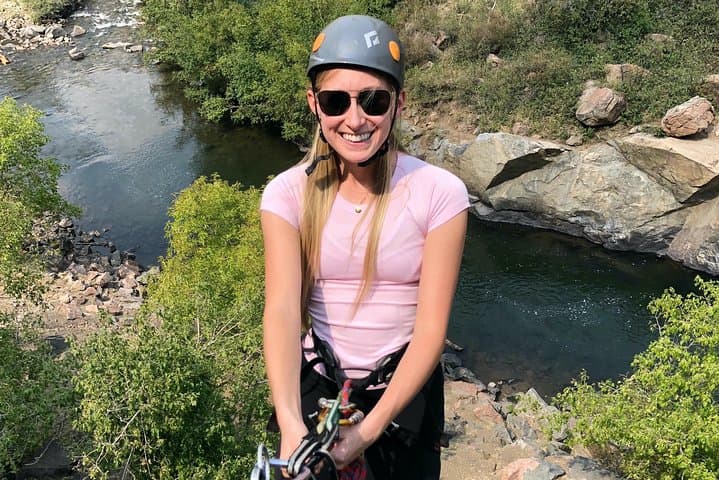


You step out of the van and the air changes—thinner, drier, edged with the mineral tang of sun-warmed stone. A ribbon of highway peels back toward the city, but here the cliff faces rise close and immediate, fingers of rock calling for hands and feet. Guides sling ropes, sort harnesses, and gesture toward routes that thread cracks, faces and small roofs. For the next three hours the Front Range stops being a postcard of distant peaks and becomes a tactile landscape you move through.
You step out of the van and the air changes—thinner, drier, edged with the mineral tang of sun-warmed stone. A ribbon of highway peels back toward the city, but here the cliff faces rise close and immediate, fingers of rock calling for hands and feet. Guides sling ropes, sort harnesses, and gesture toward routes that thread cracks, faces and small roofs. For the next three hours the Front Range stops being a postcard of distant peaks and becomes a tactile landscape you move through.
The crags less than half an hour from downtown Denver occupy the lower foothills of the Rockies, where uplifted layers of Pennsylvanian and Permian sandstone, conglomerate and volcanic intrusions create vertical playgrounds. These are not alpine summits but steep, locally sculpted faces—perfect for top-rope climbing, the safest way to climb because the rope is anchored above and climbers never lead the pitch alone.
This is also an area with a working history: miners and rail crews carved roads along the canyon, while early climbers in the mid-20th century began bolting routes for recreation. Today, local climbing ethics emphasize low-impact access—stick to established approaches, use chalk sparingly and pack out trash.
The experience is organized for accessibility. Guides teach belay techniques, knot-tying and route-reading before you step onto the rock. Routes are chosen to match ability, from low-angle slab that tests balance to short, pumpy 5.8s that reward technical footwork. Expect short approaches—typically 5–15 minutes over compact dirt—and crag elevations in the high 5,000s to low 6,000s feet, so the climb feels immediate rather than a long mountain commitment.
Practically, arrive dressed in athletic layers you can stretch in; closed-toe shoes are a must (climbing shoes provided). Hydrate early—Colorado’s altitude and sun will dry you faster than you think. Guides supply ropes, harnesses, helmets, snacks and water; bring a small daypack for your phone, sunscreen and a light jacket.
Timing matters: morning sessions have the clearest, coolest rock; afternoons offer warmer stone but more sun. Weather can turn quickly in the Front Range—lightning is a real hazard in summer storms—so operators may cancel for safety. If you want pictures, ask the guide for a belay-side vantage; the view back toward Denver and the Platte River plain opens at certain angles, giving the urban skyline a distant, geometric cut against the mountains.
For any climber factoring logistics, this is a high-value, low-commitment way to feel the rock of Colorado without a full alpine day—an active introduction to the techniques and sensations that define climbing on the Front Range.