THE ADVENTURE COLLECTIVE® · Independent discovery and booking for outdoor travel

Trace Sicily’s layered history in a single day — from the carved seats of Syracuse’s Greek theatre to the sun-washed Baroque avenues of Noto. This compact tour mixes archaeology, market flavors and UNESCO‑listed architecture with practical walking and transport.
Trace Sicily’s layered history in a single day — from the carved seats of Syracuse’s Greek theatre to the sun-washed Baroque avenues of Noto. This compact tour mixes archaeology, market flavors and UNESCO‑listed architecture with practical walking and transport.
Morning light cuts across the Ionian harbor as the tour vehicle eases into Syracuse, and the first stones you see are very old indeed — the weathered seats of the Greek theatre carved into the hill, and the deep, echoing quarries of the Latomie del Paradiso.
Verified experiences and guided adventures in the surrounding area.
Operated by Taxi Catania NCC · Siracusa, Sicily
Morning light cuts across the Ionian harbor as the tour vehicle eases into Syracuse, and the first stones you see are very old indeed — the weathered seats of the Greek theatre carved into the hill, and the deep, echoing quarries of the Latomie del Paradiso.
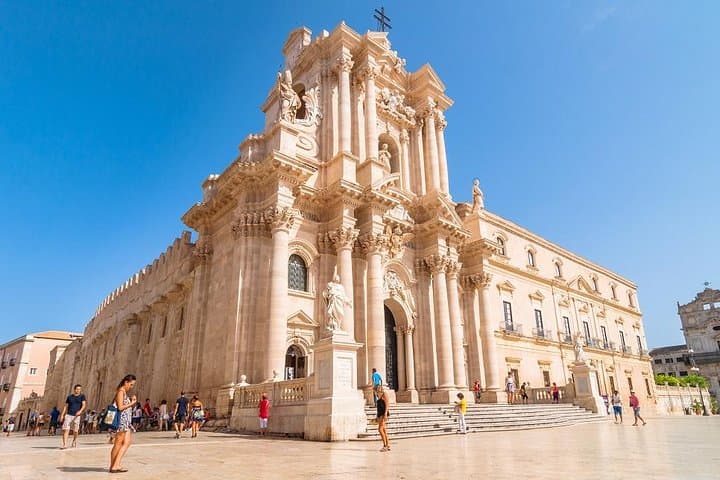
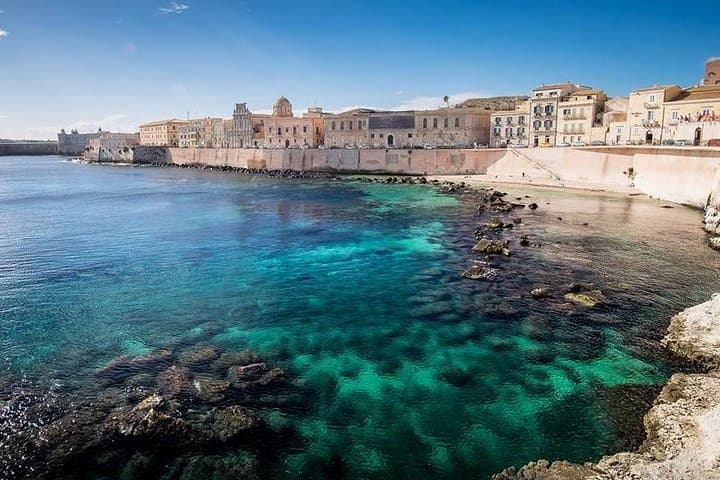
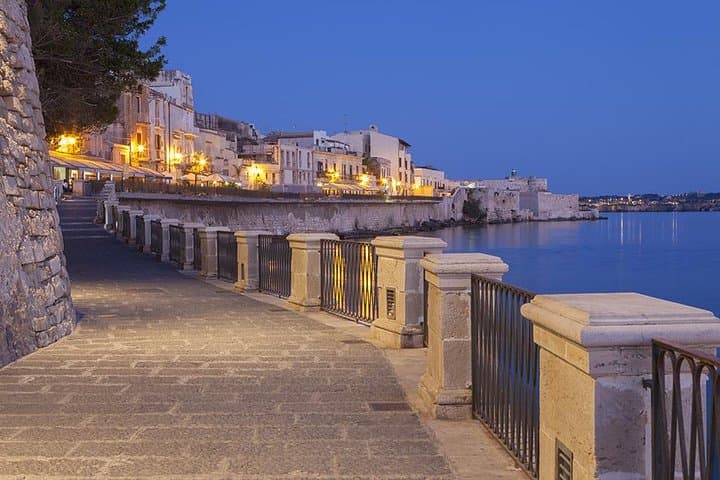
This full-day circuit pairs classical archaeology with later layers of Sicilian culture. Begin at Neapolis Archaeological Park, where the third-century BC Greek theatre, the Roman amphitheatre and the Ear of Dionysius map centuries of urban life carved from local limestone and volcanic deposits. Ortigia, Syracuse’s island heart, narrows the island’s story into tight alleys, a working fish market and the soaring façade of the cathedral built over older Greek temples.
Later, the bus crosses the flat Val di Noto toward Noto — a short drive of about 40 km through olive groves and low hills — where the late-17th-century rebuilding after an earthquake produced wide boulevards and honey-colored Baroque façades now protected by UNESCO.
Expect 1–3 km of walking at each stop on uneven paving and short stair sections; the day is sensory — sea air, frying-scented street food, and the dry chalk of carved stone under your fingers.
Practical notes: bring sturdy walking shoes, sun protection and a small daypack; plan for about eight hours including transfers. Early-morning markets are best for local products and photography; afternoons in summer can be hot, so schedule tastings and shaded breaks. Tickets for archaeological sites are often purchased on-site, and pick-up logistics vary by operator — confirm pick-up time and any accessibility needs when booking.
easy.
8 hours.
Light fitness required — able to walk 1–3 km at stops over uneven ground and climb short stair sections.
No — the tour lists site visits but admissions are typically not included; expect to purchase tickets on arrival at Neapolis and pay a suggested donation or fee for the cathedral area.
Plan for short, moderate walks of 1–3 km at each stop over uneven surfaces and some steps; the tour is rated easy but not suitable for those with significant mobility restrictions without prior notice.
The itinerary includes a tasting at a local delicatessen in Ortigia, featuring cured meats, cheeses and local bread; additional meals and some desserts in Noto are usually at your own expense unless specified.
Yes — private transportation and pick-up from accommodation are typically arranged; confirm exact pick-up time and location when you book.
Syracuse grew from a 8th-century BC Greek colony into a Roman center; Noto’s present layout dates to a post-1693 earthquake rebuilding that defined Sicilian Baroque.
The limestone façades and archaeological sites are sensitive to foot traffic and pollution — stick to marked paths, avoid climbing on ruins and support local conservation fees where requested.
Taxi Catania NCC operates guided outdoor trips and adventures with an emphasis on safety, stewardship, and memorable experiences.
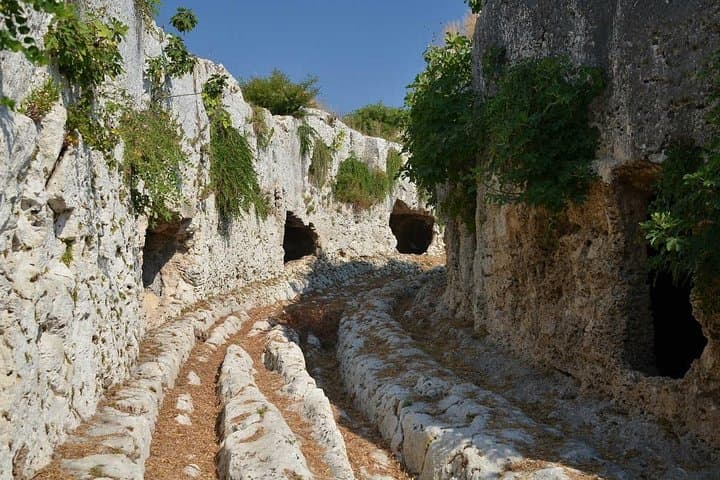
Morning light cuts across the Ionian harbor as the tour vehicle eases into Syracuse, and the first stones you see are very old indeed — the weathered seats of the Greek theatre carved into the hill, and the deep, echoing quarries of the Latomie del Paradiso.
Morning light cuts across the Ionian harbor as the tour vehicle eases into Syracuse, and the first stones you see are very old indeed — the weathered seats of the Greek theatre carved into the hill, and the deep, echoing quarries of the Latomie del Paradiso.
This full-day circuit pairs classical archaeology with later layers of Sicilian culture. Begin at Neapolis Archaeological Park, where the third-century BC Greek theatre, the Roman amphitheatre and the Ear of Dionysius map centuries of urban life carved from local limestone and volcanic deposits. Ortigia, Syracuse’s island heart, narrows the island’s story into tight alleys, a working fish market and the soaring façade of the cathedral built over older Greek temples.
Later, the bus crosses the flat Val di Noto toward Noto — a short drive of about 40 km through olive groves and low hills — where the late-17th-century rebuilding after an earthquake produced wide boulevards and honey-colored Baroque façades now protected by UNESCO.
Expect 1–3 km of walking at each stop on uneven paving and short stair sections; the day is sensory — sea air, frying-scented street food, and the dry chalk of carved stone under your fingers.
Practical notes: bring sturdy walking shoes, sun protection and a small daypack; plan for about eight hours including transfers. Early-morning markets are best for local products and photography; afternoons in summer can be hot, so schedule tastings and shaded breaks. Tickets for archaeological sites are often purchased on-site, and pick-up logistics vary by operator — confirm pick-up time and any accessibility needs when booking.