THE ADVENTURE COLLECTIVE® · Independent discovery and booking for outdoor travel

Spend a long day driving from Port Said to Cairo’s ancient heart: Sakkara’s Step Pyramid and the Giza Plateau. This private, full-day tour pairs hands-on history (papyrus making) with close-up views of Egypt’s most iconic monuments.
Spend a long day driving from Port Said to Cairo’s ancient heart: Sakkara’s Step Pyramid and the Giza Plateau. This private, full-day tour pairs hands-on history (papyrus making) with close-up views of Egypt’s most iconic monuments.
You leave Port Said before the heat builds, the Mediterranean slipping away in your rearview as a ribbon of highway carries you toward the heart of ancient Egypt.
Verified experiences and guided adventures in the surrounding area.
Operated by NORTH AFRICAN SHIPPING AND TOURISM COMPANY (NASCO TOURS) · Port Said, Port Said Governorate
You leave Port Said before the heat builds, the Mediterranean slipping away in your rearview as a ribbon of highway carries you toward the heart of ancient Egypt.
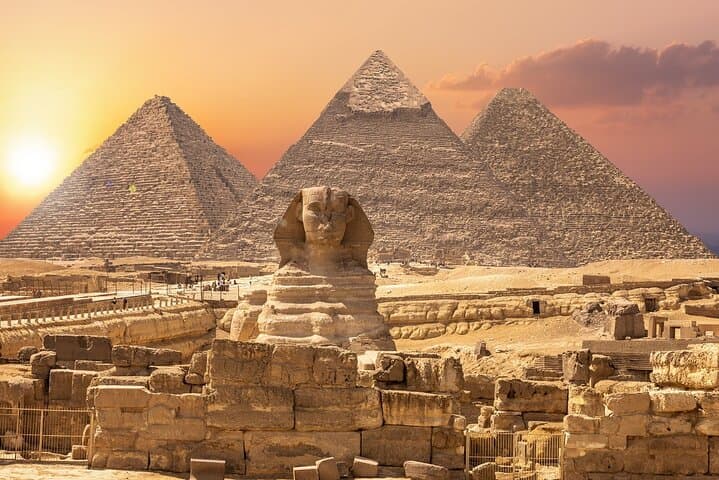
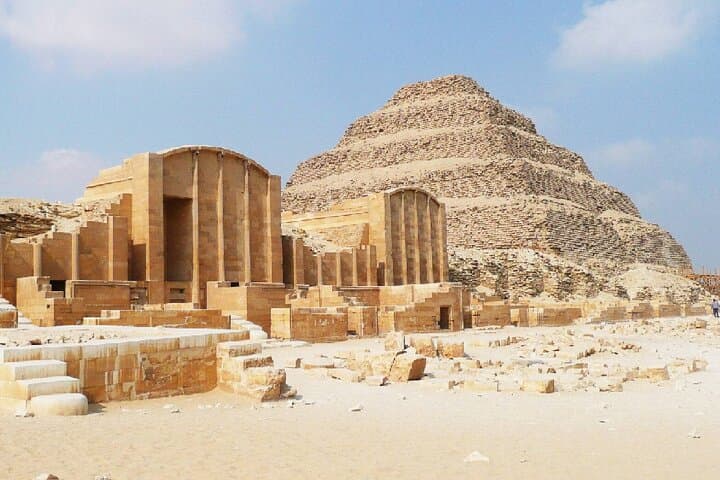
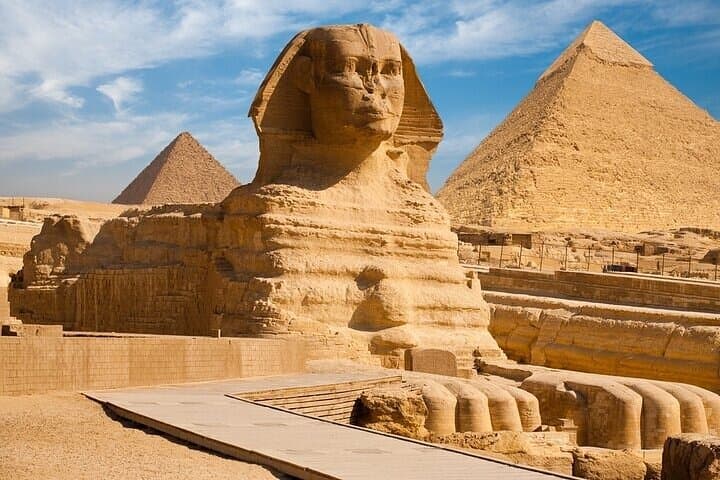
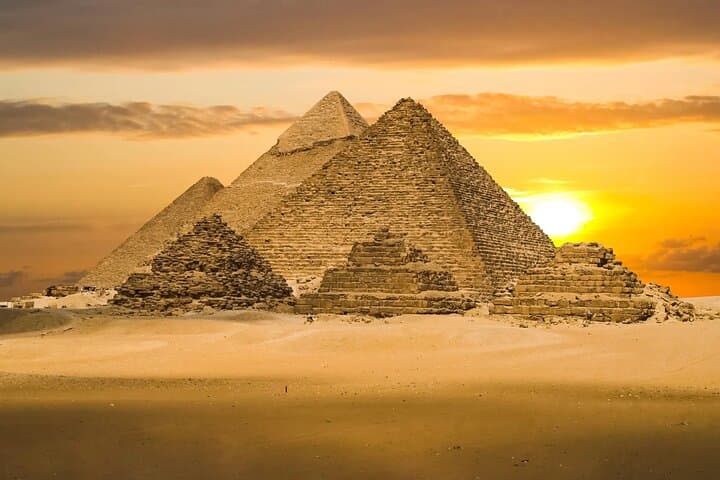
By midmorning you stand on the Sakkara plateau where the Step Pyramid of King Zoser rises at eye level — raw stone planes cut millennia ago that still feel startlingly modern in scale. Nearby, low mastabas open into cool, low-ceilinged chambers; the air smells of sun-baked limestone and a faint trace of reed smoke from the Nile flats. Later, the Giza Plateau unfolds: the Great Pyramid looms, the Pyramid of Chephren holds its angled silhouette, and the Sphinx watches from the valley like a timeworn host.
This route links two of Egypt’s defining epochs: the Early Dynastic innovations at Sakkara (attributed to Imhotep around 2600 BCE) and the Old Kingdom engineering at Giza. Geologically, you’ll traverse Nile alluvial plain into Tura and Mokattam limestone that masons quarried for millennia. A stop at a Papyrus Institute demonstrates papermaking from reed to sheet — a living craft tied to the river’s ecology.
Practical guidance: the full-day private tour runs roughly 10–11 hours and includes air-conditioned transport, a specialist guide, and admissions, but expect 2.5–3 hours of drive time each way (approx. 200 km/125 mi one-way). Wear sturdy shoes for uneven limestone and sand, carry sun protection and 1–2 liters of water, and schedule an early start to avoid midday crowds and heat. Bring small local currency for souvenirs and tip your guide; pace yourself — there’s a lot to see and a lot of history underfoot.
easy.
10–11 hours.
Moderate stamina for several hours of walking on uneven ground; comfortable for most travelers who can stand and walk for several hours.
Expect approximately 2.5–3 hours one-way (about 200 km/125 miles) depending on traffic; the full experience is a roughly 10–11 hour day.
This private tour lists admissions to Sakkara, Giza, and the Papyrus Institute as included, as well as fees and taxes — confirm on booking details.
The tour is rated easy and suitable for most fitness levels, but sites include uneven terrain and low passages; travelers with limited mobility should check specifics and request accommodations in advance.
Some pyramid interiors require separate tickets and have limited access due to preservation and capacity; check with the operator ahead of time if interior access is a priority.
Sakkara’s Step Pyramid, commissioned by Pharaoh Djoser and designed by Imhotep around 2600 BCE, marks a major shift from mudbrick tombs to monumental stone construction; Giza’s pyramids date to the Fourth Dynasty and were built as part of royal mortuary complexes.
Visitor pressure and urban sprawl pose ongoing challenges; stay on designated paths, avoid touching carved stone, and support licensed local guides and institutes that fund site maintenance.
NORTH AFRICAN SHIPPING AND TOURISM COMPANY (NASCO TOURS) operates guided outdoor trips and adventures with an emphasis on safety, stewardship, and memorable experiences.
You leave Port Said before the heat builds, the Mediterranean slipping away in your rearview as a ribbon of highway carries you toward the heart of ancient Egypt.
You leave Port Said before the heat builds, the Mediterranean slipping away in your rearview as a ribbon of highway carries you toward the heart of ancient Egypt.
By midmorning you stand on the Sakkara plateau where the Step Pyramid of King Zoser rises at eye level — raw stone planes cut millennia ago that still feel startlingly modern in scale. Nearby, low mastabas open into cool, low-ceilinged chambers; the air smells of sun-baked limestone and a faint trace of reed smoke from the Nile flats. Later, the Giza Plateau unfolds: the Great Pyramid looms, the Pyramid of Chephren holds its angled silhouette, and the Sphinx watches from the valley like a timeworn host.
This route links two of Egypt’s defining epochs: the Early Dynastic innovations at Sakkara (attributed to Imhotep around 2600 BCE) and the Old Kingdom engineering at Giza. Geologically, you’ll traverse Nile alluvial plain into Tura and Mokattam limestone that masons quarried for millennia. A stop at a Papyrus Institute demonstrates papermaking from reed to sheet — a living craft tied to the river’s ecology.
Practical guidance: the full-day private tour runs roughly 10–11 hours and includes air-conditioned transport, a specialist guide, and admissions, but expect 2.5–3 hours of drive time each way (approx. 200 km/125 mi one-way). Wear sturdy shoes for uneven limestone and sand, carry sun protection and 1–2 liters of water, and schedule an early start to avoid midday crowds and heat. Bring small local currency for souvenirs and tip your guide; pace yourself — there’s a lot to see and a lot of history underfoot.