THE ADVENTURE COLLECTIVE® · Independent discovery and booking for outdoor travel

Walk the arc of Saudi history in one half-day: the National Museum’s galleries, the defiant gate of Masmak Fortress, and the mudbrick alleys of Diriyah’s Turaif district. Practical tips on timing, gear, and what to expect from each stop.
Walk the arc of Saudi history in one half-day: the National Museum’s galleries, the defiant gate of Masmak Fortress, and the mudbrick alleys of Diriyah’s Turaif district. Practical tips on timing, gear, and what to expect from each stop.
You step out of an air-conditioned car into a sun that feels deliberate, the desert heat pressing like an invitation to pay attention. In central Riyadh the compact streets open onto Masmak Fortress’s ochre walls; the stone gate still holds the echo of 1902 when Ibn Saud’s small force reclaimed the city and began a new chapter for the Arabian Peninsula.
Verified experiences and guided adventures in the surrounding area.
Operated by Riyadh Lovely Tours · Riyadh, Riyadh Province
You step out of an air-conditioned car into a sun that feels deliberate, the desert heat pressing like an invitation to pay attention. In central Riyadh the compact streets open onto Masmak Fortress’s ochre walls; the stone gate still holds the echo of 1902 when Ibn Saud’s small force reclaimed the city and began a new chapter for the Arabian Peninsula.
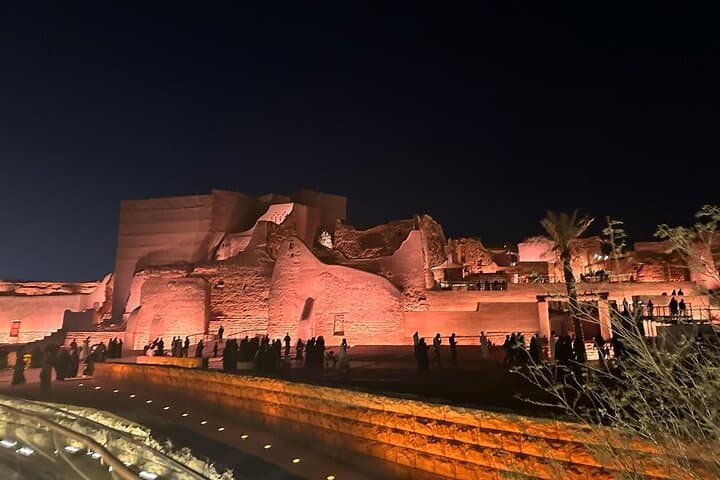
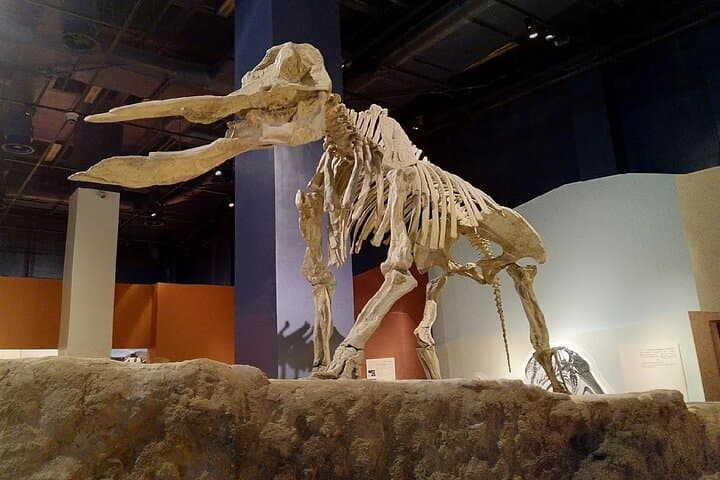
The itinerary moves from modern galleries to age-old walls: the National Museum offers chronological galleries that walk visitors through the Stone Age, pre-Islamic kingdoms, and the formation of the Saudi states. Then Masmak’s courtyard gives you a tactile sense of the skirmish that launched the unification campaign. Finally, the drive to Diriyah and a stroll through the restored Turaif district place you amid mudbrick palaces that once were the first Saudi capital; the site, listed by UNESCO, displays both ruin and reconstruction.
Geology here is simple — a flat, rocky desert plain sitting around 600 m above sea level — but human history carved the real contours. Culture is present in the cadence of call to prayer, traditional cafes in Al-Bujairi, and market stalls selling coffee and dates.
Practical guidance: this half-day spans roughly 5–6 hours with intermittent walking (expect 1–3 km total on paved streets and uneven ruins). Bring sun protection, a filled water bottle, comfortable closed shoes, and modest clothing. Morning or late-afternoon departures avoid peak sun; allow extra time for museum security and prayer-hour closures.
easy.
5–6 hours.
Suitable for most fitness levels; involves short walks (1–3 km) on paved and uneven surfaces.
The tour runs about 5–6 hours and includes the National Museum, Al Masmak Fortress, and the Turaif district in Diriyah with transport between sites.
Admission to the National Museum and Diriyah is typically included as noted in the itinerary; confirm at booking for any changes to entry fees.
The tour is rated easy and suitable for most fitness levels, but Diriyah has uneven surfaces and limited accessibility in some restored areas — contact the operator to arrange alternatives if needed.
Modest dress is recommended (shoulders and knees covered), and be mindful of prayer times and any signage that restricts photography at heritage sites.
Diriyah was the original seat of the first Saudi state (1727–1818); Masmak Fortress’s 1902 capture by Ibn Saud signaled the start of modern Saudi unification.
Diriyah’s Turaif district is undergoing restoration and conservation to balance tourism with preservation; visitors should stick to marked paths and avoid touching fragile mudbrick surfaces.
Riyadh Lovely Tours operates guided outdoor trips and adventures with an emphasis on safety, stewardship, and memorable experiences.
You step out of an air-conditioned car into a sun that feels deliberate, the desert heat pressing like an invitation to pay attention. In central Riyadh the compact streets open onto Masmak Fortress’s ochre walls; the stone gate still holds the echo of 1902 when Ibn Saud’s small force reclaimed the city and began a new chapter for the Arabian Peninsula.
You step out of an air-conditioned car into a sun that feels deliberate, the desert heat pressing like an invitation to pay attention. In central Riyadh the compact streets open onto Masmak Fortress’s ochre walls; the stone gate still holds the echo of 1902 when Ibn Saud’s small force reclaimed the city and began a new chapter for the Arabian Peninsula.
The itinerary moves from modern galleries to age-old walls: the National Museum offers chronological galleries that walk visitors through the Stone Age, pre-Islamic kingdoms, and the formation of the Saudi states. Then Masmak’s courtyard gives you a tactile sense of the skirmish that launched the unification campaign. Finally, the drive to Diriyah and a stroll through the restored Turaif district place you amid mudbrick palaces that once were the first Saudi capital; the site, listed by UNESCO, displays both ruin and reconstruction.
Geology here is simple — a flat, rocky desert plain sitting around 600 m above sea level — but human history carved the real contours. Culture is present in the cadence of call to prayer, traditional cafes in Al-Bujairi, and market stalls selling coffee and dates.
Practical guidance: this half-day spans roughly 5–6 hours with intermittent walking (expect 1–3 km total on paved streets and uneven ruins). Bring sun protection, a filled water bottle, comfortable closed shoes, and modest clothing. Morning or late-afternoon departures avoid peak sun; allow extra time for museum security and prayer-hour closures.