THE ADVENTURE COLLECTIVE® · Independent discovery and booking for outdoor travel

Cross the High Atlas and ride camels over Erg Chebbi on a compact three-day journey from Marrakech to Fez. This route mixes UNESCO kasbahs, the Dades and Todra gorges, cedar forests with Barbary macaques, and a night in a desert camp beneath clear stars.
Cross the High Atlas and ride camels over Erg Chebbi on a compact three-day journey from Marrakech to Fez. This route mixes UNESCO kasbahs, the Dades and Todra gorges, cedar forests with Barbary macaques, and a night in a desert camp beneath clear stars.
The sun drops slow and heavy over Erg Chebbi as your convoy rolls away from the Atlas foothills—sand dunes stretching like a living ocean that breathes with every wind. On this three-day overland route you move from Marrakech’s ochre bustle into high mountain passes, cedar forests where macaques chatter, and finally into the deep-cut canyons that slit the desert’s edge.
Verified experiences and guided adventures in the surrounding area.
Operated by Morocco Desert Expeditions · Marrakech, Marrakech-Safi
The sun drops slow and heavy over Erg Chebbi as your convoy rolls away from the Atlas foothills—sand dunes stretching like a living ocean that breathes with every wind. On this three-day overland route you move from Marrakech’s ochre bustle into high mountain passes, cedar forests where macaques chatter, and finally into the deep-cut canyons that slit the desert’s edge.
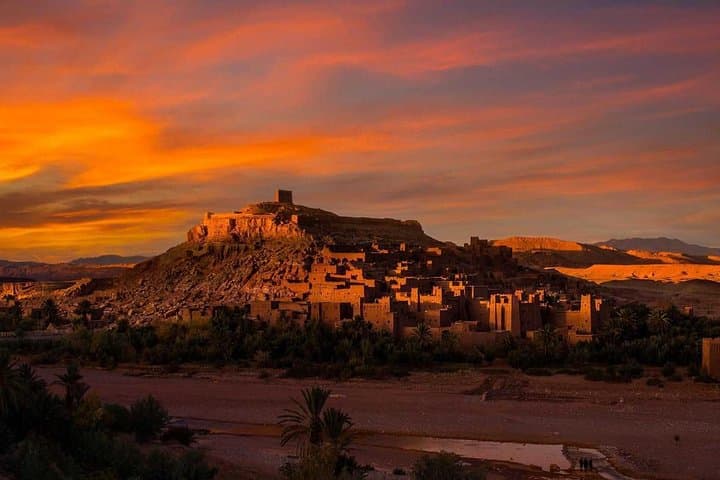
The route threads historic layers: fortified kasbahs around Ouarzazate that grew from caravan commerce, the river-cut geology of the Dades and Todra gorges carved over millennia, and the Erg Chebbi dunes—wind-sculpted mounds of quartz and feldspar that shift by seasons. Local culture is visible at road-side ksars and small towns where Berber architecture and hospitality shape the rhythm of the day; evenings in a Bedouin-style camp focus on simple communal meals and clear, star-heavy skies.
Expect varied terrain: paved highways, mountain passes over the High Atlas, gravel roads into oasis towns, and short guided walks through river gorges. Camel rides to camp are accessible for most travelers; the camp stay is semi-remote with basic comforts.
Practical guidance: travel light, layer for hot days and cold desert nights, and plan for long vehicle transfers (several hours between highlights). Bring water, sun protection, and sturdy shoes for short canyon walks. Morning or late-afternoon dune visits avoid the midday heat and reward you with better light for photos and calmer winds.
moderate.
3 days (approx. 72 hours).
Suitable for travelers comfortable with long vehicle transfers and short hikes; minimal sustained fitness required.
The tour involves long vehicle drives, short guided walks in gorges, and a camel ride to camp; it’s rated accessible to most fitness levels though not suitable for those unable to mount a camel or endure several hours in a vehicle.
Expect a traditional Bedouin-style camp with basic but comfortable sleeping arrangements, a communal dining area, and shared facilities; luxury upgrades may be available depending on operator options.
Yes—stops at kasbahs, small towns, and roadside markets offer encounters with local vendors and guides who can explain Berber culture and regional crafts.
Camel rides are generally safe and slow-paced, but mobility considerations apply; operators often provide assistance mounting and dismounting and may offer alternative transport if needed.
This corridor traces old trans-Saharan links: kasbahs and ksars grew where trade routes met mountain passes and water sources, and local Berber communities shaped architecture and caravan logistics.
The Sahara’s dunes and oases are fragile—stick to established camp sites, minimize water use, and avoid leaving waste; responsible tourism supports local guides and conservation-minded operators.
Morocco Desert Expeditions operates guided outdoor trips and adventures with an emphasis on safety, stewardship, and memorable experiences.



The sun drops slow and heavy over Erg Chebbi as your convoy rolls away from the Atlas foothills—sand dunes stretching like a living ocean that breathes with every wind. On this three-day overland route you move from Marrakech’s ochre bustle into high mountain passes, cedar forests where macaques chatter, and finally into the deep-cut canyons that slit the desert’s edge.
The sun drops slow and heavy over Erg Chebbi as your convoy rolls away from the Atlas foothills—sand dunes stretching like a living ocean that breathes with every wind. On this three-day overland route you move from Marrakech’s ochre bustle into high mountain passes, cedar forests where macaques chatter, and finally into the deep-cut canyons that slit the desert’s edge.
The route threads historic layers: fortified kasbahs around Ouarzazate that grew from caravan commerce, the river-cut geology of the Dades and Todra gorges carved over millennia, and the Erg Chebbi dunes—wind-sculpted mounds of quartz and feldspar that shift by seasons. Local culture is visible at road-side ksars and small towns where Berber architecture and hospitality shape the rhythm of the day; evenings in a Bedouin-style camp focus on simple communal meals and clear, star-heavy skies.
Expect varied terrain: paved highways, mountain passes over the High Atlas, gravel roads into oasis towns, and short guided walks through river gorges. Camel rides to camp are accessible for most travelers; the camp stay is semi-remote with basic comforts.
Practical guidance: travel light, layer for hot days and cold desert nights, and plan for long vehicle transfers (several hours between highlights). Bring water, sun protection, and sturdy shoes for short canyon walks. Morning or late-afternoon dune visits avoid the midday heat and reward you with better light for photos and calmer winds.