THE ADVENTURE COLLECTIVE® · Independent discovery and booking for outdoor travel

Take a focused 60–80 minute walk through Newport’s social transformation — from colonial commerce to the Gilded Age cottages and mansions — with museum admission included and local stories that connect architecture, immigration, and leisure culture.
Take a focused 60–80 minute walk through Newport’s social transformation — from colonial commerce to the Gilded Age cottages and mansions — with museum admission included and local stories that connect architecture, immigration, and leisure culture.
Salt air tugs at your sleeves as the group assembles in front of the red-brick Museum of Newport History on Thames Street. Cobblestone gutters and narrow lanes funnel you past 18th- and 19th-century façades while a guide traces the city's slow burn from colonial port to summer playground. The ocean breeze dares you to look up — carriage-house cornices, Queen Anne turrets, and stone chimneys crowd the sky.
Verified experiences and guided adventures in the surrounding area.
Operated by Newport Historical Society Walking Tours · Newport, Rhode Island
Salt air tugs at your sleeves as the group assembles in front of the red-brick Museum of Newport History on Thames Street. Cobblestone gutters and narrow lanes funnel you past 18th- and 19th-century façades while a guide traces the city's slow burn from colonial port to summer playground. The ocean breeze dares you to look up — carriage-house cornices, Queen Anne turrets, and stone chimneys crowd the sky.
This hour-long walk threads history and architecture: the colonial mercantile Golden Age, the arrivals of Irish and Jewish communities, early civic investments like Fort Adams and Newport’s firehouses, and the explosive land speculation that fed the Gilded Age mansions on Bellevue Avenue. You'll pass examples of Dudley Newton’s inventive roofs, the Redwood Library’s learned silence, and the Jewish cemetery that records centuries of local life.
Geologically, Newport sits on glacially scoured bedrock with exposed shoreline ledges and sheltered coves; the route is mostly flat with short slopes and cobbles underfoot. Culturally, the tour shows how tourism, shipping, and immigrant labor braided to remake a small port into an elite summer colony for families like the Vanderbilts and Astors.
Practical notes: expect 60–80 minutes and about 1–1.5 miles of walking on sidewalks and historic pavements. The tour includes museum admission and a small shop discount; it starts inside the Museum of Newport History (127 Thames St) and ends at Touro Park. Wear supportive shoes, bring water and layers — ocean wind and sun can change in minutes. The route is accessible to most walkers but not recommended for those with serious mobility or heart conditions.
easy.
60–80 minutes.
Suitable for most walkers who can stand and walk at a casual pace for up to an hour; not recommended for those with significant mobility or cardiovascular issues.
Start: check in inside the Museum of Newport History at 127 Thames Street; End: Touro Park (5 Touro Park St W).
Yes — admission to the Museum of Newport History is included and you receive 10% off the museum shop.
The tour is family-friendly for school-age kids and suitable for most seniors who can walk for up to an hour; it’s not recommended for those with serious mobility or heart conditions.
Full refund available if you cancel at least 24 hours before departure; tours may be canceled for bad weather.
Newport evolved from a 17th-century trading port into a 19th-century summer colony; land developers and industrial wealth reshaped its streets into exclusive private residences.
Historic preservation groups in Newport regulate alterations to older buildings and encourage low-impact tourism to protect fragile coastal and architectural resources.
Newport Historical Society Walking Tours operates guided outdoor trips and adventures with an emphasis on safety, stewardship, and memorable experiences.
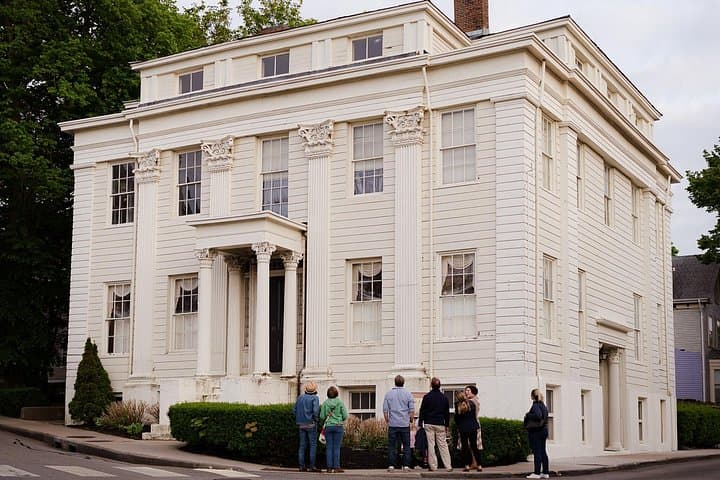

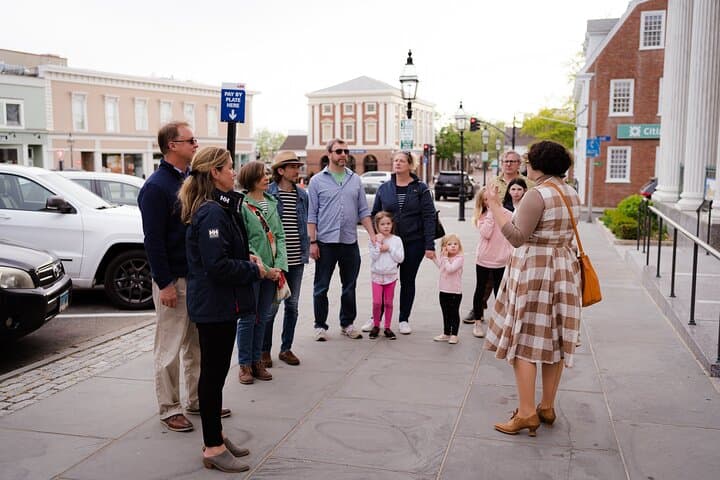

Salt air tugs at your sleeves as the group assembles in front of the red-brick Museum of Newport History on Thames Street. Cobblestone gutters and narrow lanes funnel you past 18th- and 19th-century façades while a guide traces the city's slow burn from colonial port to summer playground. The ocean breeze dares you to look up — carriage-house cornices, Queen Anne turrets, and stone chimneys crowd the sky.
Salt air tugs at your sleeves as the group assembles in front of the red-brick Museum of Newport History on Thames Street. Cobblestone gutters and narrow lanes funnel you past 18th- and 19th-century façades while a guide traces the city's slow burn from colonial port to summer playground. The ocean breeze dares you to look up — carriage-house cornices, Queen Anne turrets, and stone chimneys crowd the sky.
This hour-long walk threads history and architecture: the colonial mercantile Golden Age, the arrivals of Irish and Jewish communities, early civic investments like Fort Adams and Newport’s firehouses, and the explosive land speculation that fed the Gilded Age mansions on Bellevue Avenue. You'll pass examples of Dudley Newton’s inventive roofs, the Redwood Library’s learned silence, and the Jewish cemetery that records centuries of local life.
Geologically, Newport sits on glacially scoured bedrock with exposed shoreline ledges and sheltered coves; the route is mostly flat with short slopes and cobbles underfoot. Culturally, the tour shows how tourism, shipping, and immigrant labor braided to remake a small port into an elite summer colony for families like the Vanderbilts and Astors.
Practical notes: expect 60–80 minutes and about 1–1.5 miles of walking on sidewalks and historic pavements. The tour includes museum admission and a small shop discount; it starts inside the Museum of Newport History (127 Thames St) and ends at Touro Park. Wear supportive shoes, bring water and layers — ocean wind and sun can change in minutes. The route is accessible to most walkers but not recommended for those with serious mobility or heart conditions.