THE ADVENTURE COLLECTIVE® · Independent discovery and booking for outdoor travel

See Cairo’s headline sights in a single long day: sunrise at the Pyramids of Giza, the treasures inside the Egyptian Museum, and a two-hour Nile dinner cruise with live entertainment. This combo pairs heavy-hitter history with an atmospheric riverfront evening.
See Cairo’s headline sights in a single long day: sunrise at the Pyramids of Giza, the treasures inside the Egyptian Museum, and a two-hour Nile dinner cruise with live entertainment. This combo pairs heavy-hitter history with an atmospheric riverfront evening.
You step onto the warm limestone of the Giza plateau as morning light sharpens the pyramids’ edges; wind off the desert lifts a fine dust that seems to polish the stones. The Sphinx watches the procession of visitors while camel handlers and local guides move through the heat with practiced calm.
Verified experiences and guided adventures in the surrounding area.
Operated by Look at Egypt Tours · Giza, Giza Governorate
You step onto the warm limestone of the Giza plateau as morning light sharpens the pyramids’ edges; wind off the desert lifts a fine dust that seems to polish the stones. The Sphinx watches the procession of visitors while camel handlers and local guides move through the heat with practiced calm.
This itinerary threads three chapters of Cairo: the ancient engineering of the Great Pyramid and Sphinx on the Giza Plateau; the Egyptian Museum in Tahrir, where artifacts from Old Kingdom mastabas to Tutankhamun’s burial goods trace millennia; and a two-hour Nile dinner cruise that reorients the city at night, lights reflecting on the river’s slow current.
Geologically the plateau is a hard limestone cap on which the pyramids stand, quarried and set with precision thousands of years ago. Culturally, the Egyptian Museum’s collections tell both national and colonial-era stories about archaeology and preservation. The Nile itself asserts agency at dusk—boats glide, lights pass, and Cairo’s layered history unfolds along its banks.
Practical guidance: plan a long day of walking and standing—expect 9–10 hours with hotel transfers included. Wear sturdy, breathable shoes and sun protection; bring a refillable water bottle and a light scarf for museum modesty and dust. Photography is welcome in public areas but follow site rules and any restricted-room signs. The tour notes wheelchair accessibility for parts of the itinerary, but some uneven ground at Giza can be challenging. Evening on the Nile is casual to smart-casual; tipping for guides and boat staff is customary. Timing your visit for early morning at Giza reduces heat and crowds, while the nighttime cruise gives a different, calmer view of the city’s riverfront.
moderate.
9–10 hours.
Suitable for travelers who can walk and stand for multiple hours and manage short uneven surfaces; not strenuous but a long day.
This tour description lists admission included for the main sites; confirm specific ticket inclusions at booking and carry ID for any required museum access.
The tour notes wheelchair accessibility for parts of the itinerary, but Giza’s plateau has uneven ground and steps—check with the operator about vehicle access and any assistance required.
Yes—lunch is included during daytime sightseeing and dinner is served as part of the Nile cruise experience.
Dress tends toward smart-casual; light layers are practical for the evening breeze on deck, and modest attire is recommended for daytime cultural sites.
The Giza pyramids are the only surviving monuments of the Ancient World’s Seven Wonders; the Egyptian Museum houses tens of thousands of artifacts including items from Tutankhamun’s tomb.
Sites face pressure from tourism, urban development, and pollution—avoid touching monuments, follow guide instructions, and support local conservation-minded operators.
Look at Egypt Tours operates guided outdoor trips and adventures with an emphasis on safety, stewardship, and memorable experiences.
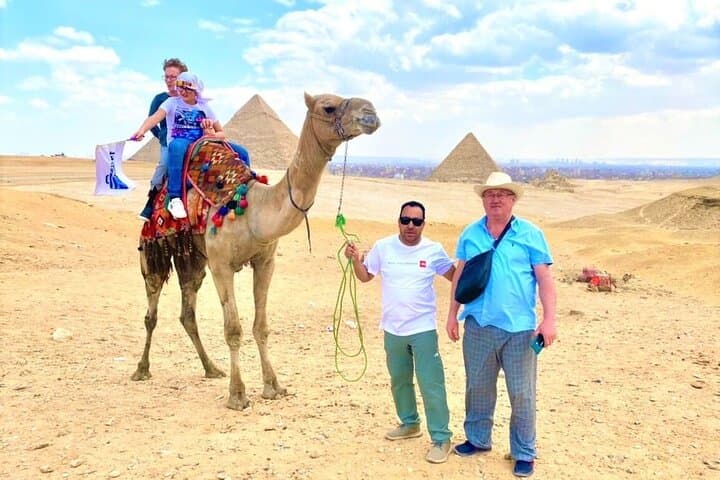

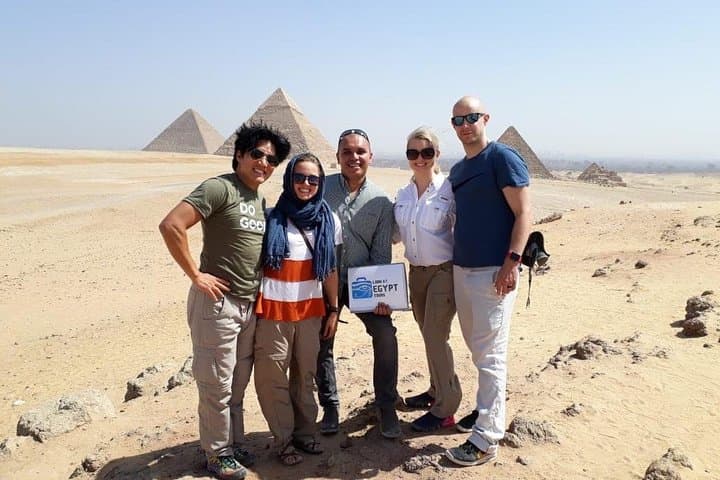
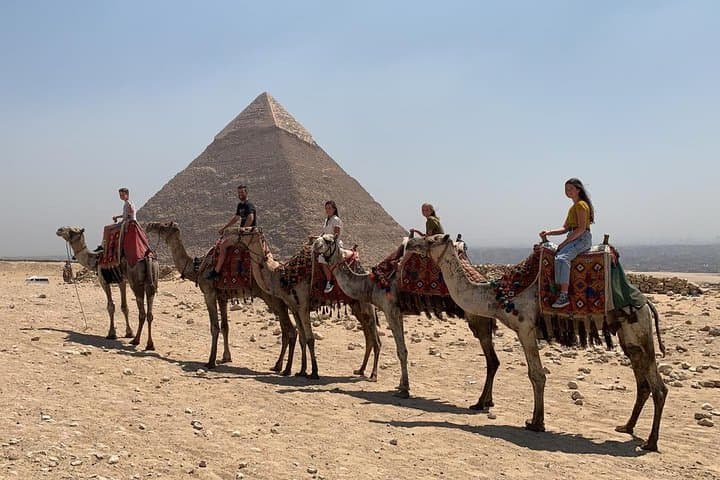
You step onto the warm limestone of the Giza plateau as morning light sharpens the pyramids’ edges; wind off the desert lifts a fine dust that seems to polish the stones. The Sphinx watches the procession of visitors while camel handlers and local guides move through the heat with practiced calm.
You step onto the warm limestone of the Giza plateau as morning light sharpens the pyramids’ edges; wind off the desert lifts a fine dust that seems to polish the stones. The Sphinx watches the procession of visitors while camel handlers and local guides move through the heat with practiced calm.
This itinerary threads three chapters of Cairo: the ancient engineering of the Great Pyramid and Sphinx on the Giza Plateau; the Egyptian Museum in Tahrir, where artifacts from Old Kingdom mastabas to Tutankhamun’s burial goods trace millennia; and a two-hour Nile dinner cruise that reorients the city at night, lights reflecting on the river’s slow current.
Geologically the plateau is a hard limestone cap on which the pyramids stand, quarried and set with precision thousands of years ago. Culturally, the Egyptian Museum’s collections tell both national and colonial-era stories about archaeology and preservation. The Nile itself asserts agency at dusk—boats glide, lights pass, and Cairo’s layered history unfolds along its banks.
Practical guidance: plan a long day of walking and standing—expect 9–10 hours with hotel transfers included. Wear sturdy, breathable shoes and sun protection; bring a refillable water bottle and a light scarf for museum modesty and dust. Photography is welcome in public areas but follow site rules and any restricted-room signs. The tour notes wheelchair accessibility for parts of the itinerary, but some uneven ground at Giza can be challenging. Evening on the Nile is casual to smart-casual; tipping for guides and boat staff is customary. Timing your visit for early morning at Giza reduces heat and crowds, while the nighttime cruise gives a different, calmer view of the city’s riverfront.