THE ADVENTURE COLLECTIVE® · Independent discovery and booking for outdoor travel

Leave El‑Sokhna by private transfer for a full day at Giza: guided visits to the three pyramids, the Sphinx and the Valley Temple, then a museum overview that culminates at the Royal Mummies Hall. Practical tips and pacing make this a condensed, interpretive day for travelers docking at the port.
Leave El‑Sokhna by private transfer for a full day at Giza: guided visits to the three pyramids, the Sphinx and the Valley Temple, then a museum overview that culminates at the Royal Mummies Hall. Practical tips and pacing make this a condensed, interpretive day for travelers docking at the port.
Stepping off the pier at El‑Sokhna, the Red Sea wind pushes warm salt across your shoulders as a private car waits to take you west toward the Nile and the ancient horizon of Giza. The highway unfurls through flat desert, and within two hours the silhouette of three pyramids rises like stone mountains against the metro haze.
Verified experiences and guided adventures in the surrounding area.
Operated by Sun Pyramids Tours · Giza, Giza Governorate
Stepping off the pier at El‑Sokhna, the Red Sea wind pushes warm salt across your shoulders as a private car waits to take you west toward the Nile and the ancient horizon of Giza. The highway unfurls through flat desert, and within two hours the silhouette of three pyramids rises like stone mountains against the metro haze.
At the Giza Plateau, your Egyptologist guides the route: Khufu’s massive casing blocks, Khafre’s preserved summit, Menkaure’s compact precision. The Sphinx sits close by, a carved conversation between human thought and feline power; the Valley Temple’s granite faces still catch light the way they did millennia ago. Geologically, the plateau is limestone bedrock shaped by wind and human quarrying; culturally, the area records royal ideology, funerary technologies, and ancient stoneworking techniques.
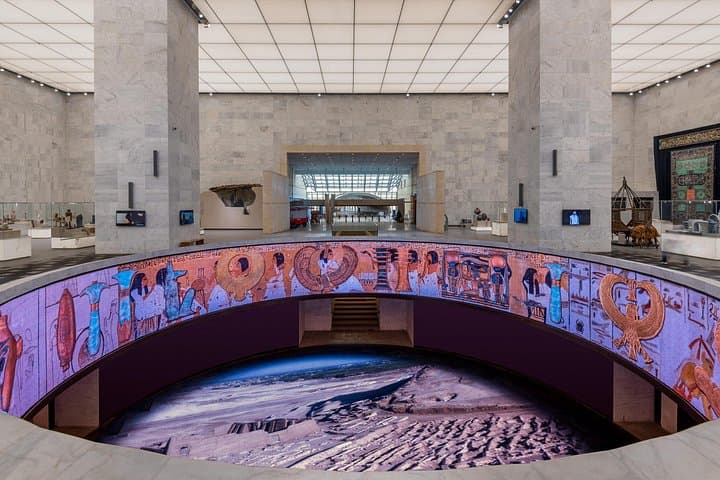
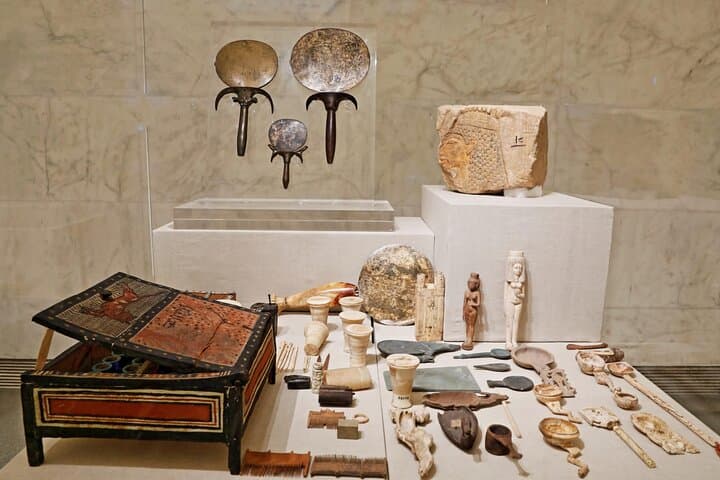
After a traditional Egyptian lunch, the National Museum of Egyptian Civilization arranges artifacts in chronological sequence and presents the Royal Mummies Hall—a rare public display that links the funerary architecture you saw on the plateau with the people who commissioned it.
Practical side: expect about ten hours door‑to‑door with several hours of standing and uneven stone underfoot. Carry sun protection, a refillable water bottle, and some local cash for optional tickets (e.g., entry into Khufu’s interior). Photography is allowed outdoors but restricted in select museum galleries. Wear comfortable, closed shoes and a light layer for air‑conditioned museum spaces. Confirm pickup and passport details with your operator—port logistics leave little margin for delay. This private day blends field archaeology with curated museum context for an efficient, interpretive outing.
easy.
10 hours.
Light walking and standing for several hours; able to walk on uneven stone and climb short stairways.
Expect about a two‑hour transfer each way depending on traffic; your itinerary accounts for this travel time.
Yes, an optional interior ticket allows limited access to Khufu’s internal passages; availability is limited and may require advance booking.
The museum has accessible routes and facilities, but some ancient structures on the plateau have uneven surfaces—check specific accessibility needs with the operator.
Yes, the tour includes a traditional lunch at a local restaurant, but additional snacks and refreshments are recommended for the plateau visit.
The three main pyramids at Giza date to the Fourth Dynasty (c. 2600–2500 BCE); the National Museum of Egyptian Civilization now houses artifacts spanning prehistoric Egypt to the modern era and hosted the 2021 Royal Mummies Parade.
High visitor numbers and urban encroachment challenge preservation; stay on marked paths, avoid touching stonework, and support licensed guides and local vendors to ensure tourism benefits conservation and communities.
Sun Pyramids Tours operates guided outdoor trips and adventures with an emphasis on safety, stewardship, and memorable experiences.
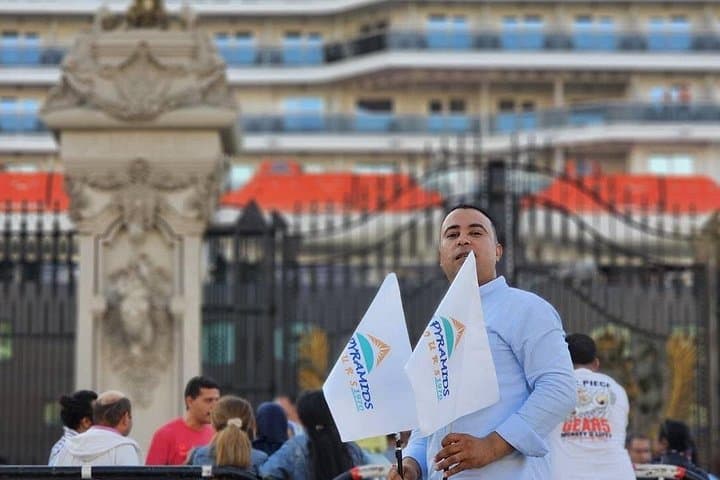
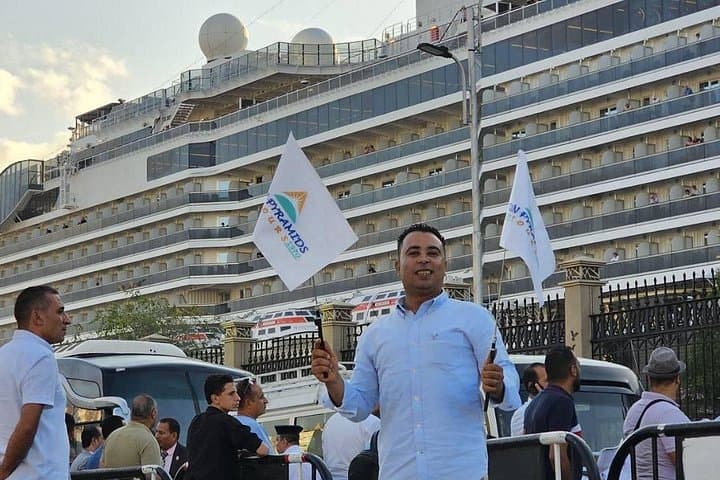
Stepping off the pier at El‑Sokhna, the Red Sea wind pushes warm salt across your shoulders as a private car waits to take you west toward the Nile and the ancient horizon of Giza. The highway unfurls through flat desert, and within two hours the silhouette of three pyramids rises like stone mountains against the metro haze.
Stepping off the pier at El‑Sokhna, the Red Sea wind pushes warm salt across your shoulders as a private car waits to take you west toward the Nile and the ancient horizon of Giza. The highway unfurls through flat desert, and within two hours the silhouette of three pyramids rises like stone mountains against the metro haze.
At the Giza Plateau, your Egyptologist guides the route: Khufu’s massive casing blocks, Khafre’s preserved summit, Menkaure’s compact precision. The Sphinx sits close by, a carved conversation between human thought and feline power; the Valley Temple’s granite faces still catch light the way they did millennia ago. Geologically, the plateau is limestone bedrock shaped by wind and human quarrying; culturally, the area records royal ideology, funerary technologies, and ancient stoneworking techniques.
After a traditional Egyptian lunch, the National Museum of Egyptian Civilization arranges artifacts in chronological sequence and presents the Royal Mummies Hall—a rare public display that links the funerary architecture you saw on the plateau with the people who commissioned it.
Practical side: expect about ten hours door‑to‑door with several hours of standing and uneven stone underfoot. Carry sun protection, a refillable water bottle, and some local cash for optional tickets (e.g., entry into Khufu’s interior). Photography is allowed outdoors but restricted in select museum galleries. Wear comfortable, closed shoes and a light layer for air‑conditioned museum spaces. Confirm pickup and passport details with your operator—port logistics leave little margin for delay. This private day blends field archaeology with curated museum context for an efficient, interpretive outing.