THE ADVENTURE COLLECTIVE® · Independent discovery and booking for outdoor travel

A full-day excursion from Dubrovnik that pairs Kravica’s limestone waterfalls with the medieval village of Pocitelj and the UNESCO-protected Old Bridge in Mostar. Expect a long but rewarding day with swimming, historical exploration, and local cuisine.
A full-day excursion from Dubrovnik that pairs Kravica’s limestone waterfalls with the medieval village of Pocitelj and the UNESCO-protected Old Bridge in Mostar. Expect a long but rewarding day with swimming, historical exploration, and local cuisine.
You climb into an air-conditioned coach before dawn and the Dalmatian coastline slips away; by mid-morning the road bends into karst valleys and the Trebižat river begins to murmur, daring you to slow down.
Verified experiences and guided adventures in the surrounding area.
Operated by Super Transfer Services · Mostar, Herzegovina-Neretva Canton
You climb into an air-conditioned coach before dawn and the Dalmatian coastline slips away; by mid-morning the road bends into karst valleys and the Trebižat river begins to murmur, daring you to slow down.
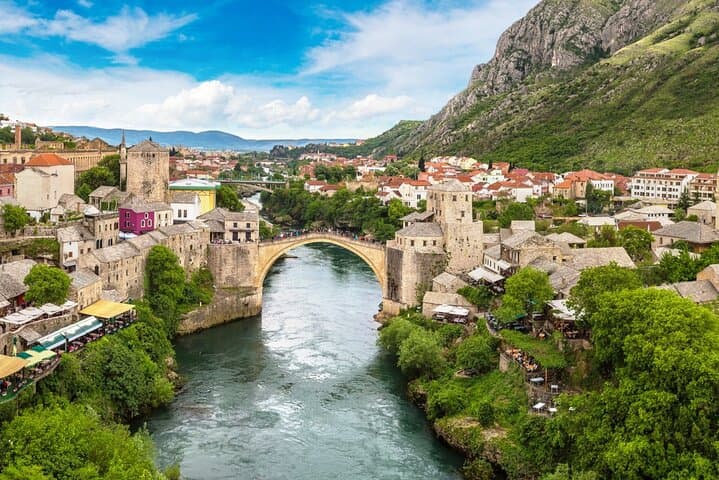
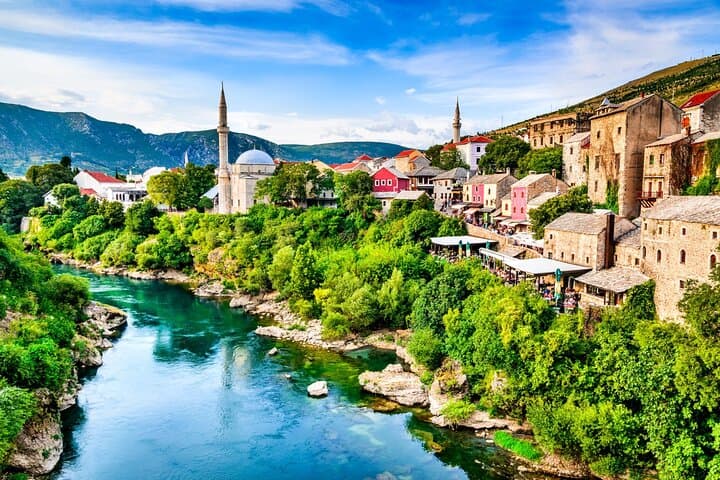
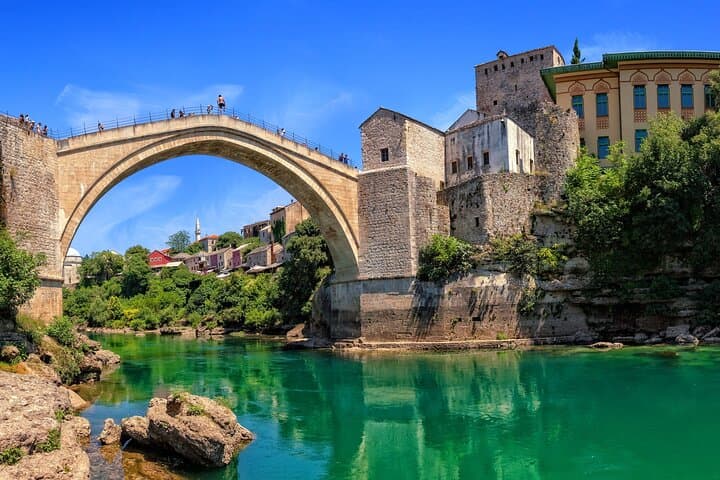
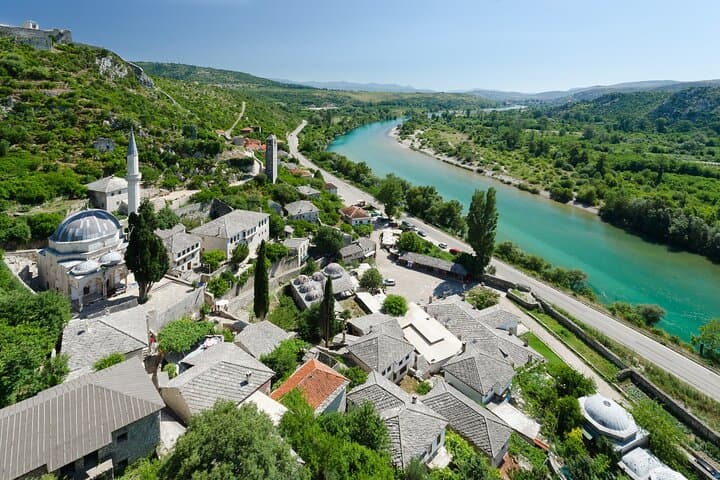
The day stitches together three distinct chapters: Kravica’s curtain of limestone falls, the hilltop stone lanes of Pocitelj, and Mostar’s Ottoman heart with its iconic Stari Most. Geologically, Kravica is a tufa cascade—water depositing calcium carbonate over millennia to form natural terraces—and the plunge pools feel cool enough to wake every sense. Pocitelj’s medieval ramparts and Ottoman-era houses speak of borderland history where Bosnian, Hungarian and Ottoman rules left visible marks. In Mostar, the rebuilt Old Bridge anchors a living museum of mosques, bazaars and riverside cafés; cultural layers are obvious in the food and the language that blends Slavic and Ottoman influences.
Practical guidance: expect an 11–13 hour day with roughly three hours in Mostar, one hour at Kravica and a short stop in Pocitelj. Wear sturdy shoes for cobbles and a swimsuit for Kravica’s inviting pools. Bring local currency for small vendors, and carry a light jacket for coastal-basin temperature shifts. The tour suits most fitness levels but involves uneven surfaces and steps—plan for sun protection and a refillable water bottle. Respect religious sites—cover shoulders where requested—and leave no trace at the waterfalls.
This itinerary gives a concentrated snapshot of Herzegovina: geology that shaped pools and cliffs, architecture that maps empires, and a river that keeps pulling the story downstream.
easy.
11–13 hours.
Suitable for anyone with basic mobility; involves walking on uneven cobbles and stairs but no sustained climbs.
Most tours include hotel pickup and drop-off in Dubrovnik—confirm your exact pickup point when you book.
Yes; swimming is allowed in designated areas when conditions permit—bring swimwear and water shoes.
Generally yes; the trip is rated easy but includes walking on uneven surfaces and stairs—notify the operator of mobility needs during booking.
Yes—this day trip crosses from Croatia into Bosnia and Herzegovina, so carry a valid passport and check visa requirements for your nationality.
Mostar’s Stari Most (Old Bridge) dates to the 16th century Ottoman period and was rebuilt after its destruction in the 1990s; Pocitelj preserves layered medieval and Ottoman architecture.
Kravica’s tufa formations and river habitats are sensitive—avoid stepping on fragile deposits, pack out trash, and support local guides and businesses to sustain the area.
Super Transfer Services operates guided outdoor trips and adventures with an emphasis on safety, stewardship, and memorable experiences.
You climb into an air-conditioned coach before dawn and the Dalmatian coastline slips away; by mid-morning the road bends into karst valleys and the Trebižat river begins to murmur, daring you to slow down.
You climb into an air-conditioned coach before dawn and the Dalmatian coastline slips away; by mid-morning the road bends into karst valleys and the Trebižat river begins to murmur, daring you to slow down.
The day stitches together three distinct chapters: Kravica’s curtain of limestone falls, the hilltop stone lanes of Pocitelj, and Mostar’s Ottoman heart with its iconic Stari Most. Geologically, Kravica is a tufa cascade—water depositing calcium carbonate over millennia to form natural terraces—and the plunge pools feel cool enough to wake every sense. Pocitelj’s medieval ramparts and Ottoman-era houses speak of borderland history where Bosnian, Hungarian and Ottoman rules left visible marks. In Mostar, the rebuilt Old Bridge anchors a living museum of mosques, bazaars and riverside cafés; cultural layers are obvious in the food and the language that blends Slavic and Ottoman influences.
Practical guidance: expect an 11–13 hour day with roughly three hours in Mostar, one hour at Kravica and a short stop in Pocitelj. Wear sturdy shoes for cobbles and a swimsuit for Kravica’s inviting pools. Bring local currency for small vendors, and carry a light jacket for coastal-basin temperature shifts. The tour suits most fitness levels but involves uneven surfaces and steps—plan for sun protection and a refillable water bottle. Respect religious sites—cover shoulders where requested—and leave no trace at the waterfalls.
This itinerary gives a concentrated snapshot of Herzegovina: geology that shaped pools and cliffs, architecture that maps empires, and a river that keeps pulling the story downstream.