THE ADVENTURE COLLECTIVE® · Independent discovery and booking for outdoor travel

Spend a full day moving from the medieval Burana Tower to the green folds of Issyk‑Ata Gorge, where a short hike reaches a waterfall and mineral hot springs. This practical day trip combines history, light hiking and a rewarding soak.
Spend a full day moving from the medieval Burana Tower to the green folds of Issyk‑Ata Gorge, where a short hike reaches a waterfall and mineral hot springs. This practical day trip combines history, light hiking and a rewarding soak.
The day opens on cracked steppe and low foothills as the road loosens the city from the traveler. Burana Tower rises first — a squat, centuries-old minaret that pins the horizon and invites a slow, archaeological curiosity before the real exertion begins. From there the vehicle winds into Issyk‑Ata Gorge, where green meadows and groves press close and the air cools; a one‑hour walk reads like a slow page turn, ending at a cliff‑tucked waterfall and mineral springs that steam faintly under the sun.
Verified experiences and guided adventures in the surrounding area.
Operated by Visit Bishkek · Bishkek, Chuy Region
The day opens on cracked steppe and low foothills as the road loosens the city from the traveler. Burana Tower rises first — a squat, centuries-old minaret that pins the horizon and invites a slow, archaeological curiosity before the real exertion begins. From there the vehicle winds into Issyk‑Ata Gorge, where green meadows and groves press close and the air cools; a one‑hour walk reads like a slow page turn, ending at a cliff‑tucked waterfall and mineral springs that steam faintly under the sun.
This route threads history and geology: Burana Tower is a remnant of the medieval Karakhanid era and roadside petroglyphs hint at Silk Road layers; Issyk‑Ata’s springs have drawn people since at least the 7th century for their mineral waters and, later, as a Soviet sanatorium. Granite and limestone cliffs shape the gorge, while glacial and spring-fed streams carve pools that invite a soak.
Practical guidance is straightforward. The walk is untechnical but uneven, with short ascents and meadow paths—expect moderate exertion over a half‑day on foot plus driving between sites. Bring layered clothing for sudden shade and wind in the gorge, sturdy shoes for rocky sections, and a towel for the springs. Water and snacks keep energy steady; mobile reception is patchy in the gorge. Respect local customs at sacred springs and avoid using soaps in mineral pools.
This is a pragmatic, scenic day that pairs cultural stops with natural rewards: a tower that tells of past trade routes, a waterfall that demands a short hike, and springs that let you end the day soaking under open sky.
moderate.
8 hours (full-day).
Suitable for travelers with moderate fitness; involves roughly an hour of walking with short elevation and uneven terrain.
The walking section from the trailhead to the waterfall is roughly 45–75 minutes one way depending on pace and stops; terrain is unpaved and uneven.
Yes, the springs are commonly used for bathing; avoid using soap or shampoo in the pools and check water temperature before entering.
The route is non‑technical but requires mobility for uneven ground; infants must sit on laps in vehicles and people with severe back or heart conditions are not recommended to join.
Site interpretation is limited; guides typically speak Russian and English. Facilities are basic — expect outdoor rest areas and small vendors rather than full services.
Burana Tower dates to the medieval Karakhanid period and marks the eastern approaches of historical Silk Road networks; Issyk‑Ata’s springs have been used since historic travelers recorded them from the 7th century onward.
Visitors should avoid introducing soaps into mineral springs, stay on established trails to prevent erosion, and pack out any waste to protect fragile gorge vegetation.
Visit Bishkek operates guided outdoor trips and adventures with an emphasis on safety, stewardship, and memorable experiences.
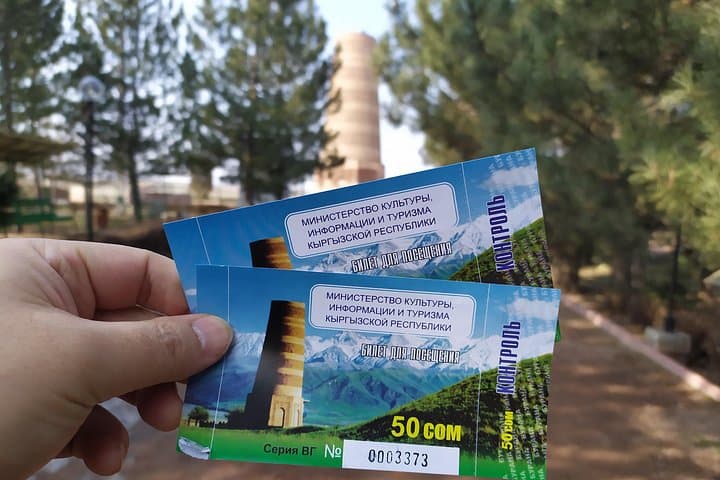
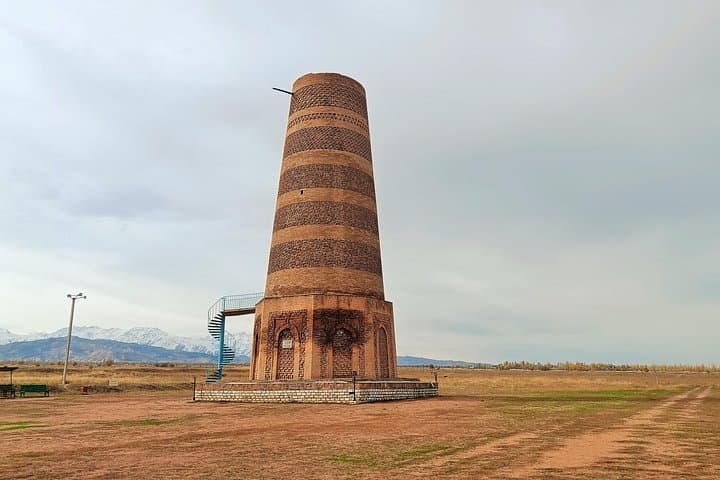
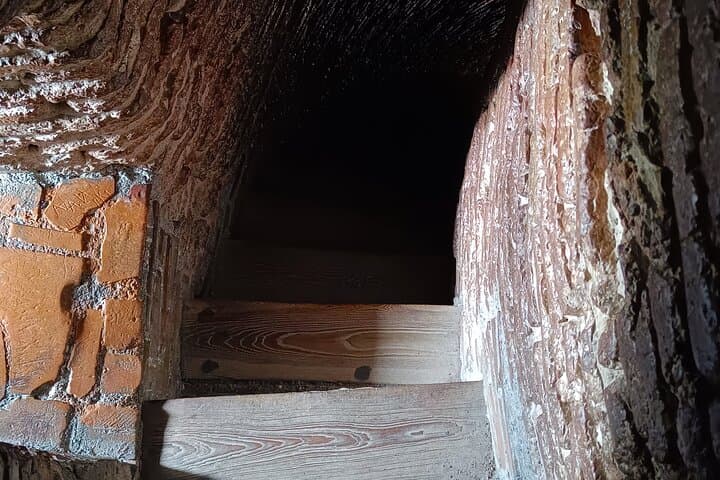
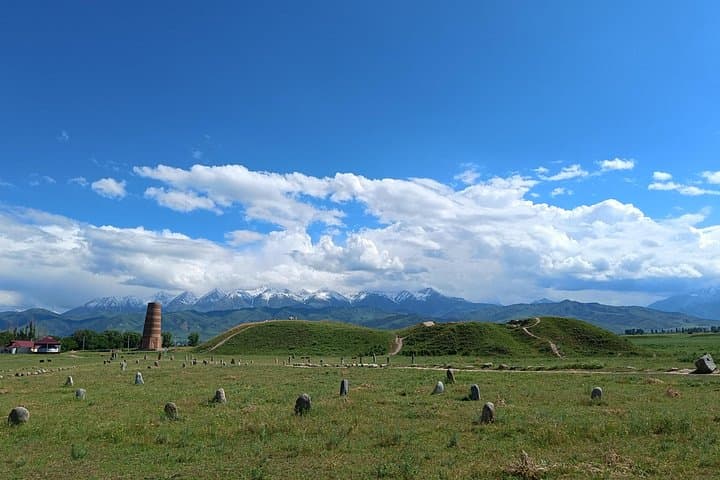
The day opens on cracked steppe and low foothills as the road loosens the city from the traveler. Burana Tower rises first — a squat, centuries-old minaret that pins the horizon and invites a slow, archaeological curiosity before the real exertion begins. From there the vehicle winds into Issyk‑Ata Gorge, where green meadows and groves press close and the air cools; a one‑hour walk reads like a slow page turn, ending at a cliff‑tucked waterfall and mineral springs that steam faintly under the sun.
The day opens on cracked steppe and low foothills as the road loosens the city from the traveler. Burana Tower rises first — a squat, centuries-old minaret that pins the horizon and invites a slow, archaeological curiosity before the real exertion begins. From there the vehicle winds into Issyk‑Ata Gorge, where green meadows and groves press close and the air cools; a one‑hour walk reads like a slow page turn, ending at a cliff‑tucked waterfall and mineral springs that steam faintly under the sun.
This route threads history and geology: Burana Tower is a remnant of the medieval Karakhanid era and roadside petroglyphs hint at Silk Road layers; Issyk‑Ata’s springs have drawn people since at least the 7th century for their mineral waters and, later, as a Soviet sanatorium. Granite and limestone cliffs shape the gorge, while glacial and spring-fed streams carve pools that invite a soak.
Practical guidance is straightforward. The walk is untechnical but uneven, with short ascents and meadow paths—expect moderate exertion over a half‑day on foot plus driving between sites. Bring layered clothing for sudden shade and wind in the gorge, sturdy shoes for rocky sections, and a towel for the springs. Water and snacks keep energy steady; mobile reception is patchy in the gorge. Respect local customs at sacred springs and avoid using soaps in mineral pools.
This is a pragmatic, scenic day that pairs cultural stops with natural rewards: a tower that tells of past trade routes, a waterfall that demands a short hike, and springs that let you end the day soaking under open sky.