THE ADVENTURE COLLECTIVE® · Independent discovery and booking for outdoor travel

Walk the French Quarter after dusk with a guide who pairs local lore and History Channel‑worthy tales with two augmented reality artworks by Marcus Brown. This two‑hour small‑group tour blends street‑level history, haunted houses, and modern AR layers for a fresh take on New Orleans’ most storied neighborhood.
Walk the French Quarter after dusk with a guide who pairs local lore and History Channel‑worthy tales with two augmented reality artworks by Marcus Brown. This two‑hour small‑group tour blends street‑level history, haunted houses, and modern AR layers for a fresh take on New Orleans’ most storied neighborhood.
Fog moves in off the Mississippi like an audience taking its seats. In the French Quarter, twilight sharpens iron balconies, puddles hold the glow of streetlamps, and the city’s past leans close enough to be heard. On this two-hour walking tour you follow a guide through alleys and squares where voices—some recorded, some imagined—claim old grievances and older griefs. Twice along the route, augmented reality layers contemporary sculpture and animation over real facades: a crackling Great Fire, and a ghostly Marie Laveau rendered by New Orleans artist Marcus Brown.
Verified experiences and guided adventures in the surrounding area.
Operated by Gray Line New Orleans · New Orleans, Louisiana
Fog moves in off the Mississippi like an audience taking its seats. In the French Quarter, twilight sharpens iron balconies, puddles hold the glow of streetlamps, and the city’s past leans close enough to be heard. On this two-hour walking tour you follow a guide through alleys and squares where voices—some recorded, some imagined—claim old grievances and older griefs. Twice along the route, augmented reality layers contemporary sculpture and animation over real facades: a crackling Great Fire, and a ghostly Marie Laveau rendered by New Orleans artist Marcus Brown.
The Quarter’s bones are colonial: French lots replotted under Spanish rebuilding after the 1788 fire, bricks lifted from the Caribbean, and a street grid set atop deltaic soils that never forget the river’s presence. Geology here is part of the story; the city rests on compressible sediment and a high water table, and the Mississippi’s breath has always tugged at the edge of settlement—pushing trade and occasionally threatening floodlines. Those forces shaped everything from building styles to the raised walkways you’ll pass.
Culturally, the walk riffs through familiar local lore—Marie Laveau’s sly power, the Casket Girls who arrived in the 18th century, tales of Dr. Dupas’ medical horrors—and it folds in music, Catholic ritual, and Creole life that made ghosts plausible company. The guide highlights where the History Channel has trod and where the city still keeps secrets; because the French Quarter is as much a living neighborhood as a museum, the tour threads public squares with private porches and taverns that have witnessed centuries.
Practical details anchor the atmosphere: tours meet at the Gray Line Lighthouse Ticket Office on Toulouse Street at the riverfront and loop through major haunted sites before returning to the start. Small groups (maximum 22) and a 2-hour duration make for a brisk, accessible pace—ground is mostly paved but can be uneven and narrow in spots. The AR experiences require an iPhone or iPad—no app download necessary—and standard data; guides offer alternate viewing for Android users. Wheelchair access is possible but may require alternate routes.
For the best experience, book an evening slot to let the Quarter’s light and sound stage the stories. Charge your phone, wear comfortable shoes for city walking, and bring a light jacket—riverfront breezes can cool suddenly. The tour balances showmanship with reliable history: you won’t be left hanging in the dark, but you will leave with a sharper sense of how New Orleans’ past keeps conversing with its present.
easy.
2 hours.
Suitable for most fitness levels; requires standing and walking on uneven city streets for up to two hours.
No app download is required for iPhone/iPad; the AR content streams using standard data. Guides offer alternate viewing methods for Android users.
Yes—this tour is wheelchair accessible, though alternate routes may be used due to narrow or uneven sidewalks in parts of the Quarter.
Meet at the Gray Line Lighthouse Ticket Office on Toulouse Street at the Mississippi riverfront; the tour runs approximately two hours and returns to the start point.
No—stories are historical and folkloric; the experience focuses on immersive storytelling, local lore, and AR art rather than guaranteed paranormal encounters.
Children are welcome but must be accompanied by an adult; some stories may be spooky for younger visitors.
For a full refund cancel at least 24 hours before the scheduled departure; last‑minute cancellations are typically nonrefundable.
The French Quarter reflects French and Spanish colonial rebuilding after major fires in the late 18th century; those eras shaped its architecture and property lines.
Heavy foot traffic affects historic streets and wrought‑iron; follow posted routes, respect private property, and support local preservation efforts by visiting nearby businesses.
Gray Line New Orleans operates guided outdoor trips and adventures with an emphasis on safety, stewardship, and memorable experiences.
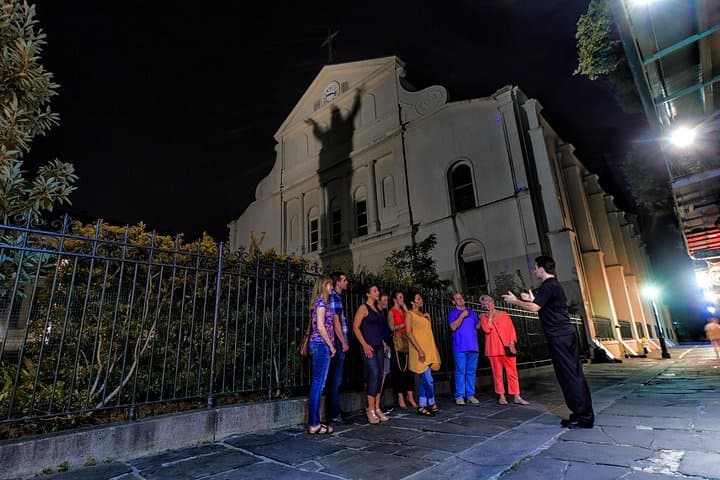
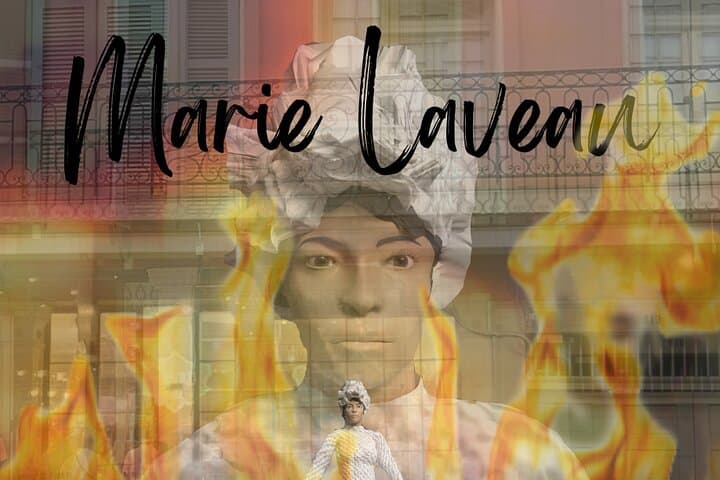
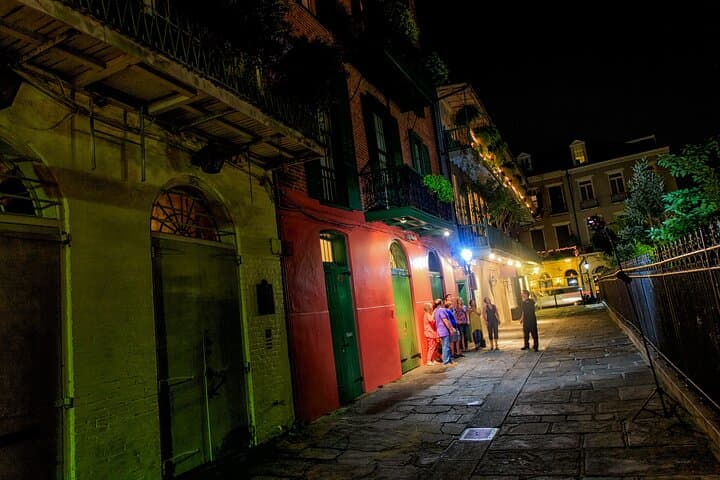
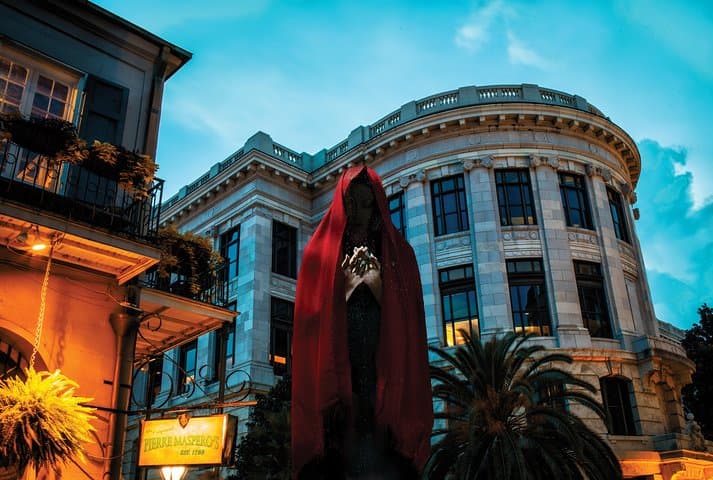
Fog moves in off the Mississippi like an audience taking its seats. In the French Quarter, twilight sharpens iron balconies, puddles hold the glow of streetlamps, and the city’s past leans close enough to be heard. On this two-hour walking tour you follow a guide through alleys and squares where voices—some recorded, some imagined—claim old grievances and older griefs. Twice along the route, augmented reality layers contemporary sculpture and animation over real facades: a crackling Great Fire, and a ghostly Marie Laveau rendered by New Orleans artist Marcus Brown.
Fog moves in off the Mississippi like an audience taking its seats. In the French Quarter, twilight sharpens iron balconies, puddles hold the glow of streetlamps, and the city’s past leans close enough to be heard. On this two-hour walking tour you follow a guide through alleys and squares where voices—some recorded, some imagined—claim old grievances and older griefs. Twice along the route, augmented reality layers contemporary sculpture and animation over real facades: a crackling Great Fire, and a ghostly Marie Laveau rendered by New Orleans artist Marcus Brown.
The Quarter’s bones are colonial: French lots replotted under Spanish rebuilding after the 1788 fire, bricks lifted from the Caribbean, and a street grid set atop deltaic soils that never forget the river’s presence. Geology here is part of the story; the city rests on compressible sediment and a high water table, and the Mississippi’s breath has always tugged at the edge of settlement—pushing trade and occasionally threatening floodlines. Those forces shaped everything from building styles to the raised walkways you’ll pass.
Culturally, the walk riffs through familiar local lore—Marie Laveau’s sly power, the Casket Girls who arrived in the 18th century, tales of Dr. Dupas’ medical horrors—and it folds in music, Catholic ritual, and Creole life that made ghosts plausible company. The guide highlights where the History Channel has trod and where the city still keeps secrets; because the French Quarter is as much a living neighborhood as a museum, the tour threads public squares with private porches and taverns that have witnessed centuries.
Practical details anchor the atmosphere: tours meet at the Gray Line Lighthouse Ticket Office on Toulouse Street at the riverfront and loop through major haunted sites before returning to the start. Small groups (maximum 22) and a 2-hour duration make for a brisk, accessible pace—ground is mostly paved but can be uneven and narrow in spots. The AR experiences require an iPhone or iPad—no app download necessary—and standard data; guides offer alternate viewing for Android users. Wheelchair access is possible but may require alternate routes.
For the best experience, book an evening slot to let the Quarter’s light and sound stage the stories. Charge your phone, wear comfortable shoes for city walking, and bring a light jacket—riverfront breezes can cool suddenly. The tour balances showmanship with reliable history: you won’t be left hanging in the dark, but you will leave with a sharper sense of how New Orleans’ past keeps conversing with its present.