THE ADVENTURE COLLECTIVE® · Independent discovery and booking for outdoor travel

Walk Boston’s Freedom Trail at your own pace with an audio guide that brings 17 historic sites to life. This 4 km, 2–3 hour self-guided tour pairs close-up city history with practical route navigation for independent travelers.
Walk Boston’s Freedom Trail at your own pace with an audio guide that brings 17 historic sites to life. This 4 km, 2–3 hour self-guided tour pairs close-up city history with practical route navigation for independent travelers.
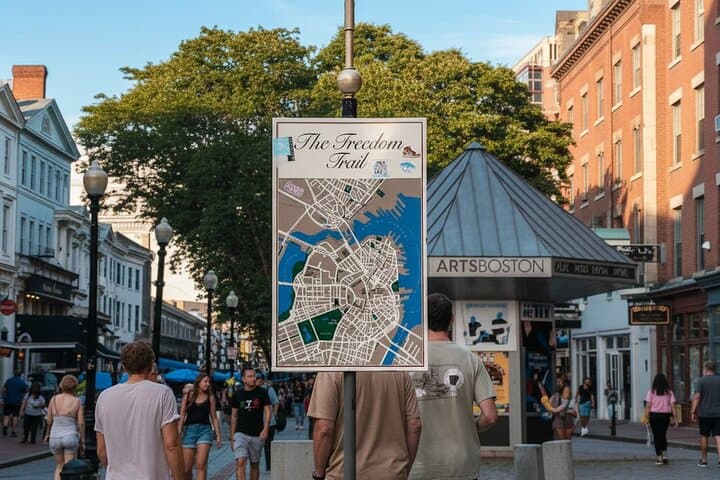
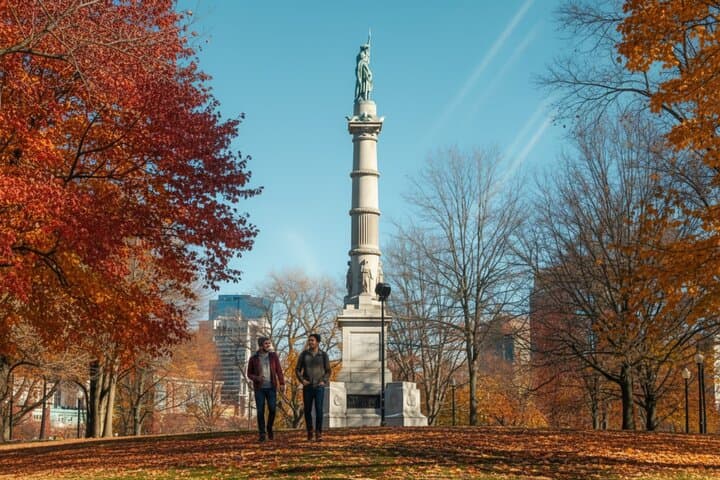
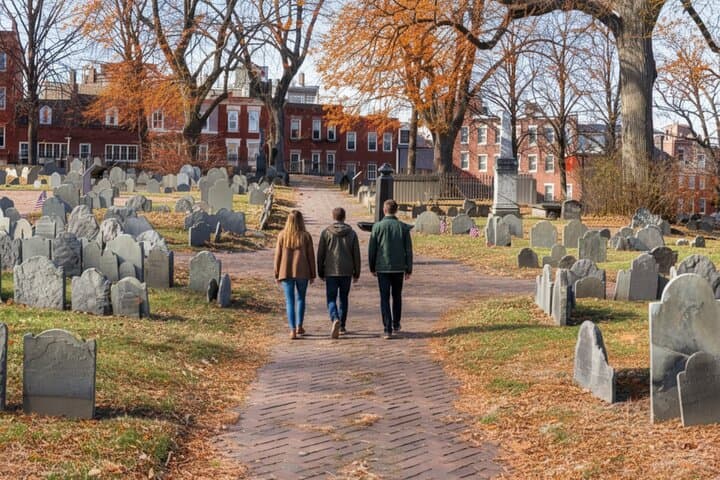
You step onto damp cobbles at Boston Common and the city begins to speak. Trees lean in over old paths, the Commons’ grass opens like a public stage, and the Freedom Trail’s red line threads you past colonial churches, brick alleys, and granite monuments that still argue with the harbor wind.
Verified experiences and guided adventures in the surrounding area.
Operated by Ciceru · Boston, Massachusetts
You step onto damp cobbles at Boston Common and the city begins to speak. Trees lean in over old paths, the Commons’ grass opens like a public stage, and the Freedom Trail’s red line threads you past colonial churches, brick alleys, and granite monuments that still argue with the harbor wind.
This 4 km self-guided walk follows 17 marked sites from Boston Common to Bunker Hill Monument. The route traces Revolutionary-era politics and everyday life: meetinghouses that housed fiery sermons, taverns that doubled as organizing rooms, and a waterfront that once supplied timber and temper. Geology shows up too—the granite of Bunker Hill, the filled land around the harbor—each surface a chapter in the city’s urban evolution.
Culturally, the trail exposes Boston’s layered contradictions: merchant wealth and abolitionist fervor, colonial architecture and modern transit. Local voices—students, guides, and dockworkers—keep the story immediate; audio narration adds dates, people, and surprise details you wouldn’t spot from a map alone.
Practical guidance: allow 2–3 hours, wear supportive shoes for cobblestones and short staircases, and keep your phone charged to run the audio and map. Start early to avoid tour groups and midday traffic; buses and the T put you within a few minutes of the Common. Carry a small bottle of water and an umbrella in season—city weather can flip quickly.
This is a walking history—accessible, urban, and best when you move at your own pace, listening for the small dramas that built a nation.
easy.
2–3 hours.
Light walking fitness; ability to stand and walk continuously for a few hours and handle short staircases.
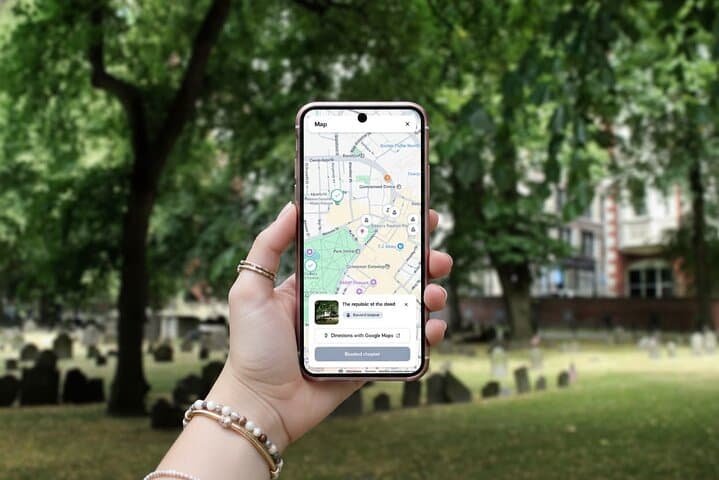
This is fully self-guided: you activate the audio on your smartphone and navigate with the included smart map at your own pace.
The trail covers about 4 km and typically takes 2–3 hours depending on pace and how many sites you stop to explore.
Much of the route uses city sidewalks and some sites have uneven cobbles or stairs; accessibility varies by stop—check specific sites for ramp access.
The audio content is available in several languages including English, Deutsch, Italiano, Français, Español, Português, and 中文.
The Freedom Trail links 17 sites important to colonial and Revolutionary Boston, from public schools and meetinghouses to the granite Bunker Hill Monument commemorating the 1775 battle.
Respect historic sites by staying on marked paths, avoiding touching fragile stonework, and carrying out trash; many locations rely on preservation funds and public stewardship.
Ciceru operates guided outdoor trips and adventures with an emphasis on safety, stewardship, and memorable experiences.
You step onto damp cobbles at Boston Common and the city begins to speak. Trees lean in over old paths, the Commons’ grass opens like a public stage, and the Freedom Trail’s red line threads you past colonial churches, brick alleys, and granite monuments that still argue with the harbor wind.
You step onto damp cobbles at Boston Common and the city begins to speak. Trees lean in over old paths, the Commons’ grass opens like a public stage, and the Freedom Trail’s red line threads you past colonial churches, brick alleys, and granite monuments that still argue with the harbor wind.
This 4 km self-guided walk follows 17 marked sites from Boston Common to Bunker Hill Monument. The route traces Revolutionary-era politics and everyday life: meetinghouses that housed fiery sermons, taverns that doubled as organizing rooms, and a waterfront that once supplied timber and temper. Geology shows up too—the granite of Bunker Hill, the filled land around the harbor—each surface a chapter in the city’s urban evolution.
Culturally, the trail exposes Boston’s layered contradictions: merchant wealth and abolitionist fervor, colonial architecture and modern transit. Local voices—students, guides, and dockworkers—keep the story immediate; audio narration adds dates, people, and surprise details you wouldn’t spot from a map alone.
Practical guidance: allow 2–3 hours, wear supportive shoes for cobblestones and short staircases, and keep your phone charged to run the audio and map. Start early to avoid tour groups and midday traffic; buses and the T put you within a few minutes of the Common. Carry a small bottle of water and an umbrella in season—city weather can flip quickly.
This is a walking history—accessible, urban, and best when you move at your own pace, listening for the small dramas that built a nation.