THE ADVENTURE COLLECTIVE® · Independent discovery and booking for outdoor travel

Learn to freedive in one of Tulum’s clear cenotes with a beginner-friendly course that blends breathing technique with guided shallow descents. This five-hour experience includes gear, private transport, and underwater video—ideal for confident swimmers ready to try breath-hold diving.
Learn to freedive in one of Tulum’s clear cenotes with a beginner-friendly course that blends breathing technique with guided shallow descents. This five-hour experience includes gear, private transport, and underwater video—ideal for confident swimmers ready to try breath-hold diving.
You step off the shaded palapa and the forest opens into light—green leaves rim a glassy hole in the limestone where the water holds the sky. The cenote’s surface looks placid, but it hums with its own rules: cool, clear water that gives you the illusion of weightlessness before you even inhale. An instructor waits with a mask in hand and a calm voice that lays out the day: breathing, equalization, gear, then gradual descent into a world where time shortens to the length of a single breath.
Verified experiences and guided adventures in the surrounding area.
Operated by Freedive Utopia · Tulum, Quintana Roo
You step off the shaded palapa and the forest opens into light—green leaves rim a glassy hole in the limestone where the water holds the sky. The cenote’s surface looks placid, but it hums with its own rules: cool, clear water that gives you the illusion of weightlessness before you even inhale. An instructor waits with a mask in hand and a calm voice that lays out the day: breathing, equalization, gear, then gradual descent into a world where time shortens to the length of a single breath.
Cenotes are collapsed limestone caves carved by groundwater over millennia, the Yucatán Peninsula’s exposed aquifer. Indigenous Maya regarded them as entrances to the underworld and vital freshwater sources—many were ceremonial sites long before they became playgrounds for modern divers. Geologically, these sinkholes reveal porous karst networks; the water here is filtered and startlingly clear because it flows through dissolved rock rather than overland sediment.
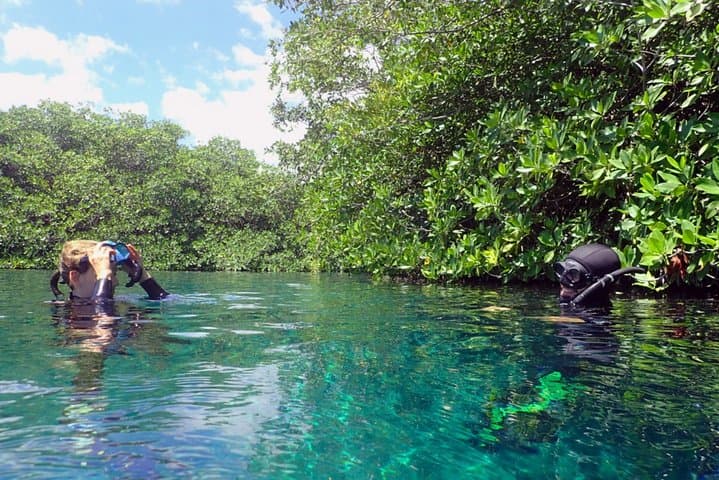
The course begins with a 15-minute drive from Tulum downtown and a land briefing inside a nearby cafe. Instructors cover freediving fundamentals—relaxed diaphragmatic breathing, equalization, and safe descent protocols—before fitting wetsuits, fins, masks and weight belts. Maximum depth for this experience is 7 meters (≈23 feet), low enough for confident beginners but enough to feel the pressure change and the thrill of descending into caverns and mangrove overhangs.
Practically speaking, this is for anyone comfortable in the water and willing to follow safety instruction. Groups are small (up to four in shared tours), and total program time is about five hours, with 1.5–2.5 hours in the water depending on group size. Transportation, equipment and underwater video are included, but participants must sign a medical release; the activity is not recommended for pregnant travelers or those with cardiovascular problems.
To make the most of the day, hydrate well before arrival, avoid heavy meals immediately prior, and practice slow, deep breathing the morning of your session. Bring a change of clothes and a towel—the shade near the cenote feels cool, but you’ll want dry layers after your dives. If you plan hotel pickup, note the operator collects only from Tulum downtown (not the beach hotel zone, Aldea Zama or La Veleta).
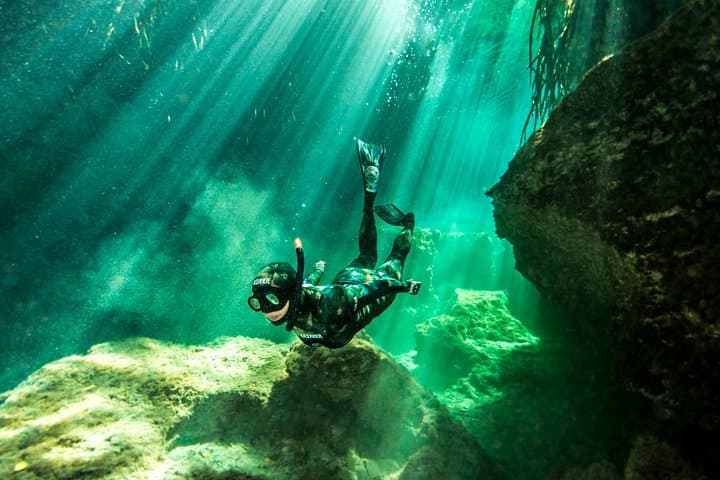
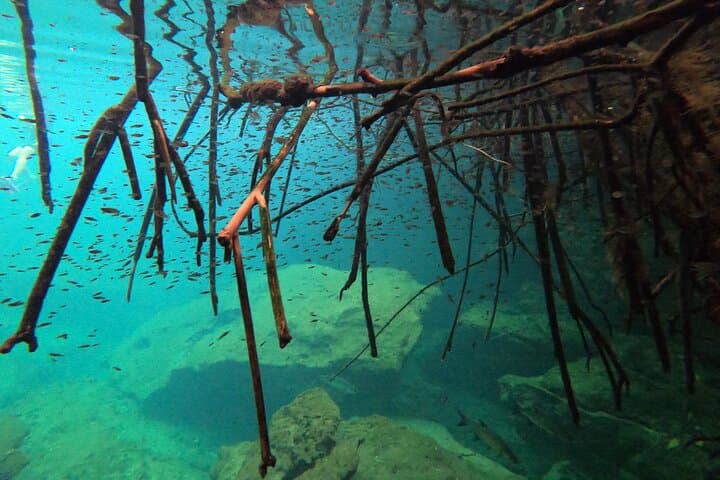
Beyond the technicals, freediving in a cenote is quietly humbling. Light shafts refract through the water, mangrove roots curl like fingers, and fish thread slow patterns just beneath your mask. The experience teaches a different skill set than scuba: patience, breath control and the ability to move with ease. For a half-day of instruction and immersion, you leave with a practical toolkit for deeper, safer exploration—and a photo or two of the world below the water’s skin.
moderate.
5 hours (1.5–2.5 hours in water).
Comfortable swimmer with basic breath control; good cardiovascular health recommended
No prior freediving or scuba experience is required; the course teaches fundamentals and progresses slowly under supervision.
Maximum depth is about 7 meters (23 feet), suitable for beginners and controlled by your instructor.
Yes—full freediving gear (mask, snorkel, fins, wetsuit, weight belt and weights) is included in the price.
Participants must sign a medical release; the activity is not recommended for pregnant travelers or people with cardiovascular issues.
Expect 1.5–2.5 hours in the water, with the full session lasting around five hours including transport and briefings.
Yes, but pickups are limited to hotels in Tulum downtown—not the beach hotel zone, Aldea Zama, or La Veleta.
Cenotes served as critical freshwater sources and ceremonial sites for the Maya; many are openings into complex underground rivers etched through Yucatán limestone.
Cenote ecosystems are fragile; use only biodegradable sunscreen, avoid touching cave formations, and follow guide instructions to minimize impact.
Freedive Utopia operates guided outdoor trips and adventures with an emphasis on safety, stewardship, and memorable experiences.
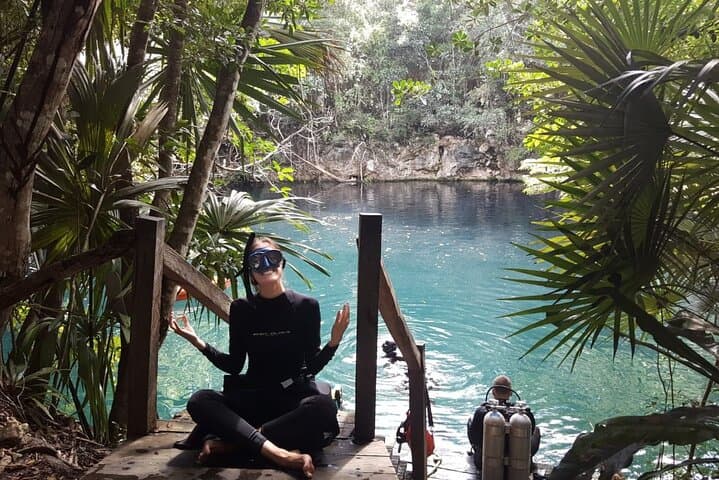
You step off the shaded palapa and the forest opens into light—green leaves rim a glassy hole in the limestone where the water holds the sky. The cenote’s surface looks placid, but it hums with its own rules: cool, clear water that gives you the illusion of weightlessness before you even inhale. An instructor waits with a mask in hand and a calm voice that lays out the day: breathing, equalization, gear, then gradual descent into a world where time shortens to the length of a single breath.
You step off the shaded palapa and the forest opens into light—green leaves rim a glassy hole in the limestone where the water holds the sky. The cenote’s surface looks placid, but it hums with its own rules: cool, clear water that gives you the illusion of weightlessness before you even inhale. An instructor waits with a mask in hand and a calm voice that lays out the day: breathing, equalization, gear, then gradual descent into a world where time shortens to the length of a single breath.
Cenotes are collapsed limestone caves carved by groundwater over millennia, the Yucatán Peninsula’s exposed aquifer. Indigenous Maya regarded them as entrances to the underworld and vital freshwater sources—many were ceremonial sites long before they became playgrounds for modern divers. Geologically, these sinkholes reveal porous karst networks; the water here is filtered and startlingly clear because it flows through dissolved rock rather than overland sediment.
The course begins with a 15-minute drive from Tulum downtown and a land briefing inside a nearby cafe. Instructors cover freediving fundamentals—relaxed diaphragmatic breathing, equalization, and safe descent protocols—before fitting wetsuits, fins, masks and weight belts. Maximum depth for this experience is 7 meters (≈23 feet), low enough for confident beginners but enough to feel the pressure change and the thrill of descending into caverns and mangrove overhangs.
Practically speaking, this is for anyone comfortable in the water and willing to follow safety instruction. Groups are small (up to four in shared tours), and total program time is about five hours, with 1.5–2.5 hours in the water depending on group size. Transportation, equipment and underwater video are included, but participants must sign a medical release; the activity is not recommended for pregnant travelers or those with cardiovascular problems.
To make the most of the day, hydrate well before arrival, avoid heavy meals immediately prior, and practice slow, deep breathing the morning of your session. Bring a change of clothes and a towel—the shade near the cenote feels cool, but you’ll want dry layers after your dives. If you plan hotel pickup, note the operator collects only from Tulum downtown (not the beach hotel zone, Aldea Zama or La Veleta).
Beyond the technicals, freediving in a cenote is quietly humbling. Light shafts refract through the water, mangrove roots curl like fingers, and fish thread slow patterns just beneath your mask. The experience teaches a different skill set than scuba: patience, breath control and the ability to move with ease. For a half-day of instruction and immersion, you leave with a practical toolkit for deeper, safer exploration—and a photo or two of the world below the water’s skin.