THE ADVENTURE COLLECTIVE® · Independent discovery and booking for outdoor travel

Spend three days on Fraser’s Hill tracing migrant flyways and highland trails. Expect cool mornings, oak-laurel forest, and a concentrated list of montane and seasonal birds—ideal for serious birders and curious nature travelers.
Spend three days on Fraser’s Hill tracing migrant flyways and highland trails. Expect cool mornings, oak-laurel forest, and a concentrated list of montane and seasonal birds—ideal for serious birders and curious nature travelers.
Dawn on Fraser’s Hill arrives cool and sharp; mist threads through oak and laurel, and the first calls of thrushes and flycatchers fill the air. Walk the Pine Tree and Hemmant Trails and the forest feels like it’s listening, every twig and leaf an active part of the day’s search for birds.
Verified experiences and guided adventures in the surrounding area.
Operated by JungleWalla Tours · Fraser's Hill, Pahang
Dawn on Fraser’s Hill arrives cool and sharp; mist threads through oak and laurel, and the first calls of thrushes and flycatchers fill the air. Walk the Pine Tree and Hemmant Trails and the forest feels like it’s listening, every twig and leaf an active part of the day’s search for birds.
The hill station was established in the late 19th century and named for naturalist Louis Fraser; its roads and cottages still carry that colonial-era footprint. Geologically, Fraser’s Hill sits on lower montane slopes above 900–1,000 m, where soils and humidity support dense montane forest and a distinctive understorey. The area is an Important Bird Area (IBA) noted for both resident highland species and seasonally arriving migrants.
Culturally, the hill has a small, quiet community and a handful of guesthouses and a golf course—a human scale that keeps wildlife encounters frequent and intimate. From November to February the valley attracts migrants from as far as Siberia and Japan; outside of those months birding focuses on resident drongos, thrushes, and specialized montane species.
Practical guidance: plan early-morning starts and pack a compact scope or quality binoculars, quiet footwear, and rain protection—conditions can change fast at elevation. Trails are mostly well-marked but uneven: expect 100–300 m of elevation variation on typical loops and up to several kilometers of walking each morning. Bring water, snacks, and a field guide or app with local species lists. Respect quiet zones and keep group sizes small; that behavior yields the best sightings and helps protect this fragile highland ecosystem.
moderate.
3 days.
Moderate fitness—comfortable walking for 3–6 hours daily on uneven trails and short elevation changes
November through February is peak migrant season—expect warblers, thrushes, and other species arriving from northern Asia.
Most trails are short to moderate loops with uneven footing; basic fitness and steady balance are recommended.
Yes—bookings typically include a birding guide who knows local trails and species; a private guide improves sightings and navigation.
Yes—small guesthouses, a hotel, and a few lodges serve visitors; many travelers also base in Kuala Lumpur and day-trip or transfer in.
Fraser’s Hill began as a late-19th-century colonial hill station named after naturalist Louis Fraser and retains its small hill-station character.
As an Important Bird Area, Fraser’s Hill relies on low-impact visitation—stay on trails, minimize noise, and avoid feeding wildlife to protect habitat and migratory stopover resources.
JungleWalla Tours operates guided outdoor trips and adventures with an emphasis on safety, stewardship, and memorable experiences.


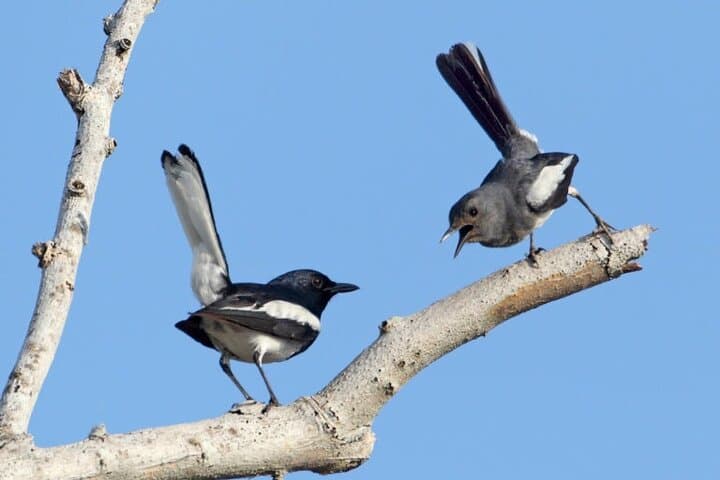
Dawn on Fraser’s Hill arrives cool and sharp; mist threads through oak and laurel, and the first calls of thrushes and flycatchers fill the air. Walk the Pine Tree and Hemmant Trails and the forest feels like it’s listening, every twig and leaf an active part of the day’s search for birds.
Dawn on Fraser’s Hill arrives cool and sharp; mist threads through oak and laurel, and the first calls of thrushes and flycatchers fill the air. Walk the Pine Tree and Hemmant Trails and the forest feels like it’s listening, every twig and leaf an active part of the day’s search for birds.
The hill station was established in the late 19th century and named for naturalist Louis Fraser; its roads and cottages still carry that colonial-era footprint. Geologically, Fraser’s Hill sits on lower montane slopes above 900–1,000 m, where soils and humidity support dense montane forest and a distinctive understorey. The area is an Important Bird Area (IBA) noted for both resident highland species and seasonally arriving migrants.
Culturally, the hill has a small, quiet community and a handful of guesthouses and a golf course—a human scale that keeps wildlife encounters frequent and intimate. From November to February the valley attracts migrants from as far as Siberia and Japan; outside of those months birding focuses on resident drongos, thrushes, and specialized montane species.
Practical guidance: plan early-morning starts and pack a compact scope or quality binoculars, quiet footwear, and rain protection—conditions can change fast at elevation. Trails are mostly well-marked but uneven: expect 100–300 m of elevation variation on typical loops and up to several kilometers of walking each morning. Bring water, snacks, and a field guide or app with local species lists. Respect quiet zones and keep group sizes small; that behavior yields the best sightings and helps protect this fragile highland ecosystem.