THE ADVENTURE COLLECTIVE® · Independent discovery and booking for outdoor travel

Travel from Cape Town into the Franschhoek Valley for a combined tram-and-cellar day: tasting at Tokara, a village lunch, and guided access to multiple estates by the Franschhoek Wine Tram. Ideal for travelers who want scenic views, approachable walks, and curated tastings in one eight-hour outing.
Travel from Cape Town into the Franschhoek Valley for a combined tram-and-cellar day: tasting at Tokara, a village lunch, and guided access to multiple estates by the Franschhoek Wine Tram. Ideal for travelers who want scenic views, approachable walks, and curated tastings in one eight-hour outing.
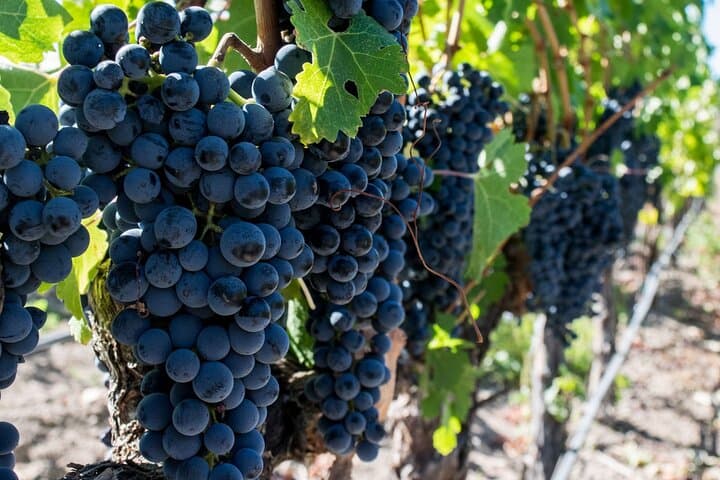
You leave Cape Town’s urban edge and the air grows cooler as vineyard rows unfold like ordered maps beneath the Cape Fold Mountains. The minibus hums along the N2; vineyards lean toward the road as if inviting you to step into a tasting. By midmorning you’re at Tokara for the first glass — broad, mineral-driven wines with the valley opening around you.
Verified experiences and guided adventures in the surrounding area.
Operated by Real Africa Travel Tours (Pty) Ltd · Franschhoek, Western Cape
You leave Cape Town’s urban edge and the air grows cooler as vineyard rows unfold like ordered maps beneath the Cape Fold Mountains. The minibus hums along the N2; vineyards lean toward the road as if inviting you to step into a tasting. By midmorning you’re at Tokara for the first glass — broad, mineral-driven wines with the valley opening around you.
Franschhoek’s wine story stretches back to the late 17th century when Huguenot settlers planted European varieties; nearby Stellenbosch developed as a center of winemaking and oak-lined streets. Geologically the valley sits in the rain-shadow of the Fold Belt, where decomposed granite and shale feed drainage patterns that influence vine vigor and flavor.
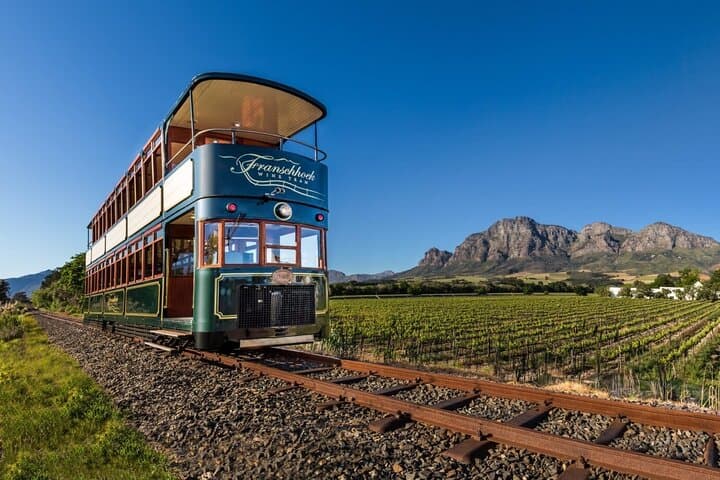
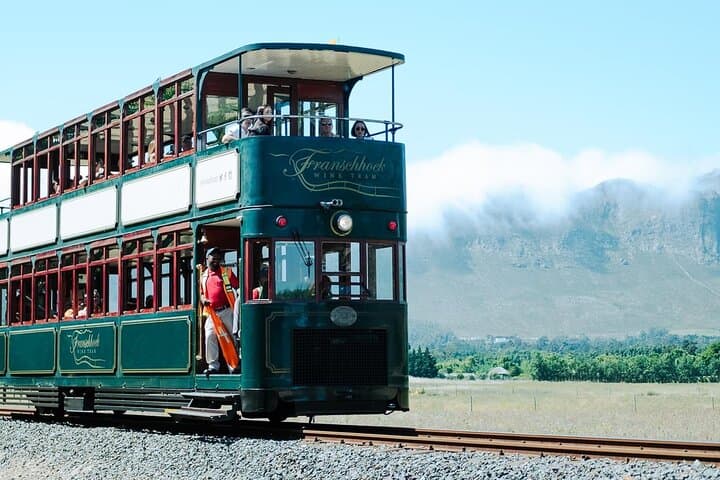
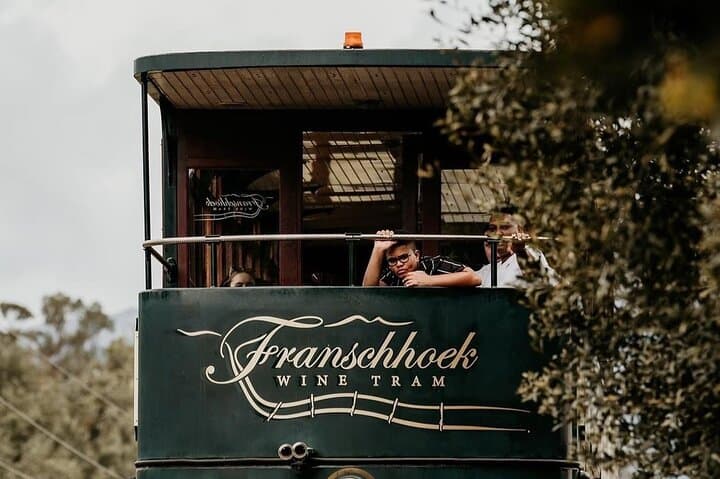
Culturally the region mixes Afrikaans farm life, French culinary legacy and a modern tasting-room culture focused on provenance. The Franschhoek Wine Tram transforms tasting into transportable exploration: choose the purple or orange line, hop off at estates like Rickety Bridge or Franschhoek Cellar, and manage your pace — most tram legs are short, eight to fifteen minutes.
Practical notes: this is a full-day outing (about eight hours with travel), suitable for most fitness levels because walking is light and on paved or gravel surfaces. Bring sun protection and a reusable water bottle to pace tastings and stay hydrated. Allow time for lunch in Franschhoek village, and confirm pickup details the day prior. If you want more focused cellar tours or food-pairing experiences, book those in advance — popular estates fill quickly. The tram’s convenience turns the landscape into a moving tasting room, where the valley’s slopes quietly shape every sip.
easy.
8 hours.
Light walking on paved and gravel surfaces; suitable for most fitness levels.
The tour runs about eight hours (including travel time) and includes round-trip transport from Cape Town in an air-conditioned vehicle.
Yes — the tram allows hopping between stops; most itineraries cover two estate tastings with the option to add a third if time permits.
Lunch in Franschhoek is not included; you’ll have free time to choose from cafés, bistros, and market options in the village.
Non-drinkers can still enjoy the scenery and cellar tours; the operator notes the tour is not recommended for pregnant travelers.
Franschhoek was founded in the late 1600s by French Huguenot refugees who brought vine-cuttings and winemaking traditions that still shape the valley’s identity.
Many estates practice sustainable viticulture and water-wise irrigation; visitors are encouraged to use refillable bottles and respect vineyard boundaries to reduce impact.
Real Africa Travel Tours (Pty) Ltd operates guided outdoor trips and adventures with an emphasis on safety, stewardship, and memorable experiences.
You leave Cape Town’s urban edge and the air grows cooler as vineyard rows unfold like ordered maps beneath the Cape Fold Mountains. The minibus hums along the N2; vineyards lean toward the road as if inviting you to step into a tasting. By midmorning you’re at Tokara for the first glass — broad, mineral-driven wines with the valley opening around you.
You leave Cape Town’s urban edge and the air grows cooler as vineyard rows unfold like ordered maps beneath the Cape Fold Mountains. The minibus hums along the N2; vineyards lean toward the road as if inviting you to step into a tasting. By midmorning you’re at Tokara for the first glass — broad, mineral-driven wines with the valley opening around you.
Franschhoek’s wine story stretches back to the late 17th century when Huguenot settlers planted European varieties; nearby Stellenbosch developed as a center of winemaking and oak-lined streets. Geologically the valley sits in the rain-shadow of the Fold Belt, where decomposed granite and shale feed drainage patterns that influence vine vigor and flavor.
Culturally the region mixes Afrikaans farm life, French culinary legacy and a modern tasting-room culture focused on provenance. The Franschhoek Wine Tram transforms tasting into transportable exploration: choose the purple or orange line, hop off at estates like Rickety Bridge or Franschhoek Cellar, and manage your pace — most tram legs are short, eight to fifteen minutes.
Practical notes: this is a full-day outing (about eight hours with travel), suitable for most fitness levels because walking is light and on paved or gravel surfaces. Bring sun protection and a reusable water bottle to pace tastings and stay hydrated. Allow time for lunch in Franschhoek village, and confirm pickup details the day prior. If you want more focused cellar tours or food-pairing experiences, book those in advance — popular estates fill quickly. The tram’s convenience turns the landscape into a moving tasting room, where the valley’s slopes quietly shape every sip.