THE ADVENTURE COLLECTIVE® · Independent discovery and booking for outdoor travel

Ride the Franschhoek Wine Tram to move between top estates without driving. This hop-on, hop-off tram lets you taste, tour cellars, and linger over lunch amid rolling vineyards.
Ride the Franschhoek Wine Tram to move between top estates without driving. This hop-on, hop-off tram lets you taste, tour cellars, and linger over lunch amid rolling vineyards.
You step off the shuttle into a valley of vines that seem to lean toward the sun, the tram’s bell cutting across the low hum of tractor work and distant church bells. The Franschhoek Wine Tram unfurls through patchwork vineyards and oak-lined lanes, offering a relaxed, vehicle-based way to move between tasting rooms without worrying about driving.
Verified experiences and guided adventures in the surrounding area.
Operated by Arrive & Explore Tours · Franschhoek, Western Cape
You step off the shuttle into a valley of vines that seem to lean toward the sun, the tram’s bell cutting across the low hum of tractor work and distant church bells. The Franschhoek Wine Tram unfurls through patchwork vineyards and oak-lined lanes, offering a relaxed, vehicle-based way to move between tasting rooms without worrying about driving.
The valley has a layered history: French Huguenot settlers introduced vine varieties in the 17th and 18th centuries and the landscape’s geology—old Bokkeveld shale and Table Mountain sandstone—creates the well-draining soils that vines favor. Town architecture still shows Cape Dutch and Victorian lines, and local cuisine reflects Boer traditions refreshed by modern chefs. Vineyards here act like patient hosts, their rows nudging you toward the next estate where a cellar door awaits.
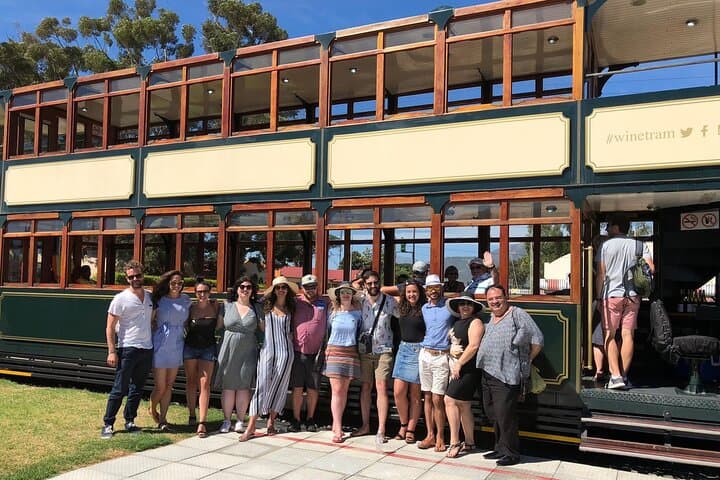
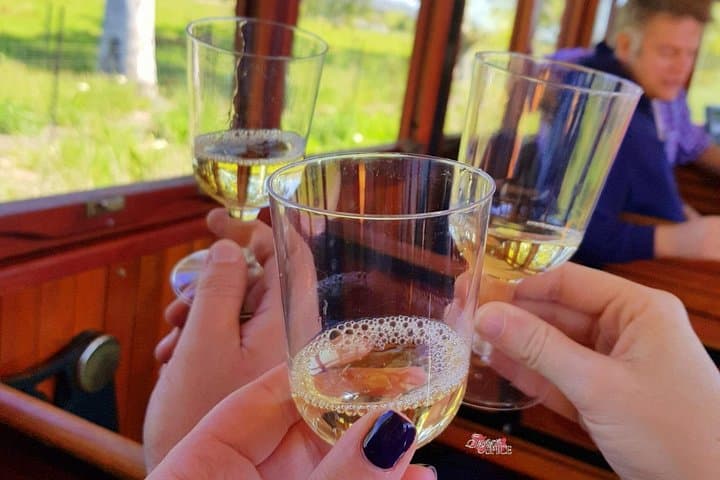
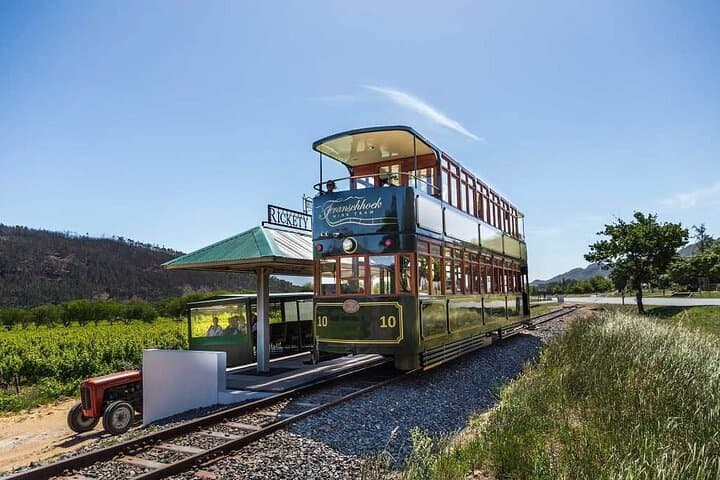
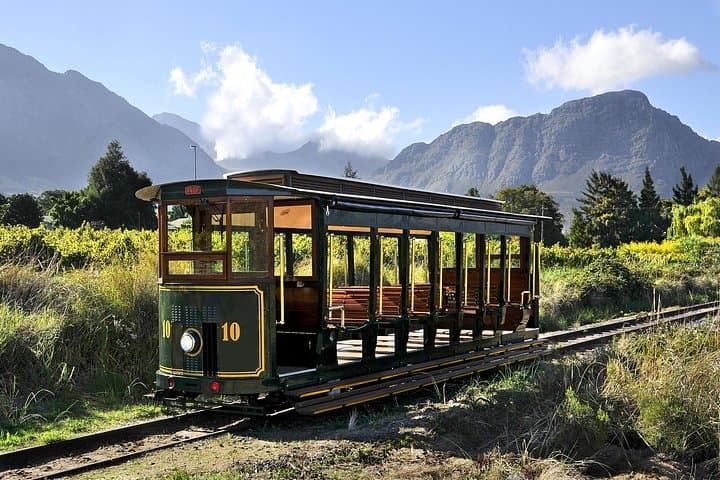
Expect vintage-style tram-buses that run two clockwise or anti-clockwise lines, with hop-on, hop-off stops at individual estates. Tastings, cellar tours, and long-lunch options are common; many estates sell bottles to take home. The tram saves time and lets you concentrate on tasting notes rather than directions.
Practical guidance: book a seat for the five-hour loop, confirm your pickup location, and bring a refillable water bottle—hydration makes palate work better. Wear comfortable shoes for short estate walks, and reserve lunches at popular estates during weekends. If you prefer a quieter pace, start early in the day when vineyards are cool and queues are shorter. Bring ID for tastings and be prepared to purchase wine on site if you want to bring a favorite bottle home.
easy.
5 hours.
Suitable for all fitness levels; minimal walking at each stop
The typical shared loop runs about five hours, allowing multiple hop-off stops; exact timing depends on your choices at estates.
Many operators include hotel pickup and drop-off—confirm your pickup point when booking.
Tastings are usually paid at each estate unless a specific tasting package is purchased—check each stop’s offerings.
Children can ride the tram but wine tastings are 18+; family-friendly activities vary by estate so check in advance.
Franschhoek’s vineyards trace back to 17th-century Huguenot settlers who shaped local viticulture and introduced European grape varieties.
Many estates practice sustainable viticulture and water-conscious irrigation; visitors can reduce impact by staying on paths and taking glass bottles home rather than leaving waste.
Arrive & Explore Tours operates guided outdoor trips and adventures with an emphasis on safety, stewardship, and memorable experiences.
You step off the shuttle into a valley of vines that seem to lean toward the sun, the tram’s bell cutting across the low hum of tractor work and distant church bells. The Franschhoek Wine Tram unfurls through patchwork vineyards and oak-lined lanes, offering a relaxed, vehicle-based way to move between tasting rooms without worrying about driving.
You step off the shuttle into a valley of vines that seem to lean toward the sun, the tram’s bell cutting across the low hum of tractor work and distant church bells. The Franschhoek Wine Tram unfurls through patchwork vineyards and oak-lined lanes, offering a relaxed, vehicle-based way to move between tasting rooms without worrying about driving.
The valley has a layered history: French Huguenot settlers introduced vine varieties in the 17th and 18th centuries and the landscape’s geology—old Bokkeveld shale and Table Mountain sandstone—creates the well-draining soils that vines favor. Town architecture still shows Cape Dutch and Victorian lines, and local cuisine reflects Boer traditions refreshed by modern chefs. Vineyards here act like patient hosts, their rows nudging you toward the next estate where a cellar door awaits.
Expect vintage-style tram-buses that run two clockwise or anti-clockwise lines, with hop-on, hop-off stops at individual estates. Tastings, cellar tours, and long-lunch options are common; many estates sell bottles to take home. The tram saves time and lets you concentrate on tasting notes rather than directions.
Practical guidance: book a seat for the five-hour loop, confirm your pickup location, and bring a refillable water bottle—hydration makes palate work better. Wear comfortable shoes for short estate walks, and reserve lunches at popular estates during weekends. If you prefer a quieter pace, start early in the day when vineyards are cool and queues are shorter. Bring ID for tastings and be prepared to purchase wine on site if you want to bring a favorite bottle home.