THE ADVENTURE COLLECTIVE® · Independent discovery and booking for outdoor travel

Spend a half day on an electric bike through Franschhoek’s wine valley—15–20 km of quiet farm roads, two boutique winery tastings, and a local guide who explains vine seasons and cellar craft. This shared tour mixes easy pedaling with regional history and sweeping valley views.
Spend a half day on an electric bike through Franschhoek’s wine valley—15–20 km of quiet farm roads, two boutique winery tastings, and a local guide who explains vine seasons and cellar craft. This shared tour mixes easy pedaling with regional history and sweeping valley views.
You begin at the Franschhoek Rent n Bicycle, helmets clicked, e-bike motors whispering as the valley opens. Vine rows fan out below ridges of folded sandstone and shale; the Franschhoek Mountains stand like a low guard, directing wind and light across small family vineyards. The route threads quiet farm lanes and sealed service roads, giving repeated viewpoints of the valley and the towns’ old Huguenot monuments.
Verified experiences and guided adventures in the surrounding area.
Operated by Winelands Guide · Franschhoek, Western Cape
You begin at the Franschhoek Rent n Bicycle, helmets clicked, e-bike motors whispering as the valley opens. Vine rows fan out below ridges of folded sandstone and shale; the Franschhoek Mountains stand like a low guard, directing wind and light across small family vineyards. The route threads quiet farm lanes and sealed service roads, giving repeated viewpoints of the valley and the towns’ old Huguenot monuments.
Franschhoek’s wine story starts with 17th‑century French Huguenots who brought vine cuttings and cellar craft; today boutique estates continue that lineage on soils formed by the Cape Fold Belt, where weathered sandstone and loam favor Chenin, Sauvignon and Pinot Noir. Local culture is equal parts tasting-room warmth and working farmland—expect simple farm gates, tasting rooms that double as family kitchens, and guides who explain pruning cycles and harvest timing.
Practical guidance: the shared tour covers roughly 15–20 km over rolling terrain with short climbs, and runs about 4–5 hours including two winery tastings. Mountain e-bikes and helmets are provided; moderate pedaling is required on sections away from motor traffic. Bring a photo ID for tastings, sun protection, closed-toe shoes and a small daypack for layers and purchases. Hydrate before you start—the provided bottled water is helpful but carry a refillable bottle if you prefer.
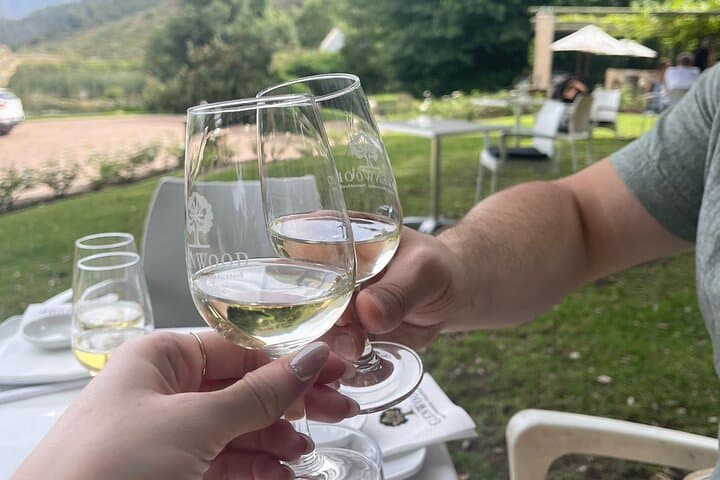
Arrive five minutes early to collect the correct bike size and listen to the safety briefing. Tastings occur at two family-owned, award-winning estates (one listed as Wildeberg in the route), and the guide will weave viniculture details with local history. The pacing is relaxed: more time at the vineyards, brisk but comfortable riding between them.
easy.
4–5 hours.
Suitable for most fitness levels—basic ability to pedal short hills and spend a few hours on a saddle is enough.
The route is approximately 15–20 km and the shared tour runs about 4–5 hours including two winery tastings.
Yes, mountain e-bikes and helmets are supplied and included in the booking price.
Tastings at two boutique wineries are included; bring valid photo ID as wineries enforce age requirements.
The tour is labeled physically easy and suitable for most fitness levels, but it is not recommended for travelers with significant spinal or heart problems, or for pregnant visitors.
Franschhoek was settled by French Huguenots in the 17th century who established the region’s winemaking traditions and left a strong cultural imprint on local place names and cellar practices.
Many small estates practice water-wise viticulture and limited-chemical farming; stay on designated paths, take litter home, and consider supporting boutique wineries that follow sustainable practices.
Winelands Guide operates guided outdoor trips and adventures with an emphasis on safety, stewardship, and memorable experiences.
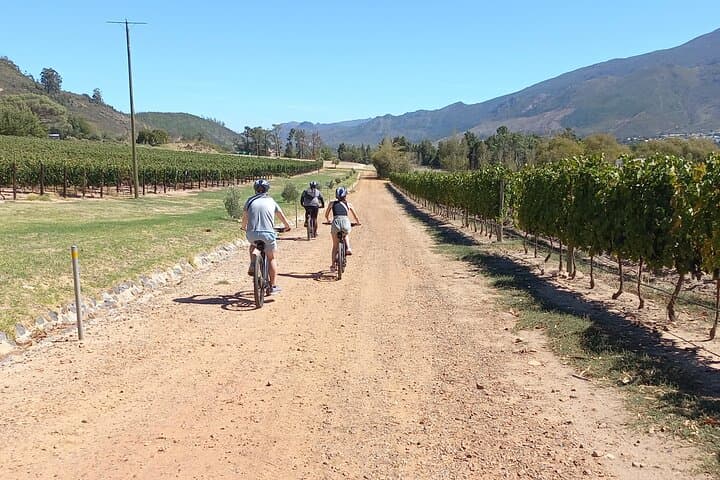
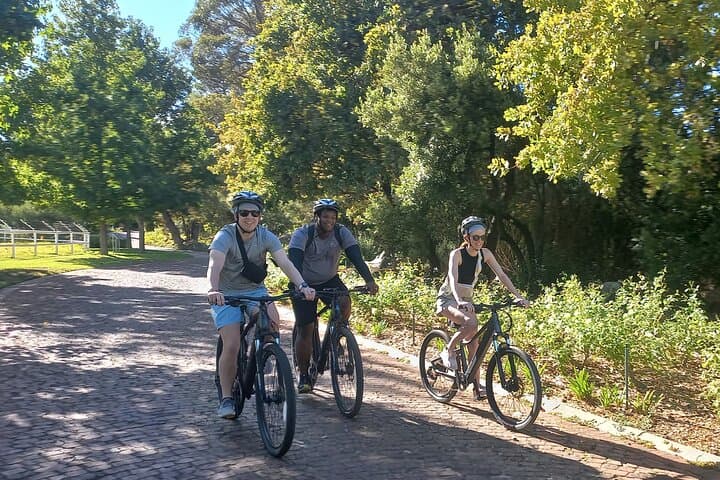
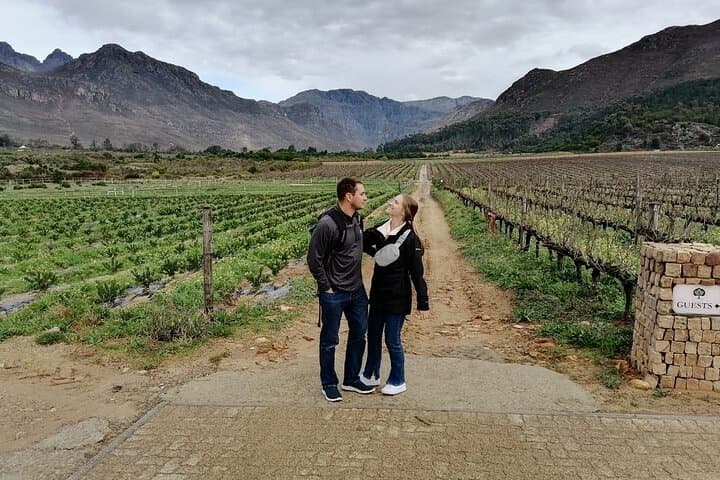
You begin at the Franschhoek Rent n Bicycle, helmets clicked, e-bike motors whispering as the valley opens. Vine rows fan out below ridges of folded sandstone and shale; the Franschhoek Mountains stand like a low guard, directing wind and light across small family vineyards. The route threads quiet farm lanes and sealed service roads, giving repeated viewpoints of the valley and the towns’ old Huguenot monuments.
You begin at the Franschhoek Rent n Bicycle, helmets clicked, e-bike motors whispering as the valley opens. Vine rows fan out below ridges of folded sandstone and shale; the Franschhoek Mountains stand like a low guard, directing wind and light across small family vineyards. The route threads quiet farm lanes and sealed service roads, giving repeated viewpoints of the valley and the towns’ old Huguenot monuments.
Franschhoek’s wine story starts with 17th‑century French Huguenots who brought vine cuttings and cellar craft; today boutique estates continue that lineage on soils formed by the Cape Fold Belt, where weathered sandstone and loam favor Chenin, Sauvignon and Pinot Noir. Local culture is equal parts tasting-room warmth and working farmland—expect simple farm gates, tasting rooms that double as family kitchens, and guides who explain pruning cycles and harvest timing.
Practical guidance: the shared tour covers roughly 15–20 km over rolling terrain with short climbs, and runs about 4–5 hours including two winery tastings. Mountain e-bikes and helmets are provided; moderate pedaling is required on sections away from motor traffic. Bring a photo ID for tastings, sun protection, closed-toe shoes and a small daypack for layers and purchases. Hydrate before you start—the provided bottled water is helpful but carry a refillable bottle if you prefer.
Arrive five minutes early to collect the correct bike size and listen to the safety briefing. Tastings occur at two family-owned, award-winning estates (one listed as Wildeberg in the route), and the guide will weave viniculture details with local history. The pacing is relaxed: more time at the vineyards, brisk but comfortable riding between them.