THE ADVENTURE COLLECTIVE® · Independent discovery and booking for outdoor travel

Roll from Sachsenhausen to the skyline on a 2½-hour guided bike tour that mixes museum banks, Goethe’s birthplace and authentic apple wine taverns. Expect flat urban miles, cobbled old-town turns and local tips you won’t find on a map.
Roll from Sachsenhausen to the skyline on a 2½-hour guided bike tour that mixes museum banks, Goethe’s birthplace and authentic apple wine taverns. Expect flat urban miles, cobbled old-town turns and local tips you won’t find on a map.
You push off from Sachsenhausen and the city slides open: cobbled alleys give way to river rims, the Main dares you into a faster rhythm and the skyline rises like a modern ridge ahead.
Verified experiences and guided adventures in the surrounding area.
Operated by frankfurtbiketour.com · Frankfurt am Main, Hesse
You push off from Sachsenhausen and the city slides open: cobbled alleys give way to river rims, the Main dares you into a faster rhythm and the skyline rises like a modern ridge ahead.
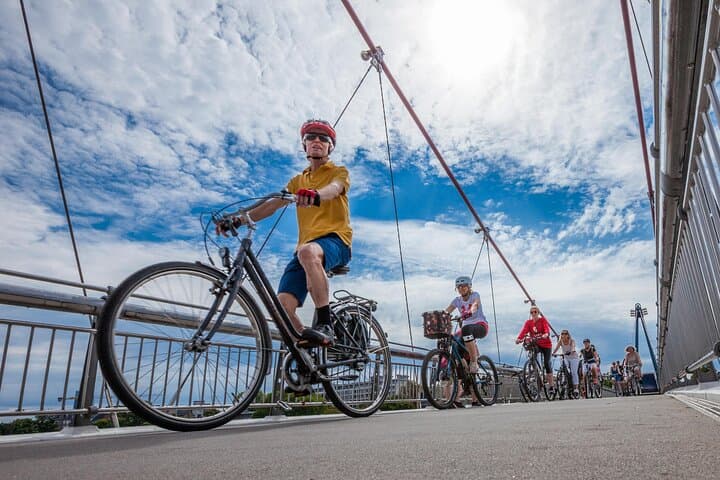
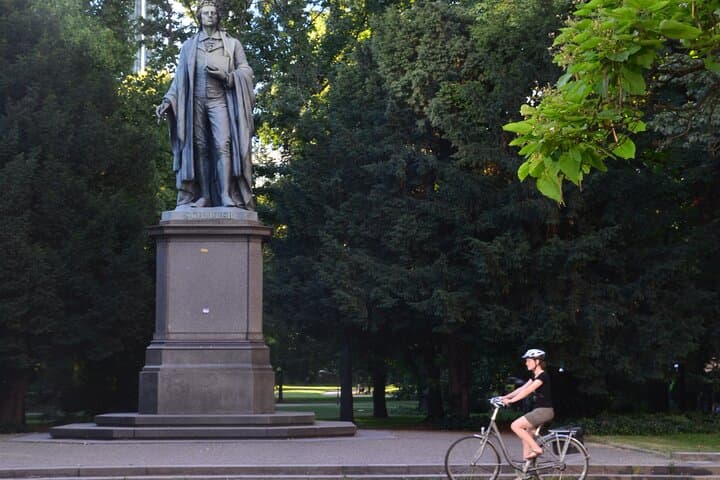
This guided 2½-hour circuit threads historic streets and museum-lined embankments. You pass the Wilhelminian façades of Sachsenhausen — once orchard country where Äbbelwoi was born — cross the Holbeinsteg and roll into the Römer square, where medieval trade routes meet reconstructed New Old Town. The Paulskirche and the Goethe House anchor the tour in 18th–19th century civic life; the Main’s broad channel explains why Frankfurt grew into a mercantile and banking hub rather than a hill town.
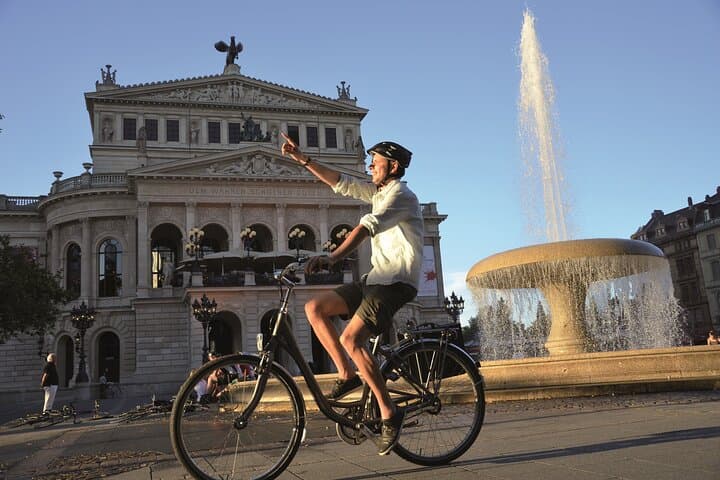
Expect mostly flat, paved surfaces with short stretches of cobbles in the old town; total distance is roughly 8–10 km with negligible elevation gain. Guides point out the Städelsche Kunstinstitut, the Alte Oper and the glassy European Central Bank as the ride moves between classical texture and contemporary steel.
Practical edge: steady bike handling and awareness of tram tracks are the essentials. Bring a refillable bottle, wear closed-toe shoes and layer for riverside wind. The tour includes a qualified guide and ends with local recommendations for apple wine taverns — the perfect reward after light urban effort.
Timing tip: late afternoon softens traffic and gilds the skyline; morning rides are cooler and less crowded. Helmets are recommended; expect easy pacing suitable for first-time visitors and regular cyclists alike.
easy.
2–3 hours.
Suitable for most fitness levels; riders should be comfortable with 10 km of urban cycling and basic traffic awareness.
Most city tours include bikes and a helmet; confirm on booking and bring your own if you prefer a personal fit.
Yes — the route is paced for families, but children should be comfortable handling a bike in mixed city traffic.
It’s an easy, mostly flat 8–10 km loop with short cobbled sections; basic cycling fitness is sufficient.
Standard policy offers a full refund if you cancel at least 24 hours before departure; check the operator’s terms when booking.
Frankfurt’s central role in commerce and imperial ceremonies is visible in the Römer, Paulskirche and cathedral sites; the Paulskirche hosted Germany’s first freely elected National Assembly in 1848.
Stick to bike lanes, avoid littering along the Main and support local taverns that source regional produce to minimize your footprint.
frankfurtbiketour.com operates guided outdoor trips and adventures with an emphasis on safety, stewardship, and memorable experiences.
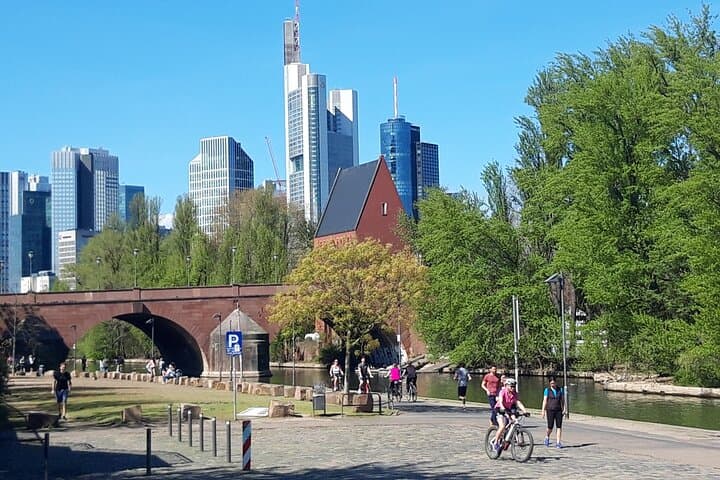
You push off from Sachsenhausen and the city slides open: cobbled alleys give way to river rims, the Main dares you into a faster rhythm and the skyline rises like a modern ridge ahead.
You push off from Sachsenhausen and the city slides open: cobbled alleys give way to river rims, the Main dares you into a faster rhythm and the skyline rises like a modern ridge ahead.
This guided 2½-hour circuit threads historic streets and museum-lined embankments. You pass the Wilhelminian façades of Sachsenhausen — once orchard country where Äbbelwoi was born — cross the Holbeinsteg and roll into the Römer square, where medieval trade routes meet reconstructed New Old Town. The Paulskirche and the Goethe House anchor the tour in 18th–19th century civic life; the Main’s broad channel explains why Frankfurt grew into a mercantile and banking hub rather than a hill town.
Expect mostly flat, paved surfaces with short stretches of cobbles in the old town; total distance is roughly 8–10 km with negligible elevation gain. Guides point out the Städelsche Kunstinstitut, the Alte Oper and the glassy European Central Bank as the ride moves between classical texture and contemporary steel.
Practical edge: steady bike handling and awareness of tram tracks are the essentials. Bring a refillable bottle, wear closed-toe shoes and layer for riverside wind. The tour includes a qualified guide and ends with local recommendations for apple wine taverns — the perfect reward after light urban effort.
Timing tip: late afternoon softens traffic and gilds the skyline; morning rides are cooler and less crowded. Helmets are recommended; expect easy pacing suitable for first-time visitors and regular cyclists alike.