THE ADVENTURE COLLECTIVE® · Independent discovery and booking for outdoor travel

Step into the original workshop where Frank Lloyd Wright refined the Prairie style. This one-hour tour in Oak Park guides you through the home and studio that shaped modern American architecture—plan ahead, follow photography rules, and look for design details that changed 20th-century houses.
Step into the original workshop where Frank Lloyd Wright refined the Prairie style. This one-hour tour in Oak Park guides you through the home and studio that shaped modern American architecture—plan ahead, follow photography rules, and look for design details that changed 20th-century houses.
A narrow row of homes gives way to a low-lying house where broad eaves drop like a curtain over a forgiving porch; the air smells faintly of cut wood and city pavement. Visitors step from Oak Park's busy streets into an early experiment in modern American space—rooms that flow, windows that frame the block instead of a single view, and a studio where ideas were sketched into whole houses.
Verified experiences and guided adventures in the surrounding area.
Operated by Frank Lloyd Wright Home and Studio · Oak Park, Illinois
A narrow row of homes gives way to a low-lying house where broad eaves drop like a curtain over a forgiving porch; the air smells faintly of cut wood and city pavement. Visitors step from Oak Park's busy streets into an early experiment in modern American space—rooms that flow, windows that frame the block instead of a single view, and a studio where ideas were sketched into whole houses.
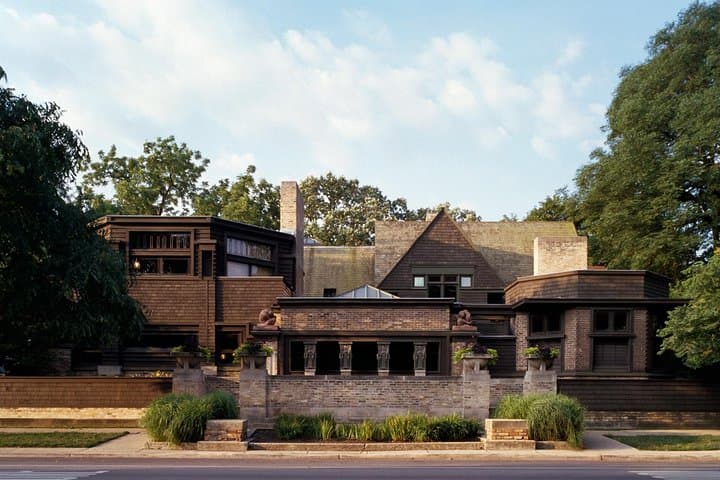
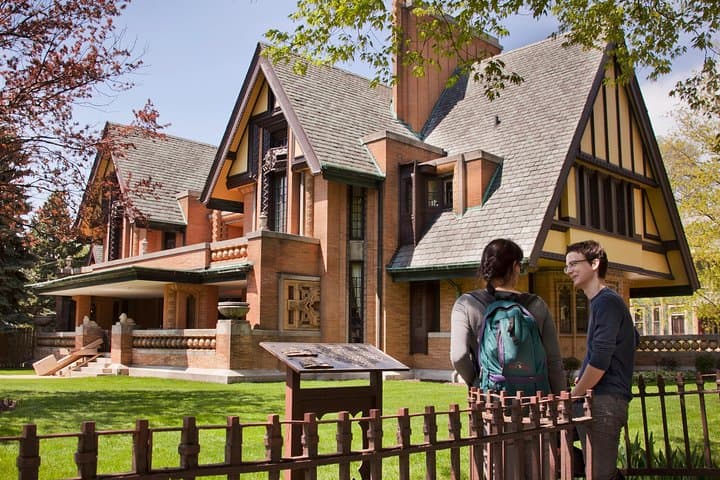
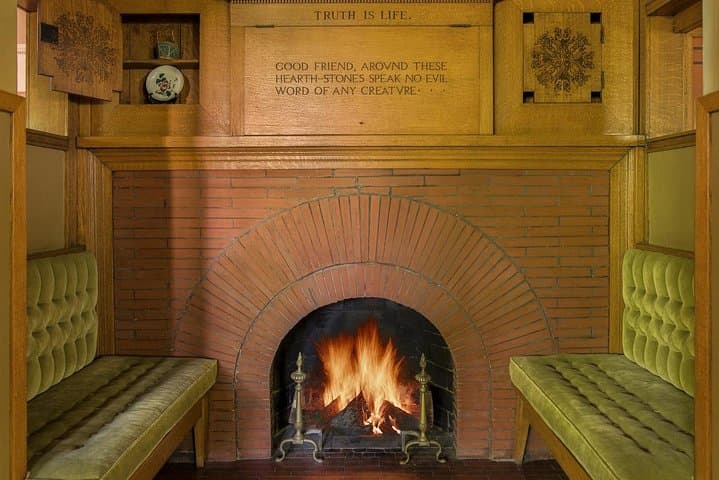
Built in 1889 and expanded through the 1890s, Wright's Home and Studio is the laboratory of Prairie School ideas. The property records the moment a young architect turned away from Victorian clutter toward horizontal planes, built-in furniture and an honest use of materials. Geologically, the building sits on the flat glacial plain of the Chicago region; the landscape's horizon lines informed Wright's low, linear compositions.
Oak Park is a community of artisans, churches and modest commercial blocks—culture here feels civic and hands-on. Nearby Unity Temple and other Wright commissions make the neighborhood itself an extension of the museum.
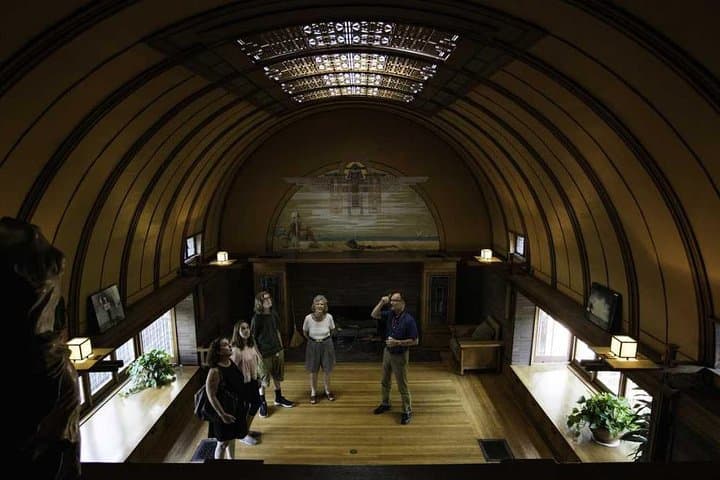
Practical guidance: tours run about 60 minutes and require advance reservation—purchasing a ticket does not guarantee a spot. Photography rules vary by room; follow your guide. The route is accessible to most visitors but includes some narrow historic thresholds. Visit early morning or late afternoon to avoid groups and to see sunlight sculpt Wright's windows. Bring comfortable shoes, a light jacket for breezy porches, and a curiosity for construction details—look at joinery and how light moves across planes. Respect the historic fabric: no touching surfaces and follow guide instructions to protect fragile interiors.
easy.
1 hour.
Suitable for all fitness levels; involves short, gentle walking and some standing.
Yes—purchasing a ticket does not reserve a spot; contact the site in advance to secure a tour time as they can sell out.
The property offers limited accessibility; contact the venue ahead to discuss accommodations and accessible routes.
Children are permitted but should be supervised; the house contains fragile historic elements and narrow spaces.
Photography policies vary by room—always ask your guide before photographing interiors to respect preservation rules.
Frank Lloyd Wright lived and worked here from 1889 into the early 20th century; the house and connected studio were the site where he developed elements of the Prairie School and modern domestic design.
The Home and Studio is maintained through restoration projects and visitor fees; following on-site rules helps protect original finishes and furnishings for future visitors.
Frank Lloyd Wright Home and Studio operates guided outdoor trips and adventures with an emphasis on safety, stewardship, and memorable experiences.
A narrow row of homes gives way to a low-lying house where broad eaves drop like a curtain over a forgiving porch; the air smells faintly of cut wood and city pavement. Visitors step from Oak Park's busy streets into an early experiment in modern American space—rooms that flow, windows that frame the block instead of a single view, and a studio where ideas were sketched into whole houses.
A narrow row of homes gives way to a low-lying house where broad eaves drop like a curtain over a forgiving porch; the air smells faintly of cut wood and city pavement. Visitors step from Oak Park's busy streets into an early experiment in modern American space—rooms that flow, windows that frame the block instead of a single view, and a studio where ideas were sketched into whole houses.
Built in 1889 and expanded through the 1890s, Wright's Home and Studio is the laboratory of Prairie School ideas. The property records the moment a young architect turned away from Victorian clutter toward horizontal planes, built-in furniture and an honest use of materials. Geologically, the building sits on the flat glacial plain of the Chicago region; the landscape's horizon lines informed Wright's low, linear compositions.
Oak Park is a community of artisans, churches and modest commercial blocks—culture here feels civic and hands-on. Nearby Unity Temple and other Wright commissions make the neighborhood itself an extension of the museum.
Practical guidance: tours run about 60 minutes and require advance reservation—purchasing a ticket does not guarantee a spot. Photography rules vary by room; follow your guide. The route is accessible to most visitors but includes some narrow historic thresholds. Visit early morning or late afternoon to avoid groups and to see sunlight sculpt Wright's windows. Bring comfortable shoes, a light jacket for breezy porches, and a curiosity for construction details—look at joinery and how light moves across planes. Respect the historic fabric: no touching surfaces and follow guide instructions to protect fragile interiors.