THE ADVENTURE COLLECTIVE® · Independent discovery and booking for outdoor travel

Rise from rainforest to ice in a 35-minute helicopter flight that lands on Fox Glacier and circles Aoraki / Mount Cook. Expect a short but powerful alpine encounter — weather dependent and ideal for travelers wanting dramatic views with minimal exertion.
Rise from rainforest to ice in a 35-minute helicopter flight that lands on Fox Glacier and circles Aoraki / Mount Cook. Expect a short but powerful alpine encounter — weather dependent and ideal for travelers wanting dramatic views with minimal exertion.
The rotor wash clears and the valley opens: green rainforest gives way to steely ice as the helicopter rises above Fox Glacier. In 35 minutes passengers move from coastal temperate forest into an alpine world where crevasses and seracs race past beneath bright, wind-scoured snowfields. A brief snow landing places visitors on a frozen plain above the icefalls — close enough to hear the glacier’s small, distant groans and smell the clean, high-country air.
Verified experiences and guided adventures in the surrounding area.
Operated by Totally Tourism - The Helicopter Line · Fox Glacier, West Coast
The rotor wash clears and the valley opens: green rainforest gives way to steely ice as the helicopter rises above Fox Glacier. In 35 minutes passengers move from coastal temperate forest into an alpine world where crevasses and seracs race past beneath bright, wind-scoured snowfields. A brief snow landing places visitors on a frozen plain above the icefalls — close enough to hear the glacier’s small, distant groans and smell the clean, high-country air.
This flight threads parts of the Southern Alps carved by Pleistocene ice and ongoing tectonic uplift. Fox Glacier is one of the few glaciers that descend from alpine ice into temperate rainforest, a geological rarity shaped by steep gradients and heavy maritime precipitation. The tour also frames Aoraki / Mount Cook, New Zealand’s highest peak, whose west face displays recent rockfall scars and glinting névé fields. Local Māori and European mountaineering histories intersect here: routes and place names reflect exploration, farming, and reverence for the mountain.
Practically, expect a compact, weather-dependent experience: check-in is 30 minutes before departure for a mandatory weather assessment. Dress in warm layers and sturdy shoes — alpine temperatures and wind at landing are significantly colder than the village. Cameras are welcome; keep lenses and batteries warm. Weight declarations are required for safety and may affect scheduling. Wheelchair access is available for check-in facilities but boarding requires mobility to step into the aircraft.
This flight is ideal for travelers seeking a high-impact alpine encounter with minimal physical exertion, combining aerial perspective, brief on-ice time, and expert pilot commentary.
easy.
35 minutes.
No specific fitness required beyond boarding ability; passengers should be able to step into the helicopter and sit unassisted.
If weather prevents operation you can reschedule for another similar scenic flight at The Helicopter Line locations or receive a refund if canceled at least 24 hours in advance.
Yes — you must declare accurate body weight at booking; if your actual weight exceeds your declared weight by 15 kg or more you may be rescheduled subject to availability.
The snow landing is approximately 10 minutes—enough for photos and to stand on the snow, but not for extended glacier travel or guided ice walks.
Children are welcome but must be accompanied by an adult. Check-in facilities are wheelchair accessible, but boarding requires stepping into the helicopter and basic mobility.
The Southern Alps were sculpted over millennia by glaciation and uplift; local Ngāi Tahu place names and mountaineering history reflect longstanding cultural and exploratory ties to Aoraki / Mount Cook and surrounding glaciers.
Glaciers here are sensitive indicators of climate change; flights operate under strict safety and environmental guidelines to minimize disturbance and promote sustainable tourism.
Totally Tourism - The Helicopter Line operates guided outdoor trips and adventures with an emphasis on safety, stewardship, and memorable experiences.
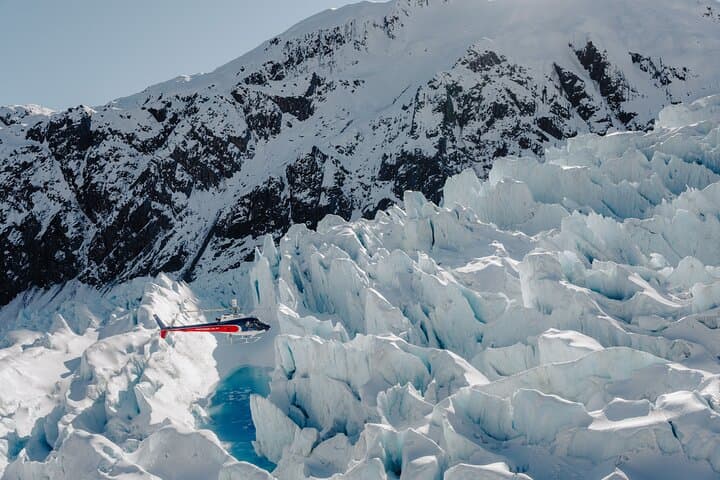
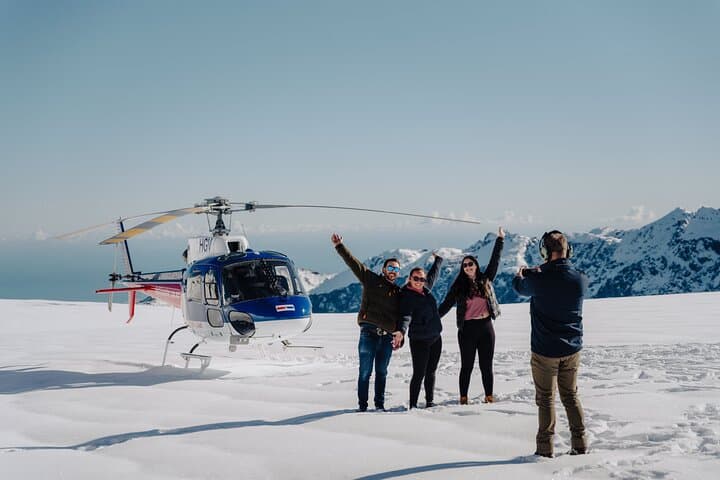
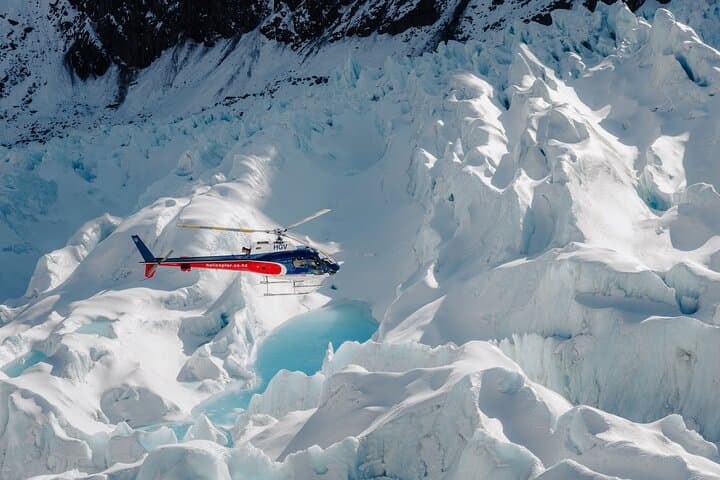
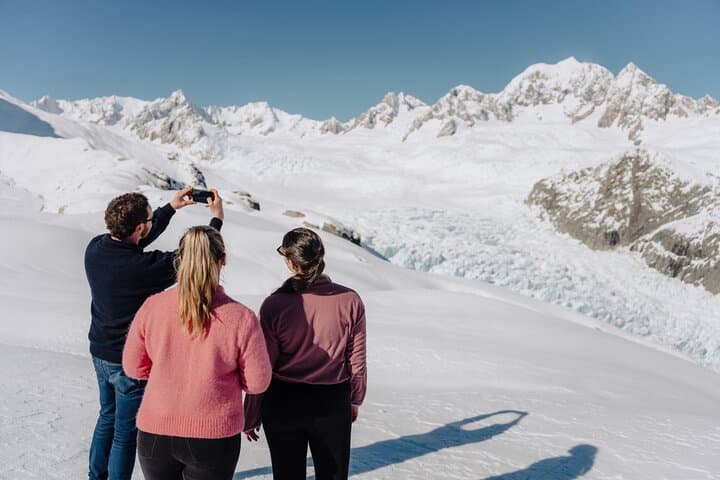
The rotor wash clears and the valley opens: green rainforest gives way to steely ice as the helicopter rises above Fox Glacier. In 35 minutes passengers move from coastal temperate forest into an alpine world where crevasses and seracs race past beneath bright, wind-scoured snowfields. A brief snow landing places visitors on a frozen plain above the icefalls — close enough to hear the glacier’s small, distant groans and smell the clean, high-country air.
The rotor wash clears and the valley opens: green rainforest gives way to steely ice as the helicopter rises above Fox Glacier. In 35 minutes passengers move from coastal temperate forest into an alpine world where crevasses and seracs race past beneath bright, wind-scoured snowfields. A brief snow landing places visitors on a frozen plain above the icefalls — close enough to hear the glacier’s small, distant groans and smell the clean, high-country air.
This flight threads parts of the Southern Alps carved by Pleistocene ice and ongoing tectonic uplift. Fox Glacier is one of the few glaciers that descend from alpine ice into temperate rainforest, a geological rarity shaped by steep gradients and heavy maritime precipitation. The tour also frames Aoraki / Mount Cook, New Zealand’s highest peak, whose west face displays recent rockfall scars and glinting névé fields. Local Māori and European mountaineering histories intersect here: routes and place names reflect exploration, farming, and reverence for the mountain.
Practically, expect a compact, weather-dependent experience: check-in is 30 minutes before departure for a mandatory weather assessment. Dress in warm layers and sturdy shoes — alpine temperatures and wind at landing are significantly colder than the village. Cameras are welcome; keep lenses and batteries warm. Weight declarations are required for safety and may affect scheduling. Wheelchair access is available for check-in facilities but boarding requires mobility to step into the aircraft.
This flight is ideal for travelers seeking a high-impact alpine encounter with minimal physical exertion, combining aerial perspective, brief on-ice time, and expert pilot commentary.