THE ADVENTURE COLLECTIVE® · Independent discovery and booking for outdoor travel

A 35-minute helicopter flight crosses the Southern Alps from Fox Glacier to the west face of Aoraki / Mount Cook, including a snow landing on Fox Glacier. Expect icefalls, crevasses and sweeping alpine views—weather dependent and highly photogenic.
A 35-minute helicopter flight crosses the Southern Alps from Fox Glacier to the west face of Aoraki / Mount Cook, including a snow landing on Fox Glacier. Expect icefalls, crevasses and sweeping alpine views—weather dependent and highly photogenic.
You lift off from the wet green terrace of the West Coast and the rainforest falls away beneath the thrum of the rotors. Icefields push up like folded metal plates; seracs and crevasses march toward the Southern Alps. The pilot vectors you along the spine of the range and the west face of Aoraki / Mount Cook grows from a white peak to an immediate, jagged presence. A short snow landing on Fox Glacier gives you the rare chance to step onto high alpine snow and feel the cold air bite your cheeks.
Verified experiences and guided adventures in the surrounding area.
Operated by Glacier Helicopters · Fox Glacier, West Coast
You lift off from the wet green terrace of the West Coast and the rainforest falls away beneath the thrum of the rotors. Icefields push up like folded metal plates; seracs and crevasses march toward the Southern Alps. The pilot vectors you along the spine of the range and the west face of Aoraki / Mount Cook grows from a white peak to an immediate, jagged presence. A short snow landing on Fox Glacier gives you the rare chance to step onto high alpine snow and feel the cold air bite your cheeks.
This run—Fox Glacier to Mount Cook—threads together recent geological drama and human history. The Southern Alps are young, still rising as Pacific and Australian tectonic plates collide; glaciers here carve valleys and reveal rock shaped over millennia. The area is also rich in Māori heritage: Aoraki is a sacred ancestor in Ngāi Tahu tradition, and place names reflect both Māori and European exploration.
Expect a tightly timed, weather-dependent experience: the advertised flight time is 35 minutes, with about 10 minutes at key viewpoints and a brief snow stop. Visual highlights include icefalls, crevasses, névé fields, and a circling view of New Zealand’s highest peak. Operators enforce weight limits, ban large bags and drones, and recommend warm layers, sturdy footwear and a good camera.
Practical edge: arrive 30 minutes early for check-in, plan for last-minute cancellations in unstable weather, and keep personal items zipped and secured during landing. This flight is an efficient, high-adrenaline way to sample the raw geometry of the Southern Alps without a multiday trek.
easy.
35 minutes (plus 30 min check-in).
Minimal fitness required; must be able to step in and out of the helicopter and stand briefly on snow.
No—snow landings depend on current weather and glacier conditions; operators will substitute additional scenic flying if a landing is unsafe.
Yes—weight restrictions and balance requirements apply; you’ll be asked for passenger weights at check-in and large bags are not permitted on board.
Infants are allowed but must sit on an adult’s lap; specialized infant seats are available—check operator policy when booking.
Flights canceled at least 24 hours beforehand are fully refundable; same-day or near-time weather cancellations usually offer rebooking or refund options—confirm the cancellation policy when you book.
European explorers named Fox Glacier after Sir William Fox; Māori call the area Te Moeka o Tuawe and Aoraki / Mount Cook holds cultural significance for Ngāi Tahu.
Glaciers on the West Coast are retreating due to climate change; operators and visitors are encouraged to minimize footprint, avoid disturbing sensitive ice and follow Leave No Trace principles.
Glacier Helicopters operates guided outdoor trips and adventures with an emphasis on safety, stewardship, and memorable experiences.
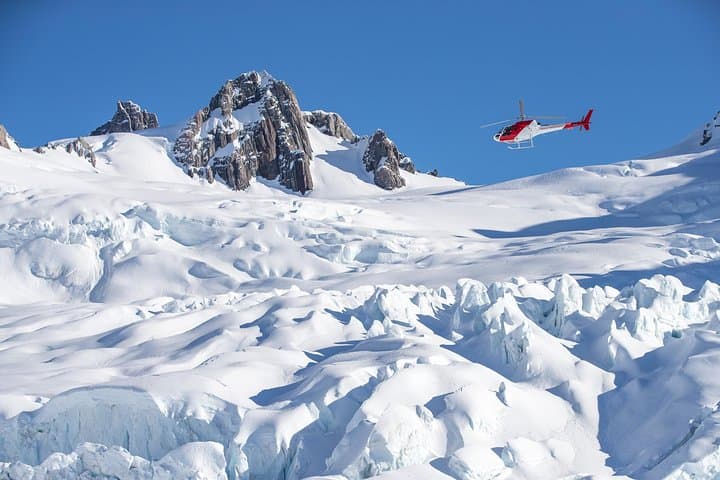
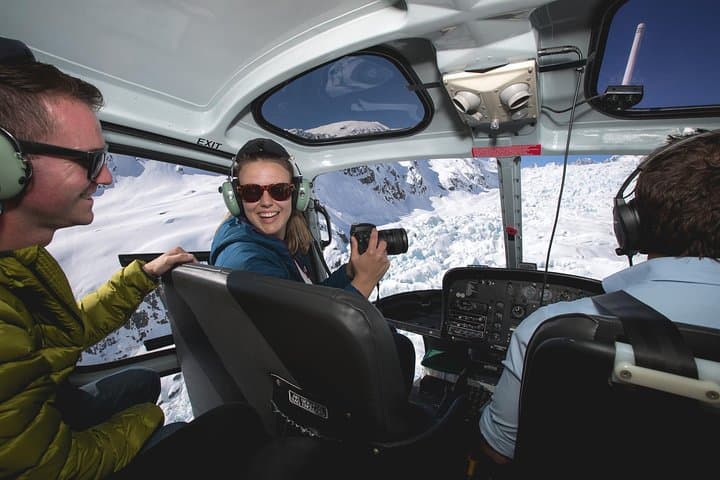
You lift off from the wet green terrace of the West Coast and the rainforest falls away beneath the thrum of the rotors. Icefields push up like folded metal plates; seracs and crevasses march toward the Southern Alps. The pilot vectors you along the spine of the range and the west face of Aoraki / Mount Cook grows from a white peak to an immediate, jagged presence. A short snow landing on Fox Glacier gives you the rare chance to step onto high alpine snow and feel the cold air bite your cheeks.
You lift off from the wet green terrace of the West Coast and the rainforest falls away beneath the thrum of the rotors. Icefields push up like folded metal plates; seracs and crevasses march toward the Southern Alps. The pilot vectors you along the spine of the range and the west face of Aoraki / Mount Cook grows from a white peak to an immediate, jagged presence. A short snow landing on Fox Glacier gives you the rare chance to step onto high alpine snow and feel the cold air bite your cheeks.
This run—Fox Glacier to Mount Cook—threads together recent geological drama and human history. The Southern Alps are young, still rising as Pacific and Australian tectonic plates collide; glaciers here carve valleys and reveal rock shaped over millennia. The area is also rich in Māori heritage: Aoraki is a sacred ancestor in Ngāi Tahu tradition, and place names reflect both Māori and European exploration.
Expect a tightly timed, weather-dependent experience: the advertised flight time is 35 minutes, with about 10 minutes at key viewpoints and a brief snow stop. Visual highlights include icefalls, crevasses, névé fields, and a circling view of New Zealand’s highest peak. Operators enforce weight limits, ban large bags and drones, and recommend warm layers, sturdy footwear and a good camera.
Practical edge: arrive 30 minutes early for check-in, plan for last-minute cancellations in unstable weather, and keep personal items zipped and secured during landing. This flight is an efficient, high-adrenaline way to sample the raw geometry of the Southern Alps without a multiday trek.